The 1969 Mustang Mach 1: Ford's Fastback Bruiser
Ford stopped selling cute and started selling mean, and it put the whole package on one order sheet.
Ford stopped selling cute and started selling mean, and it put the whole package on one order sheet.
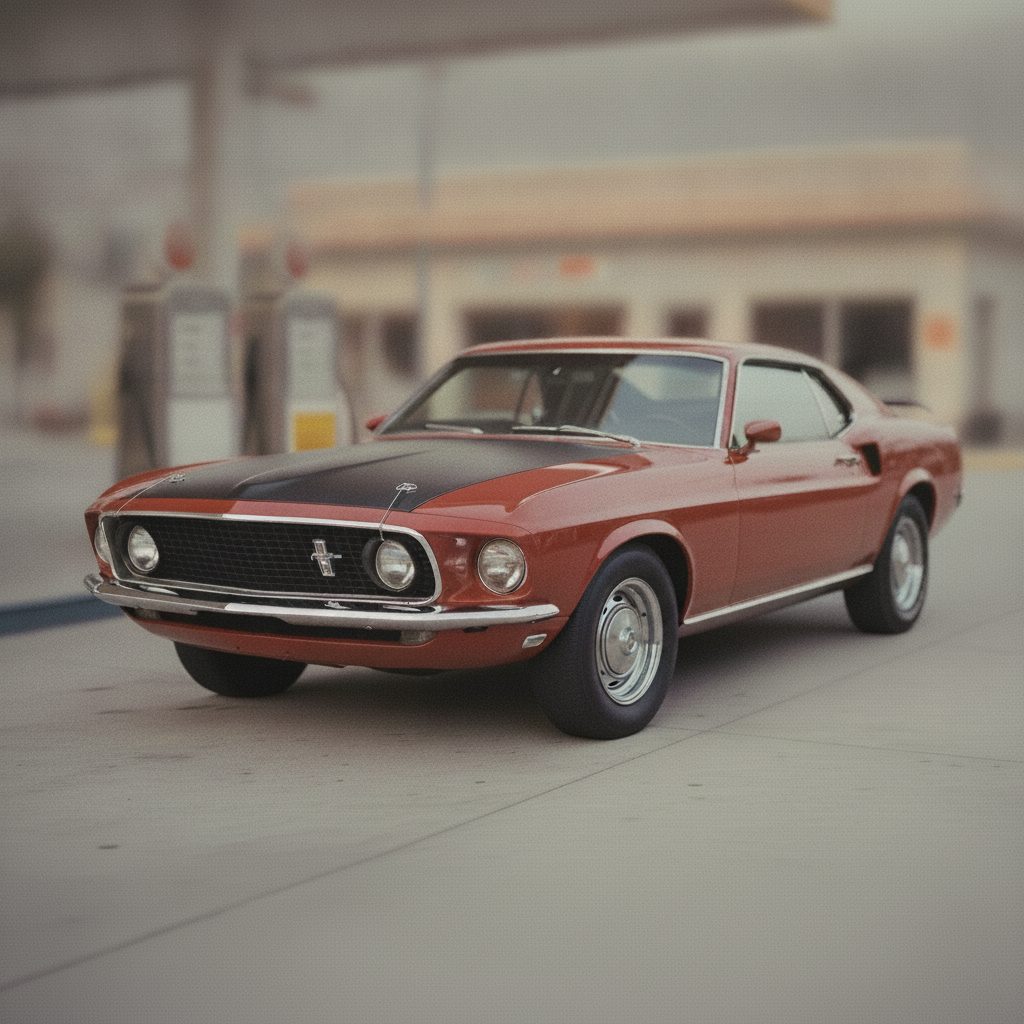
The 1969 Mustang Mach 1 arrived as Ford's answer to a simple problem. The Mustang had grown faster and louder every year, but the lineup still lacked one car that packaged the look, the sound, and the muscle onto a single order sheet. The Mach 1 fixed that. It took the restyled SportsRoof fastback, draped it in a matte black hood and bold side stripes, and backed the attitude with a V8 range that climbed all the way to the 428 Cobra Jet. This was the Mustang for buyers who wanted the whole show in one signature.
Ford built just over 72,000 Mach 1 fastbacks for 1969, and the car did something rare in a crowded showroom. It outsold the long-running GT package so decisively that Ford dropped the GT option for 1970 and let the Mach 1 carry the performance banner alone. More than half a century later the shape is still instantly readable as the moment the Mustang stopped being cute and started being genuinely mean. You can trace the whole bloodline on our Mustang hub.
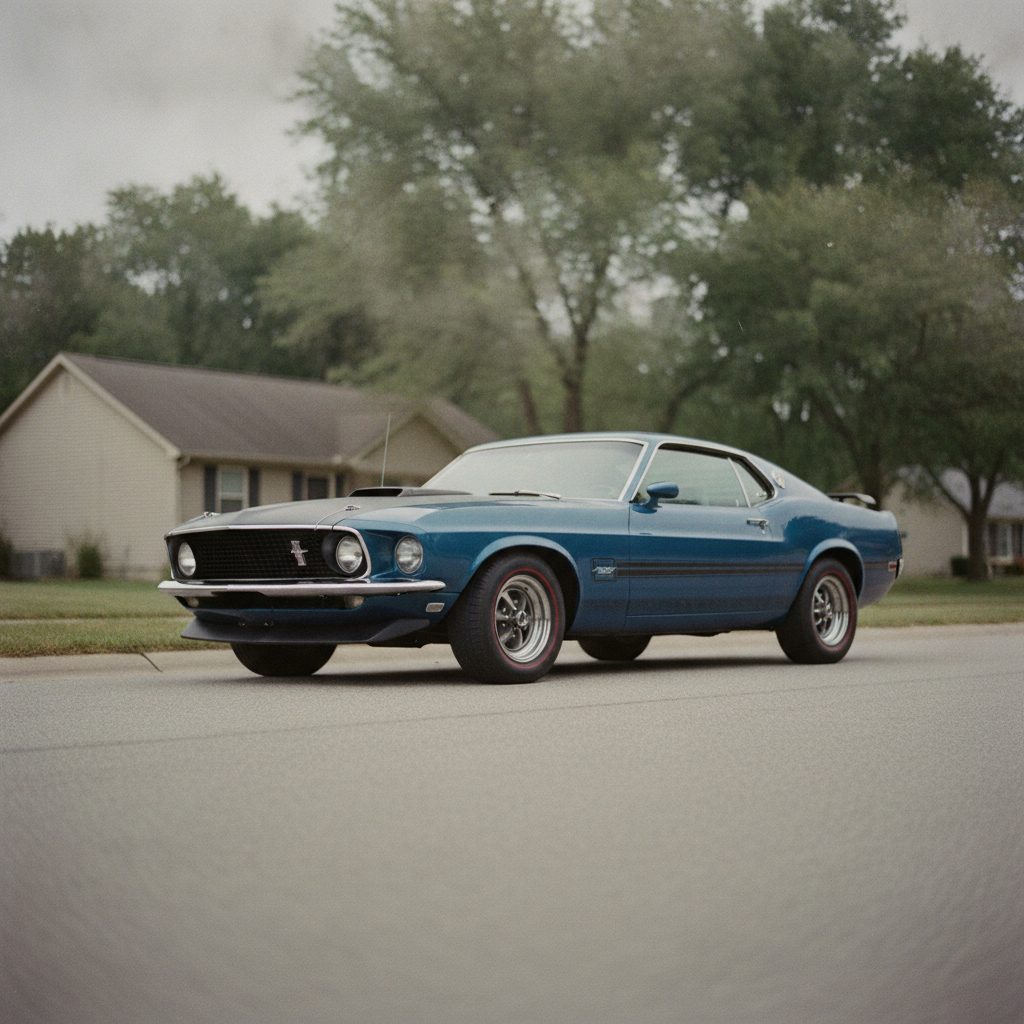
The 1969 Mustang Mach 1 was never a single engine or a stripe kit. It was a complete package, and that is the key to understanding it. Every Mach 1 rode on the new SportsRoof body, the long fastback roofline that flowed unbroken from the windshield down to the tail panel. Ford added a matte black hood with hood pins, dual color-keyed racing mirrors, chrome styled steel wheels, a competition-tuned suspension, and a deluxe interior with high-back bucket seats and simulated woodgrain trim. A chrome pop-open gas cap finished the look. The result appeared fast standing still, which was exactly the point of the exercise.
This was also the year the Mustang grew its four-headlight face. Two lamps sat inside the grille and two sat out in the fenders, a look unique to 1969. It is the fastest way to tell a 1969 from a 1970 car, which returned to a single pair of headlights flanked by non-functional scoops. Collectors lean on that one detail constantly when they authenticate a car, so it is worth committing to memory before you ever walk a swap meet or scroll a listing. The 1969 front end is the signature of the whole first performance year.
The 1969 Mustang Mach 1 engine ladder started with the 351 Windsor two-barrel rated at 250 horsepower and climbed to a 351 Windsor four-barrel at 290. Above those sat the 390 FE big-block at 320 horsepower, a heavy iron motor that planted the nose but never became the enthusiast favorite. The cars everyone chases wear the 428 Cobra Jet, whose 335 horsepower rating almost nobody believed then and nobody believes now. Ford quoted the number low to keep the insurance companies calm. The real output was comfortably north of 400, and the way one pulls from 3,000 rpm tells you the truth immediately.
There was one more tier hiding in the option book. Order the 428 with the Drag Pak axle package, either the 3.91 Traction-Lok or the fierce 4.30 Detroit Locker, and Ford quietly upgraded the engine to Super Cobra Jet specification. That meant stronger connecting rods, a sturdier crank, and an external engine oil cooler mounted up front. On paper the horsepower stayed put. In practice you got a bottom end built to survive repeated hard launches at the strip. Those Drag Pak cars are the holy grail of the range, and they are priced like it.
The single most theatrical option was the Shaker. Bolted straight to the top of the air cleaner and poking up through a hole cut in the hood, the scoop shook and jerked with every stab of the throttle because it moved with the engine, not the body. It fed cold outside air directly to the carburetor, and Ford badged the 428 Ram Air cars to match. Today a genuine Shaker car draws a crowd at any show field. It remains one of the great pieces of muscle car showmanship, mechanical honesty and pure marketing fused into one shaking chunk of painted steel.
The Mach 1 looked fast standing still, and with a 428 Cobra Jet under that shaking hood, it backed up every inch of the promise.
Part of the reason the Mach 1 sold in such numbers is that it felt special without a mile-long options sheet. The side stripes, the blacked-out hood, the styled steel wheels, the pop-open cap, and the upgraded cabin all came standard on every car. Buyers could add a rear deck spoiler and rear window sport slats to complete the fastback race-car silhouette, and a great many of them did exactly that. Even a base 351 car looked every bit as aggressive as a 428, which is a large part of why the entry-level cars hold their appeal with drivers today.
The Mach 1 also arrived alongside some of the wildest Mustangs Ford ever built. The Trans-Am homologation special gets its full story in our Boss 302 history, and the Carroll Shelby cars get their due in our Shelby GT350 feature. The difference is that the Mach 1 was the one you could order from an ordinary dealer, finance on ordinary terms, and drive to work every day. That everyday usability is precisely why so many of them survived long enough to become collectible in the first place.
It helps to know where the Mach 1 sat in the pecking order. The GT was an appearance and handling package that predated the Mach 1, and it faded away once the newcomer arrived and stole its thunder. The Boss 302 was a purpose-built road racer with a high-winding small-block, stiffer springs, and a focus on corners rather than the quarter mile. The Boss 429 was a NASCAR homologation monster built in tiny numbers. The Mach 1 split the difference between all of them. It offered big-block torque, everyday manners, and a sticker most enthusiasts could actually reach. It was muscle for people who wanted the whole show without the race-car compromises.
Value tracks the engine badge more closely than anything else. Base 351 Mach 1 cars remain the most attainable way into a genuine one and make excellent, usable drivers. The 390 sits oddly in the middle, rarer than the 351 yet less loved than the Cobra Jet. The 428 Cobra Jet cars command a strong premium, and a documented Ram Air or Super Cobra Jet Drag Pak example sits at the very top of the market. As with any Mustang of the era, matching numbers and a Marti Report move the needle far more than a fresh coat of paint ever will. Directionally, the good cars keep getting harder to find.
The real enemy is rust. Check the floors, the torque boxes, the front frame rails, the cowl, and the lower quarters carefully before you fall in love with a color. Many of these cars have also been restomodded over the years, and a tasteful Coyote swap can make a wonderful modern driver even as it costs you originality points at judging. Decide up front whether you want a numbers-matching car to preserve or a car to actually thrash on a Sunday, because those two paths lead to very different budgets and very different cars.
The 1969 Mach 1 offered a 351 Windsor two-barrel at 250 horsepower, a 351 Windsor four-barrel at 290, a 390 FE big-block at 320, and the 428 Cobra Jet rated at 335. Ordering the Drag Pak axle package upgraded the 428 to Super Cobra Jet internals with a stronger bottom end and an external oil cooler.
It depends entirely on the engine fitted. A base 351 Mach 1 made 250 horsepower, while the top 428 Cobra Jet carried a factory rating of 335. That 428 figure was famously conservative, quoted low to keep insurance costs down, and the true output is widely believed to have been well over 400 horsepower in real driving.
Value depends on engine, documentation, and condition. Base 351 cars are the most affordable entry into a real Mach 1, while 428 Cobra Jet cars carry a large premium. Documented Ram Air and Super Cobra Jet Drag Pak examples sit at the top. Matching numbers and a Marti Report matter far more to price than cosmetics.
The quickest tell is the front. The 1969 car wears four headlights, two in the grille and two in the fenders, while the 1970 returned to two headlights with non-functional scoops outboard. The 1970 also revised the tail panel and switched the four-barrel 351 from Windsor to Cleveland cylinder heads for more breathing.
The muscle world, every morning. Auctions, builds, reveals. Free.