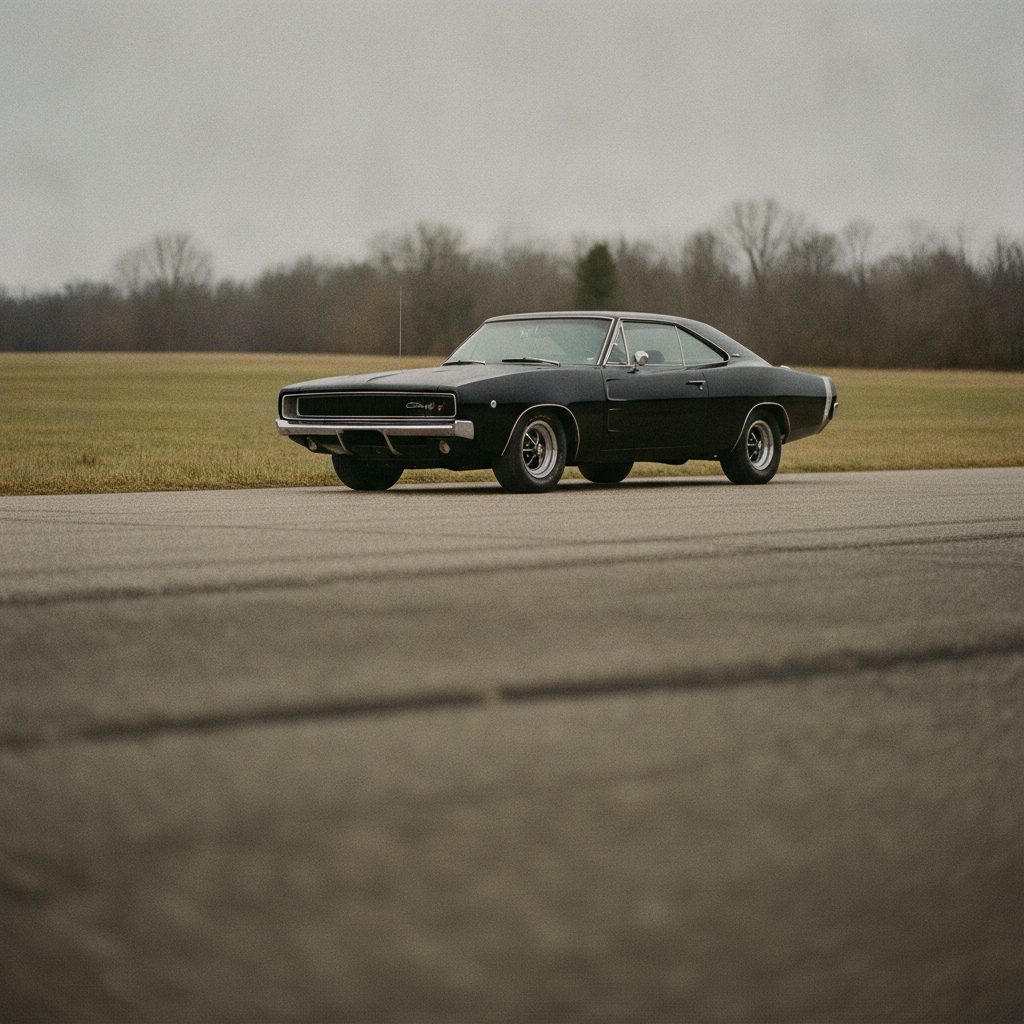
The 1969 Dodge Charger: Specs, Trims, and Legend
The year the second-generation Charger got its divided grille, its Hemi homologation specials, and a permanent place in American muscle.
The year the second-generation Charger got its divided grille, its Hemi homologation specials, and a permanent place in American muscle.
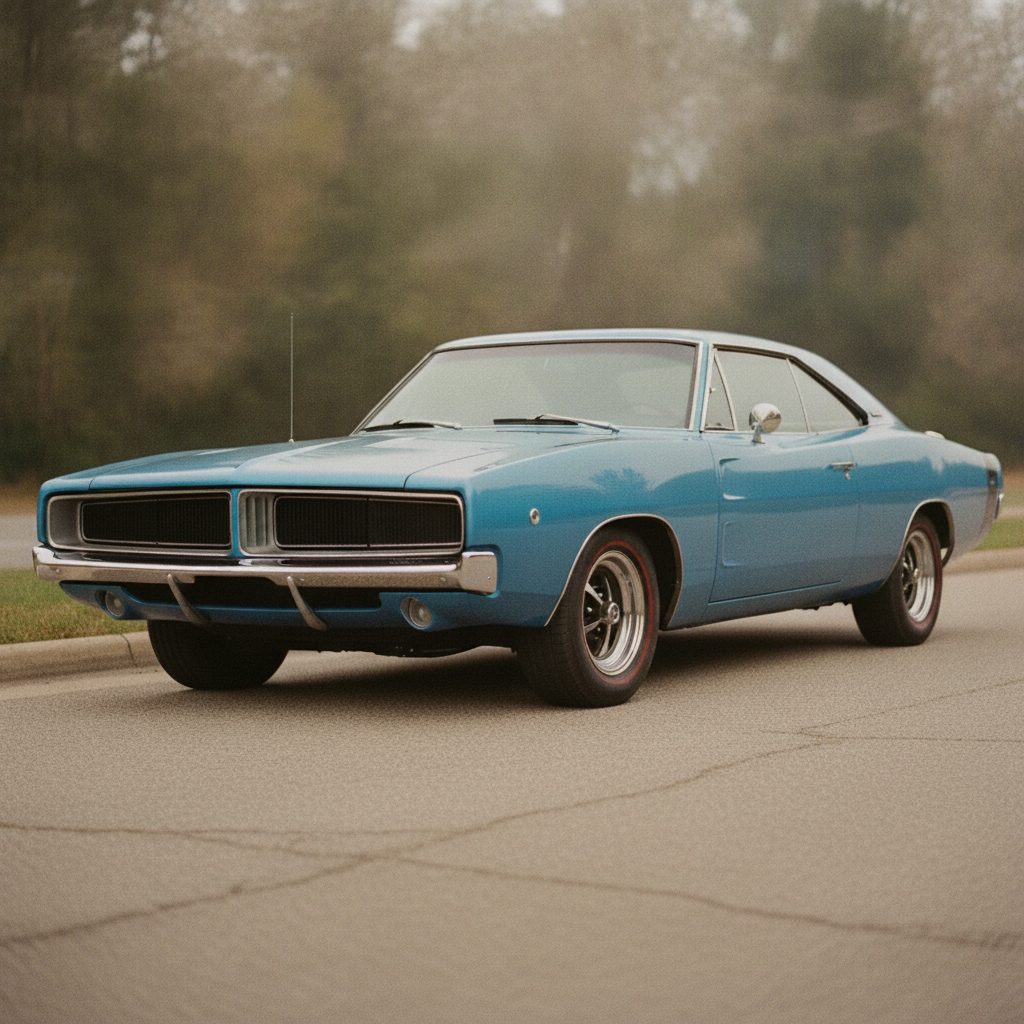
The 1969 Dodge Charger sits right in the middle of a three-year run, and somehow it became the one everybody pictures first. Say the words out loud and a shape appears in your head: the hidden headlights, the tunneled rear window, the long flanks pulled tight through the middle like a Coke bottle. This was the year the second-generation Charger stopped being the new thing and started being the icon.
Dodge did not reinvent the car for 1969. It refined a shape that was already close to perfect. The changes read small on a spec sheet and look enormous in the metal, and together they gave the 1969 Dodge Charger a face that enthusiasts can still call out from fifty feet away. If you want the shorthand: this is the Charger with the split grille.
The headline update was the grille. The clean full-width opening from 1968 gained a body-color divider straight down the center, splitting the blacked-out grille into two hidden-headlight halves. Out back, Dodge revised the taillights, and inside there was a fresh trim and options list. It is the single easiest way to date a second-generation car in a parking lot. One opening means 1968, a divided grille means 1969, and a chrome loop bumper up front means 1970.
Everything else carried over the hardware that made the redesign a hit in the first place. The tunneled backlight, the flying-buttress roofline, and the flush door handles all stayed. What Dodge added in 1969 was reach: a new luxury package for buyers who wanted comfort with their muscle, and a pair of wild aerodynamic specials built to win on Sunday. The Charger was no longer just a fastback with attitude. It had become a full lineup, and the model hub for the whole run tells that longer story.
The engine ladder is where the 1969 Dodge Charger earns its reputation. A base car could be ordered with a 225 slant-six or a 318 V8, honest and durable but not the reason anyone remembers these cars. The heart of the range was the 383 big-block, and the four-barrel 383 Magnum made a stout 335 horsepower. That was the sweet spot for a lot of buyers, a genuine muscle car that did not carry the insurance bill of the top engines.
Above the 383 sat the two motors that turned Chargers into legends. The 440 Magnum brought 375 horsepower and a wall of torque that defined how a Mopar big-block feels off the line, the same character we walked through in our look at the 440 in a Go Mango B-body. Then there was the crown: the 426 Street Hemi, rated at 425 horsepower on paper and understood by everyone to be making more. A Hemi Charger was the fastest, rarest, and most expensive way to leave a 1969 Dodge dealership.
Two badges did the heavy lifting in 1969. The R/T, short for Road and Track, was the performance package. It came standard with the 440 Magnum, added heavy-duty suspension and brakes, and wore the bumblebee stripe that wrapped the tail. The 426 Hemi was the R/T's only engine upgrade, which tells you how serious the base setup already was. If you see a stripe around the back of a second-generation Charger, you are almost certainly looking at an R/T.
The SE, or Special Edition, went the other direction. It layered leather bucket seats, wood-grain trim, and deep-dish wheel covers over whatever was underneath. A buyer could order the SE on a base car or stack it on an R/T, and an R/T-SE was the closest thing Dodge built to a muscle car and a personal luxury coupe in the same body. It is a combination that plays extremely well with collectors today.
The R/T was the muscle and the SE was the manners. A car ordered with both was a Sunday cruiser that could still scare a stoplight.
The prettiest part of the standard Charger was also its enemy at speed. That recessed grille and tunneled rear window looked mean, but on a NASCAR superspeedway they trapped air and cost the car real miles per hour against the Fords. Dodge answered first with the Charger 500, a homologation special that filled in the grille with a flush Coronet unit and glassed over the tunneled backlight to smooth the airflow. Roughly 392 were built, just enough to make it legal to race.
When the 500 still was not enough, Dodge went nuclear. The Charger Daytona bolted an eighteen-inch pointed nose cone to the front and a towering rear wing over the trunk, and 503 were built to satisfy the rulebook. Those winged cars rewrote what a stock car could do, and one of them carried Buddy Baker past 200 miles per hour in testing at Talladega in March of 1970, the first time a NASCAR machine had ever done it. We tell the full winged-warrior story in our feature on the Charger Daytona.
Dodge built just under 90,000 Chargers for 1969, which sounds like a lot until you start sorting by what people actually chase. The R/T was a minority of that total, and Hemi cars numbered only in the hundreds across the entire model year. The Charger 500 and Daytona were rarer still, built in the low hundreds each purely to satisfy racing homologation. Add fifty-plus years of rust, wrecks, and hard driving, and the survivor pool for the desirable configurations is small. That scarcity is the whole reason a documented 1969 Dodge Charger commands what it does.
Values spread across a huge range, and the engine badge is the biggest lever. A clean 318 or 383 car remains one of the more attainable ways into a genuine muscle-era legend, and it still delivers all of the presence. R/Ts trade for strong money, with numbers-matching 440 cars well into the collector bracket. Documented Hemi cars and the winged Daytonas live in six and seven figures at the major auctions. As always in this world, condition, matching numbers, and paperwork move the price far more than a fresh coat of the right color.
Numbers explain the value, but they do not explain the fame. That job belongs to television. A generation met the 1969 Charger as the orange General Lee, sailing over creeks and hay wagons every week on The Dukes of Hazzard, and the show burned that exact profile into the American brain the way no brochure ever could. Combine the screen time with the aero legend and the Hemi mystique, and you get a car that punches far above its production number. It is a shape that reads as muscle even to people who could not name a single spec, which is exactly why its silhouette still anchors a blacked-out B-body build to this day.
It depends almost entirely on the engine and the paperwork. Base 318 and 383 cars are the accessible entry point, R/T 440 cars trade for strong collector money, and documented 426 Hemi cars and winged Daytonas reach six and seven figures at major auctions. Condition and matching numbers move the price more than anything else.
Nobody has an exact count. Dodge built just under 90,000 for 1969, but survivors are a fraction of that after decades of rust, crashes, and hard use. Common 318 and 383 cars turn up regularly, while R/T, Hemi, Charger 500, and Daytona survivors are genuinely scarce and closely tracked by collectors.
The range ran from a 225 slant-six and a 318 V8 on base cars up through the 383 Magnum big-block at 335 horsepower. The R/T came standard with the 440 Magnum at 375 horsepower, and the top option was the 426 Street Hemi, rated at 425 horsepower and the most collectible engine of the bunch.
The quickest tell is the grille. A 1968 Charger has one clean full-width opening, while the 1969 gained a body-color divider down the center that splits it into two halves. The 1969 also revised the taillights and added the SE luxury package and the Charger 500 and Daytona aero specials.
The muscle world, every morning. Auctions, builds, reveals. Free.