What a 1970 Plymouth Superbird Is Really Worth
The wing car that crashed the collector market, then crashed back to earth, is still one of Detroit's great blue-chip gambles.
The wing car that crashed the collector market, then crashed back to earth, is still one of Detroit's great blue-chip gambles.
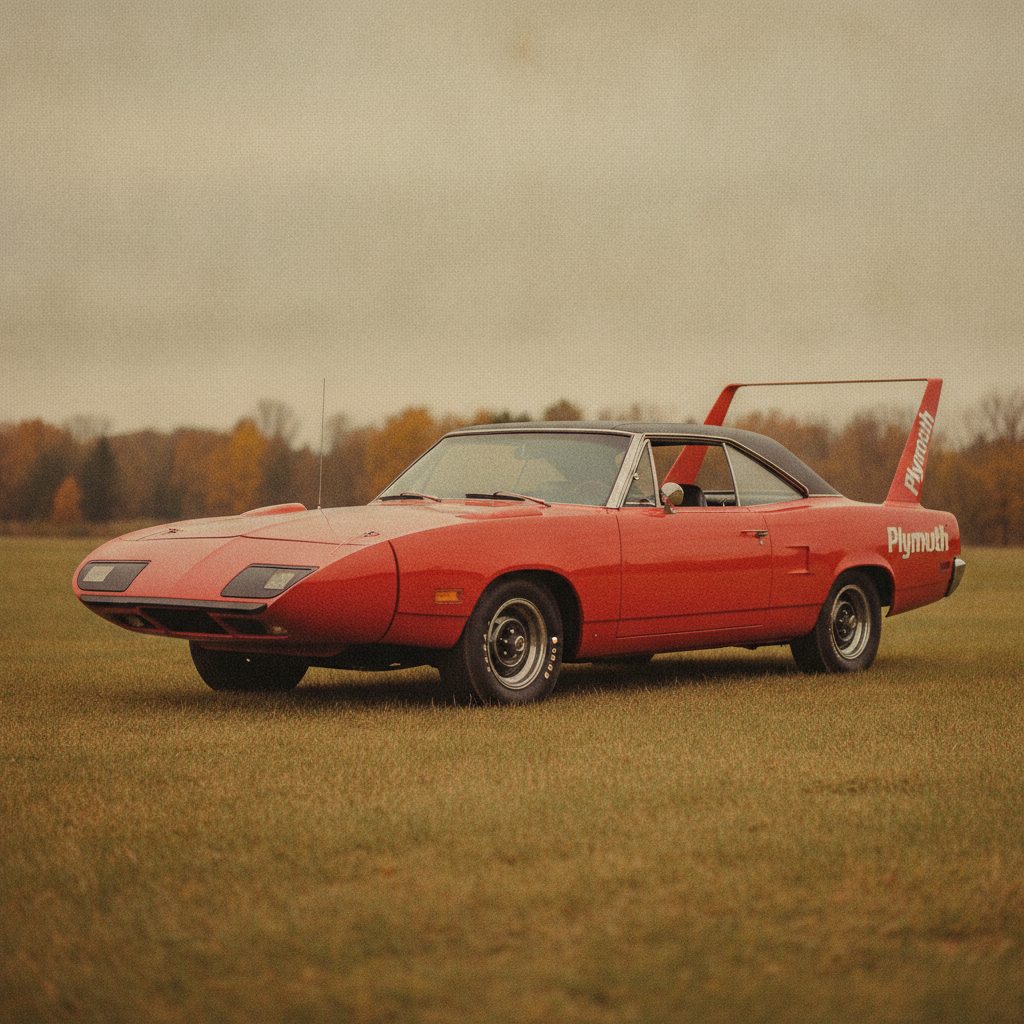
The 1970 Plymouth Superbird is the most theatrical car Detroit ever put on a dealer lot, and for a long stretch it was one of the hardest to sell. A pointed aero nose, a rear wing tall enough to see over the roof, and a name built for NASCAR. When it was new, buyers thought it was ridiculous. Today it is one of the most closely watched values in the muscle car market, and the numbers have been on a wild ride.
That ride is exactly why the Superbird is worth a careful look right now. A single Hemi example traded hands for $1.65 million in 2022, then sold again for a fraction of that just three years later. Headlines called it a crash. The reality is more useful for anyone actually trying to buy or value one, so let us break it down by engine, by condition, and by the factors that decide whether a Superbird is a six-figure car or a seven-figure one.
For a running, presentable Superbird with the common 440 engine, the market generally sits in the low-to-mid six figures. Classic.com, which tracks public sales across the major auction houses, puts the average Superbird sale right around $310,000. That number blends everything from tired drivers to concours restorations, so treat it as a midpoint rather than a quote.
The spread around that average is enormous, and it is almost entirely about the engine and the paperwork. A clean 440 car and a documented, matching-numbers 426 Hemi are not in the same conversation. One is a strong six-figure classic. The other is a blue-chip trophy that can push past seven figures on the right day in front of the right room. Understanding where a specific car falls in that range is the whole game.
Plymouth offered the Superbird with three engines, and the badge on the air cleaner is the single biggest lever on price. The base 440 Super Commando made 375 horsepower on a single four-barrel and went into the majority of the cars. These are the most attainable Superbirds, and they anchor the bottom of the range. Expect strong 440 cars to land in the low-to-mid six figures depending on color and restoration quality.
Step up to the 440 Six Barrel, with its trio of two-barrel carburetors and 390 horsepower, and you add a meaningful premium. Fewer were built, and the induction setup is exactly the kind of factory hardware collectors chase. The same big-block appeal shows up on the street, where a well-sorted 440 like the one in our Project Go-Mango build proves how much torque these engines still make.
At the very top sits the 426 Street Hemi, rated at 425 horsepower and fitted to only around 135 Superbirds. A documented Hemi car is the one that generates the seven-figure headlines. Within each engine tier, originality still separates the strong sales from the soft ones: a numbers-matching 440 can outrun a Hemi car that has lost its original block, because collectors pay for what left the factory, not just for what is bolted in now.
Here is the sale everyone points to. A Hemi Superbird crossed the block for $1.65 million in 2022, at the peak of a frenzied market. Three years later, in 2025, the same car sold again for $418,000. Hagerty, which studies these results for a living, walked through the drop in detail and framed it less as a collapse and more as a reset after an unrepeatable high.
Cars like this trade through houses like Mecum and Barrett-Jackson, where a hot room and two determined bidders can produce a number that never comes back. The 2022 result was a moment. The 2025 result is closer to where a strong Hemi Superbird actually lives. For a buyer, that is good news: the eye-watering peak was the outlier, not the rule, and the correction pulled the whole conversation back toward reality.
The Superbird's value is not one number. It is a range that runs from a six-figure driver to a seven-figure trophy, and the engine code decides which car you are holding.
The Superbird existed for one reason: to put an aerodynamic Plymouth on NASCAR's superspeedways and to lure Richard Petty back to the brand after he left for Ford. NASCAR's homologation rules meant Plymouth had to build a run of street cars to make the racer legal. So for 1970, and only 1970, the wing car went into showrooms. Most sources put total production under 2,000 units, with the figure usually cited near 1,935.
That scarcity was not planned as a collector strategy. It was a hard sell. The styling was too extreme for 1970 tastes, and unsold Superbirds lingered on dealer lots, with a handful quietly converted back into ordinary Road Runners just to move them. The same B-body bones underneath are why a modern Road Runner build like our 9-second street car shares so much DNA with the wing car. What looked like a commercial flop in 1970 became the foundation of the car's legend.
The Superbird did not invent the wing car. Dodge did, one year earlier, with the 1969 Charger Daytona. The two are cousins, both built on Chrysler's B-body and both wearing a nose cone and a towering wing, but they are not identical, and the market treats them differently. We covered that arms race in full in our Daytona wing war feature.
In broad strokes, verified Daytonas are rarer and often command even stronger money, while the Superbird's larger production and pop-culture fame keep it the more recognizable of the two. If you are shopping the segment, the two cars are worth valuing side by side, because a fair number of buyers cross-shop them and the price gap between a strong Daytona and a strong Superbird can swing either way depending on engine and provenance.
Beyond the engine, three things move the needle. Matching numbers come first: an original, documented drivetrain is worth far more than a car with a replacement block, and Hemi cars live or die on that paperwork. Documentation is second, meaning build sheets, fender tags, and a clean ownership history that a marque expert can verify. Color is third. Iconic factory shades like Tor Red, Lemon Twist, and Vitamin C Orange draw a premium over more subdued colors, and a repaint away from the original hue costs money at sale time.
Condition sits underneath all of it. A high-quality frame-off restoration earns the top of a given engine's range, while an unrestored survivor is a judgment call that only a Superbird expert should make. The wing cars are complex, the aero pieces are hard to source correctly, and a bad restoration can quietly cap a car's value no matter what engine is in the nose. Buy the paperwork and the history first, and the metal second.
Treated as a car first and an asset second, a Superbird has held up well over the long run, even with the 2025 correction. The blue-chip Hemi cars remain among the most valuable American muscle ever built, and the 440 cars offer a more attainable way into an unmistakable piece of NASCAR history.
The discipline is simple to say and hard to follow at auction: buy on documentation, not on hype, and remember that the record-setting number you saw on television is the ceiling, not the going rate. A well-bought 440 car that you actually drive will likely reward you more, and stress you less, than chasing the next seven-figure headline.
A presentable 440-powered Superbird generally trades in the low-to-mid six figures, with Classic.com pegging the average sale near $310,000. Documented 426 Hemi cars are worth far more, routinely clearing $500,000 and occasionally reaching seven figures at major auctions like Mecum and Barrett-Jackson.
Plymouth built the Superbird for the 1970 model year only. Most sources place total production under 2,000 units, with the commonly cited figure around 1,935 cars. Of those, only roughly 135 received the 426 Street Hemi, which is why Hemi Superbirds are the rarest and most valuable examples.
That Hemi Superbird sold at the 2022 market peak, when two bidders pushed it to an outlier number. When it returned to auction in 2025, it brought $418,000, which Hagerty described as a reset closer to true value. The 2022 peak was the anomaly, not the going rate.
Over the long term, Superbirds have held their value well, and the Hemi cars sit among the most sought-after American muscle. The safest approach is to buy a documented, matching-numbers example, weigh condition heavily, and treat the record auction results as a ceiling rather than a going market rate.
The muscle world, every morning. Auctions, builds, reveals. Free.