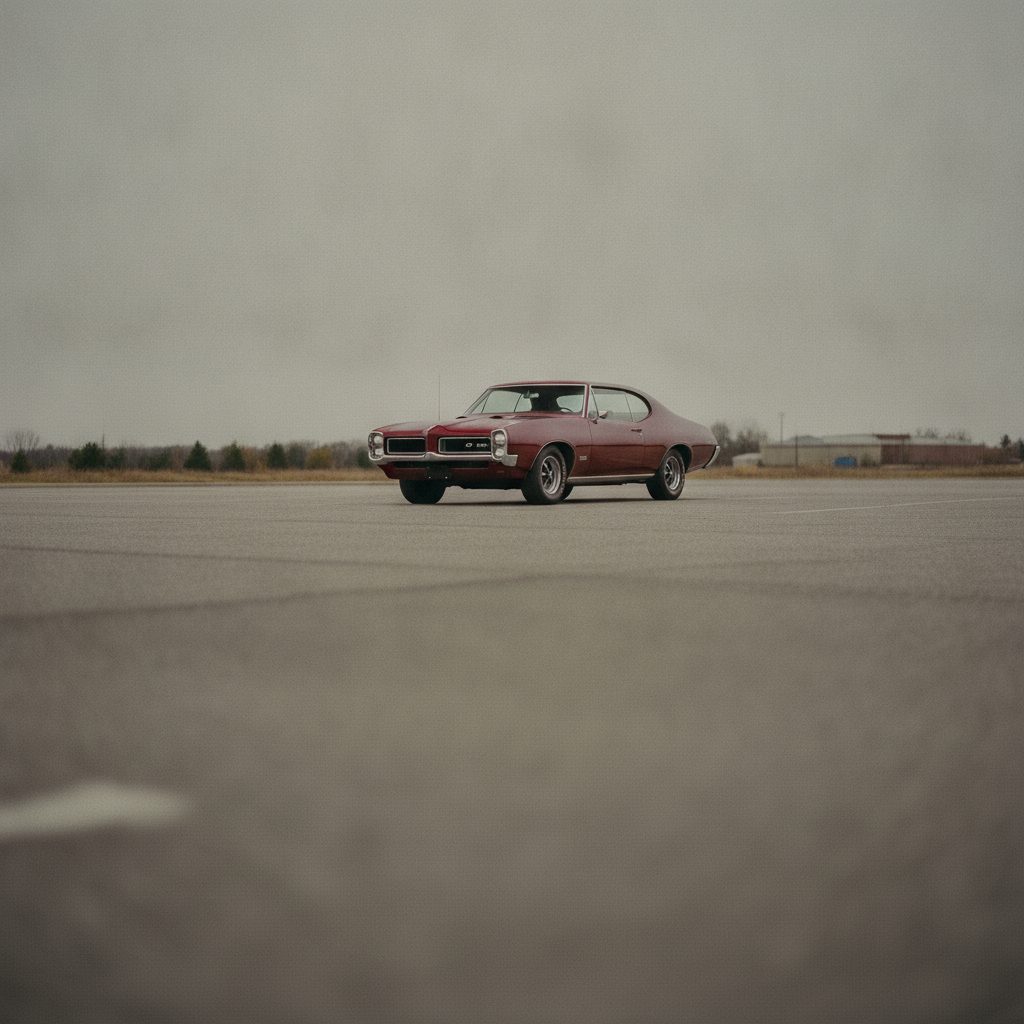
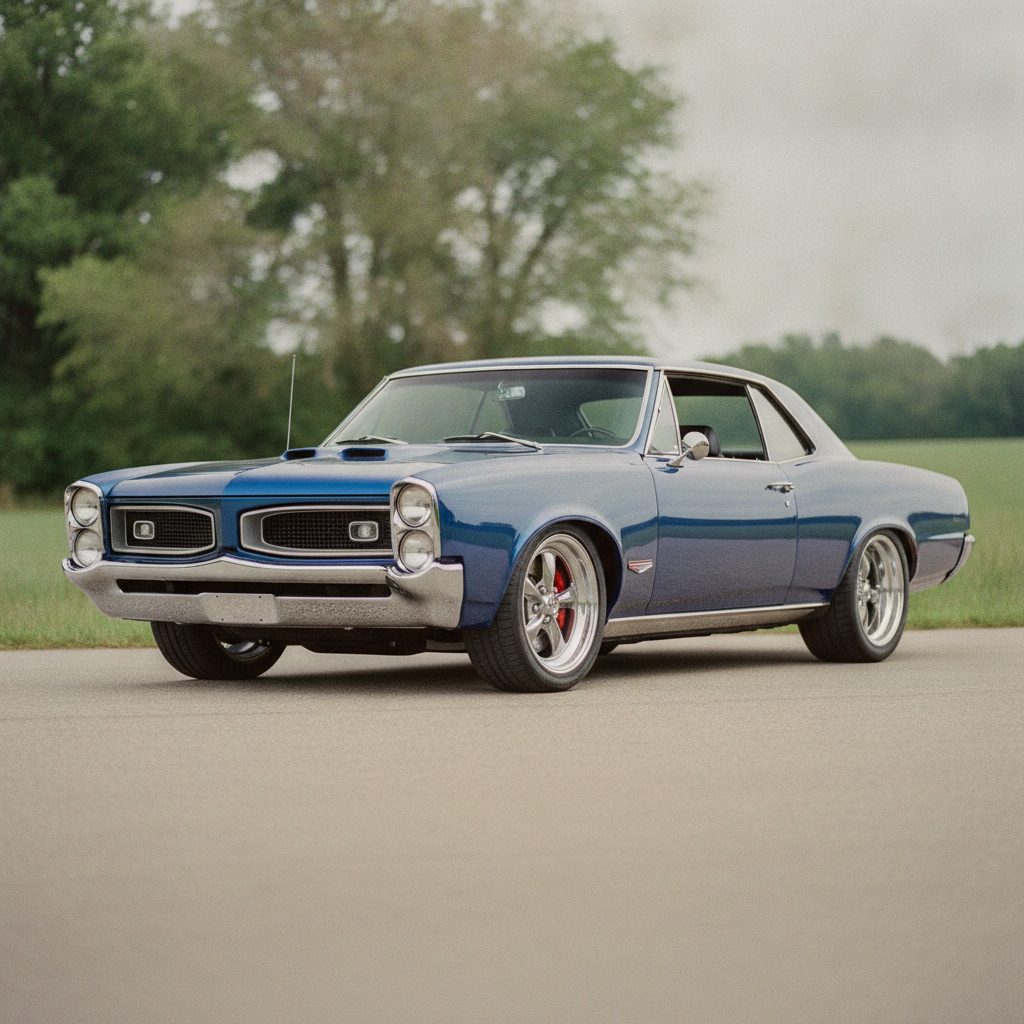
The 1969 Pontiac GTO Judge Started as a Joke
Pontiac set out to build a cheap answer to the Road Runner and accidentally built the loudest legend of the muscle era.
Pontiac set out to build a cheap answer to the Road Runner and accidentally built the loudest legend of the muscle era.
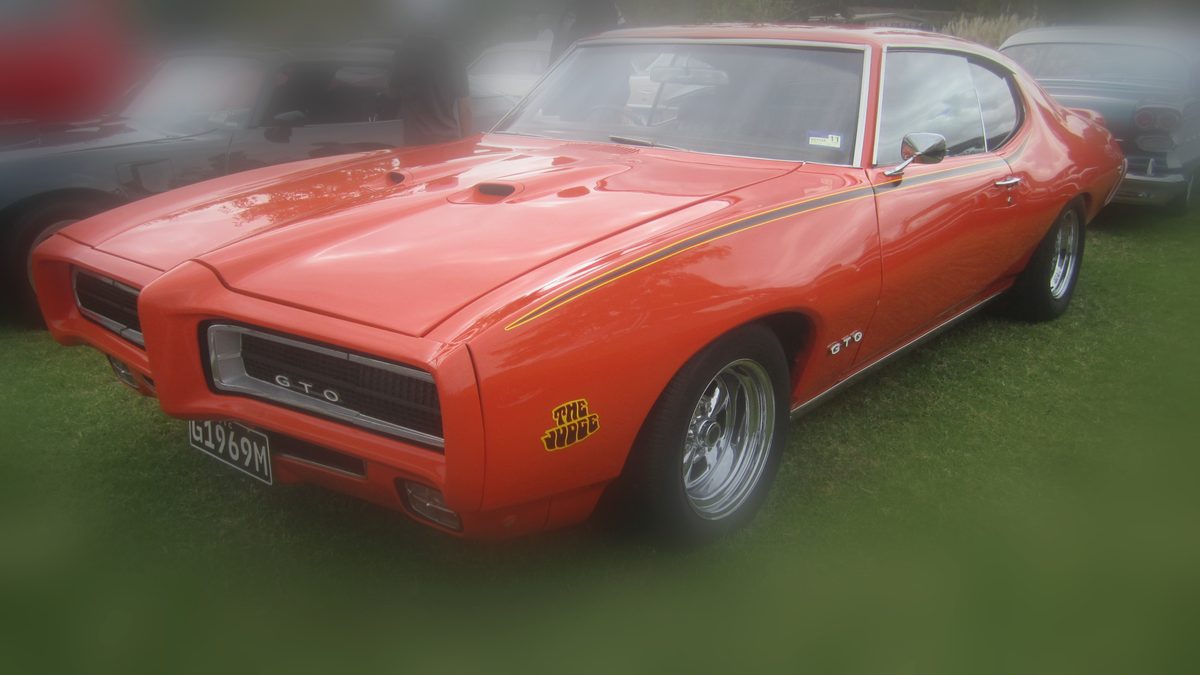
Pontiac spent the back half of 1968 trying to figure out how to build a cheap muscle car, and what came out the other end was the least cheap thing on the lot. The 1969 Pontiac GTO Judge landed on December 19, 1968 as option code WT1, wearing a five foot rear wing, cartoon decals and a name lifted straight off a network television sketch. It was supposed to undercut the Plymouth Road Runner. Instead it cost more than the GTO it was bolted to, and almost seven thousand people bought one anyway.
Nearly sixty years later the Judge is still the car people picture when someone says GTO, which is a strange fate for what began as a marketing compromise. Here is what the package actually included, what it cost, how many were built, and how you separate a documented car from a very convincing tribute.
The Judge was not a separate model. It was an option package, WT1, that you checked on the order form for a hardtop or a convertible. Everything underneath was still a GTO: the same 242 series body, the same perimeter frame, the same Endura nose that Pontiac had been beating with a sledgehammer in its television ads since 1968.
What the package bought you was a combination Pontiac would not let you build any other way. A Ram Air III 400 became the standard engine instead of an upcharge. A sixty inch airfoil went on the rear deck. Rally II wheels showed up without their trim rings, wearing wider rubber. Then came the part everyone remembers, the eyebrow stripes over the wheel arches in blue, red and yellow, and the psychedelic decals reading The Judge on the front fenders and on the right side of the spoiler.
The first cars were all Carousel Red, the loudest orange in the Pontiac catalog. Other colors opened up partway through the year, which is why a genuine 1969 Judge can turn up in green, blue or black and still be entirely correct. Anyone who tells you a Judge has to be orange is thinking of the first few weeks of production.
The reason any of this exists is Plymouth. The Road Runner arrived for 1968 as a deliberately stripped machine, a big engine in a cheap body with a cartoon bird on the fender, and it sold in numbers nobody at General Motors had forecast. Pontiac had spent the decade owning the segment it more or less invented, and it was suddenly being undercut on price by a car with rubber floor mats.
John DeLorean's group started work on an answer, a decontented GTO built to a price. That car never made it out of the building. By the time the accountants and the product planners were finished, the cheap GTO had turned into an expensive one, a $332 option on top of a car that already stickered around $3,150. The name survived from the original irreverent pitch. It came from the Here Come de Judge routine that Sammy Davis Jr. and Flip Wilson had turned into a national catchphrase on Rowan and Martin's Laugh-In.
So the joke landed backwards. Pontiac wanted a budget brawler, built a halo car instead, and the buying public turned out to want the halo car more. It is one of the few times in the muscle era that a product plan failed in a useful direction.
The standard engine was the 400 cubic inch Ram Air III, rated at 366 horsepower at 5,100 rpm and 445 lb-ft of torque at 3,600 rpm. That is a genuinely strong street engine with a functional hood scoop system, and it is what the overwhelming majority of Judges left the factory carrying.
Above it sat the Ram Air IV, also 400 cubic inches, rated at 370 horsepower at 5,500 rpm and the same 445 lb-ft, only now arriving at 3,900 rpm. The four horsepower difference on paper is one of the great insurance dodges of the era. The Ram Air IV had round port heads, a far more aggressive cam, a higher rpm ceiling and a completely different personality above 4,000 rpm. Pontiac quoted the number it needed to quote.
A three speed manual with the Hurst T handle shifter was standard equipment. Most buyers moved up to a four speed or the Turbo Hydra-Matic 400 automatic. The hood mounted tachometer, sitting out on the cowl where you could read it through the windshield, was an option and one of the defining tells of a well ordered car.
Pontiac set out to build the cheapest GTO it could and shipped the most expensive one instead.
Pontiac built 6,833 Judges for 1969: 6,725 hardtops and 108 convertibles. Against total GTO production for the year that is a thin slice, and the convertible number is the one that gets collectors out of their chairs.
The Ram Air IV cars are rarer still. Fewer than 300 of the 1969 Judges left the factory with that engine, split roughly 239 four speeds to 58 automatics. Stack the two scarce boxes together and you land on the combination that anchors the top of the market, a Ram Air IV convertible, of which only a handful were ever built.
The package thinned out quickly after that. For 1970 Pontiac moved 3,797 Judges including 168 convertibles, and for 1971 the entire run was 374 cars, 357 hardtops and 17 convertibles, with the last one built on January 31, 1971. Insurance surcharges, emissions work and a market losing patience with wings and decals finished it off. The Judge outlasted very few of its rivals, which is part of why the survivors matter.
This is the part the for sale listings skip. The VIN on a 1969 GTO tells you the car is a GTO. It does not tell you the car is a Judge. WT1 was an option package, and options do not live in the VIN, so a decal kit, a spoiler and a free afternoon are all that separate a plain GTO from something that photographs exactly like a Judge.
The proof is paperwork. Pontiac's factory billing history, available through PHS Automotive Services, lists the options a specific VIN was invoiced with, and it is the document a serious buyer asks for before anything else. It is the Pontiac equivalent of the Marti Report that Ford people lean on. No billing history, no premium, no argument.
Beyond the paper, look at what a quick conversion usually gets wrong: the hood tach wiring and the cowl hole it needs rather than a pod bolted to the sheet metal, Rally II wheels wearing no trim rings, spoiler mounting holes in the factory locations rather than freshly drilled ones, and Ram Air hardware that is actually plumbed instead of decorative. None of that replaces documentation. It only tells you whether the seller has done any homework.
Tributes are not a dirty word around here. A well built one is an honest way to get the experience without the seven figure anxiety, and we have made that case before in our piece on building a Judge tribute the right way. The only sin is selling one as something it is not.
Judge values sit meaningfully above a comparable standard GTO, and the spread between a documented car and an undocumented one is wider than most first time buyers expect. The hierarchy is consistent. Convertibles sit above hardtops. Ram Air IV sits above Ram Air III. A four speed generally sits above an automatic. An original drivetrain sits above a correct replacement, and a car with its billing history sits above an identical looking car without it.
Carousel Red still carries a small premium because it is the color the package was born in, though a documented car in a rarer factory shade can beat it. What the market punishes is ambiguity: repainted, restamped, undocumented cars with a good story attached. When a genuinely correct example turns up at a major sale it tends to reset expectations for everyone else, which is exactly what happened with the record setting Judge we covered earlier this year.
If you are shopping the wider field rather than one nameplate, our guide to the classic muscle car landscape lays out how the Pontiac cars sit against the Chevrolet, Ford and Mopar competition of the same years.
There is no single number, because condition and documentation drive the result more than the badge does. Convertibles, Ram Air IV cars and four speeds bring the strongest money, and a car with PHS billing history commands a clear premium over an identical looking car without it. Undocumented cars trade much closer to standard GTO territory.
The name came from the Here Come de Judge routine popularized on Rowan and Martin's Laugh-In, one of the most quoted catchphrases in America in 1968. Pontiac wanted something irreverent for what began as a budget performance package, and the joke stuck around long after the budget half of the plan died.
Pontiac built 6,833 for 1969, 3,797 for 1970 and 374 for 1971, so roughly 11,000 across the entire run. Within that, the 108 convertibles built in 1969 and the fewer than 300 Ram Air IV cars are the genuinely scarce combinations, and a Ram Air IV convertible is rarer than either on its own.
The WT1 package added $332 to a GTO with the standard Ram Air III engine, or roughly $390 with the Ram Air IV. A 1969 GTO hardtop started around $3,150 before options, so a modestly equipped Judge landed near $3,500 before the buyer added a hood tach, a four speed or air conditioning.
Photograph: a 1969 GTO Judge in Carousel Red, by Sicnag, licensed CC BY 2.0 via Wikimedia Commons. Depth of field and grading applied in house.
The muscle world, every morning. Auctions, builds, reveals. Free.