Classic Muscle Cars: The Whole Field, Make by Make
A field guide to every classic muscle car family that matters, from the Big Three heavyweights to the outliers most lists forget.
A field guide to every classic muscle car family that matters, from the Big Three heavyweights to the outliers most lists forget.
Search classic muscle cars and you mostly get inventory. Listing walls, a ten car slideshow ranked in an order nobody agrees with, and an encyclopedia table of engine codes. What almost nobody publishes is the thing an enthusiast actually wants, which is a map of the whole field: which families exist, what separates them, and how to tell a real one from a good looking tribute. That is what this guide is.
The era runs roughly from 1964 to 1974. Before it you have hot rods and full size cars with big engines. After it you have emissions plumbing and horsepower ratings that read like typos. Inside that ten year window, five corporations built dozens of overlapping models, and the overlap is exactly what makes the field confusing. Here it is, sorted by the people who built the cars.
The working definition is narrow on purpose. A muscle car is an intermediate body, an oversized V8 lifted out of something bigger or more expensive, rear wheel drive, and a price a factory worker could actually reach. That is why a Corvette is a sports car and a base Mustang is a pony car. We settled that argument in full in our guide to what actually makes a muscle car, so treat it as the entry requirement here.
Classic adds the second filter, which is the calendar. Most of the hobby treats 1964 through 1974 as the window, bookended by the Pontiac GTO at one end and the death of the big block option sheets at the other. The 1980s revival cars, the GNX and the 5.0 Mustang among them, are a separate category and deserve their own guide.
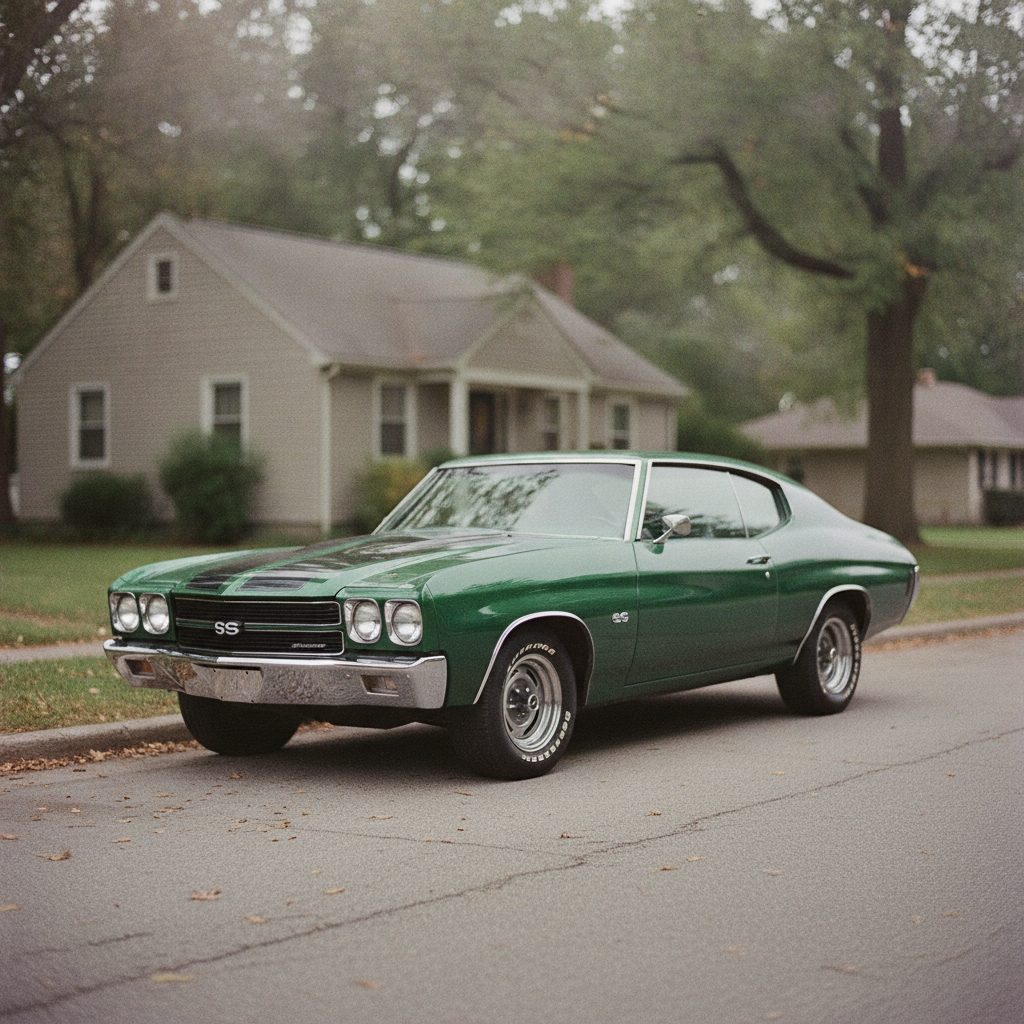
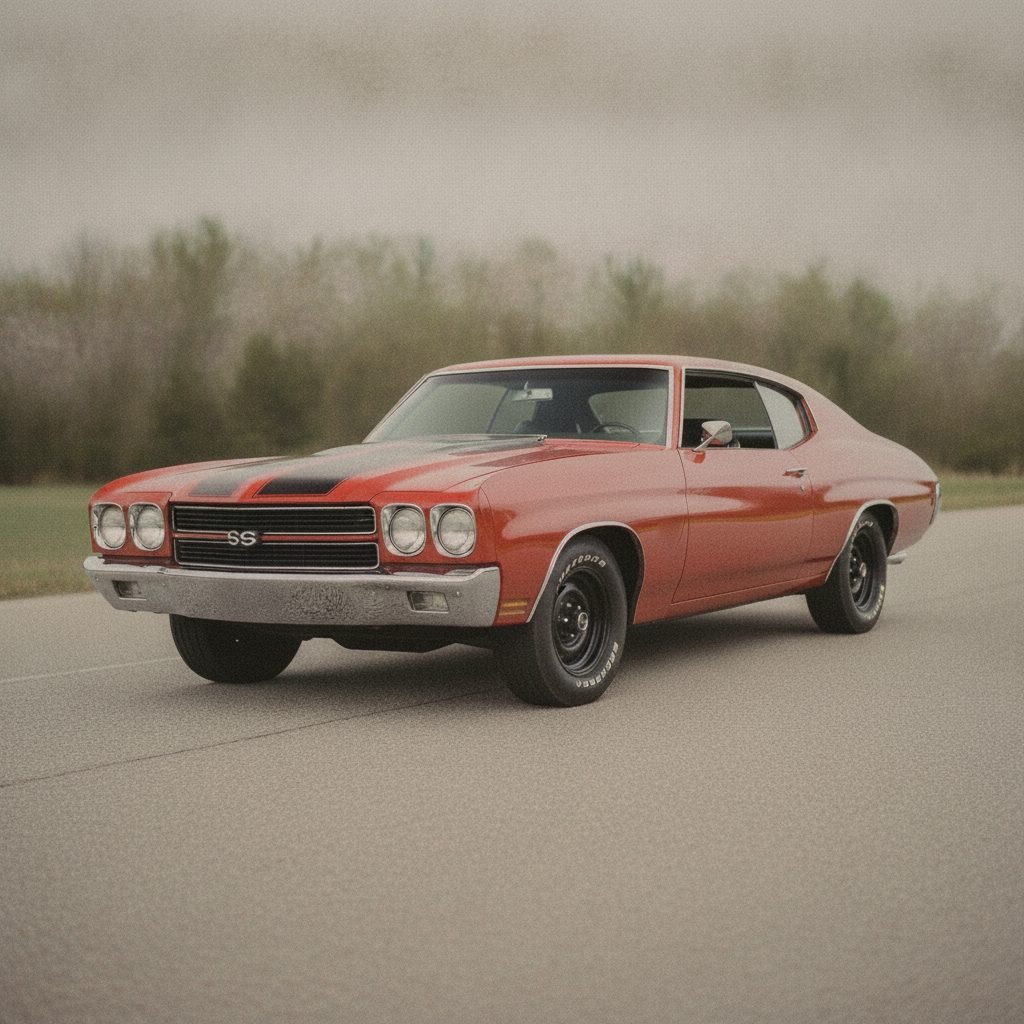
Chevrolet built the highest volume classic muscle cars of the era, and the Chevelle SS is the spine of the catalog. The SS 396 became its own model in 1966. The 1970 car is the one people picture, because GM finally let its intermediates past 400 cubic inches that year and the SS 454 arrived in two flavors. The LS5 was rated at 360 horsepower. The LS6 was rated at 450, the highest figure Chevrolet ever printed on a factory muscle car window sticker, and we went deep on it in the story of the LS6 454.
Around the Chevelle sits a family that shares most of its parts. The Camaro answered the Mustang in 1967 with the small block Z/28 for road racing and the SS 396 for the street, plus a small run of COPO cars built with the 427 that no dealer was supposed to be able to order. The Nova SS put a 396 in a compact. The El Camino SS did the same trick with a pickup bed behind it. Same engines, four different arguments.
Ford's problem was that its most famous car was not really a muscle car until it grew. The Mustang landed in 1964 as a style purchase with a six cylinder base engine, and it took the 390, then the 428 Cobra Jet in 1968, to turn it into a genuine threat. The Boss 302 and Boss 429 followed in 1969, both built to make racing engines legal rather than to sell in volume, and the Mach 1 finally gave the range a proper performance trim.
The intermediate Fords are the ones collectors still underrate. The Fairlane and Torino carried the same 390 and 428 Cobra Jet engines in a bigger, calmer body, and the Torino Talladega existed purely so Ford could put a slippery nose on the superspeedways. Mercury built the same cars with better trim and worse luck. The Cyclone Spoiler was the Talladega's twin, and the Cougar Eliminator remains one of the cheapest routes into a 1970 car with a Boss engine in it.
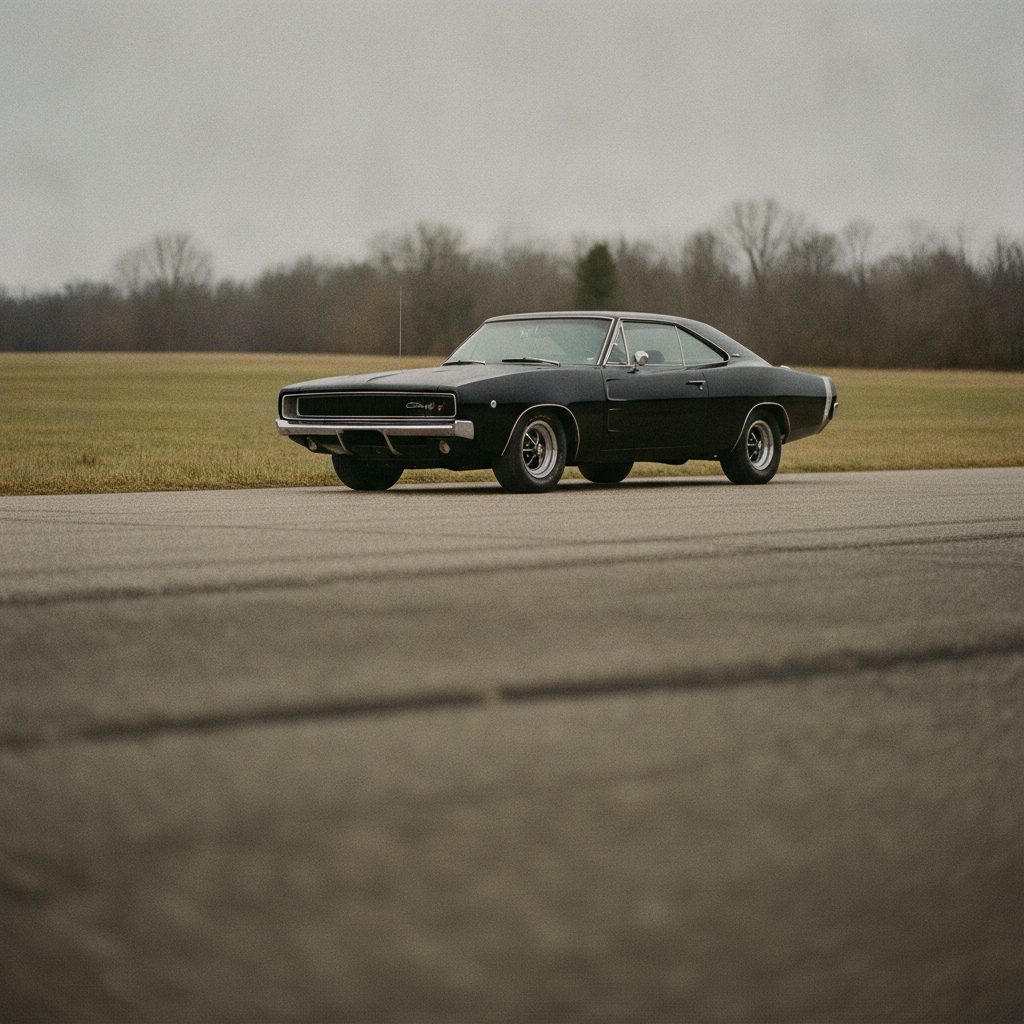
Chrysler came late and then refused to be subtle about it. The B body cars are the core. Dodge sold the Charger, the Coronet R/T, and the budget Super Bee, while Plymouth sold the GTX and the Road Runner, which was the same idea with everything a buyer did not need to go fast deleted. The Charger is the shape everyone pictures, and the two aero cars built off that platform, the 1969 Charger Daytona and the 1970 Plymouth Superbird, are still the most extreme machines any American factory ever sold to the public.
The engine ladder is what people actually shop. The 383 was the everyday big block. The 440 Magnum was the sensible fast one, and the three carburetor version, sold as the Six Pack at Dodge and the Six Barrel at Plymouth, was the bargain of the era. Above all of it sat the 426 Hemi, rated at 425 horsepower, expensive when new and rare because of it. In 1970 the E body Challenger and Barracuda arrived to fight the Camaro and Mustang head on, which is why most Mopar people will tell you 1970 was the peak.
Strip away the stripes and a classic muscle car is a plain family sedan that got handed the engine from something far more expensive. Everything else is detail.
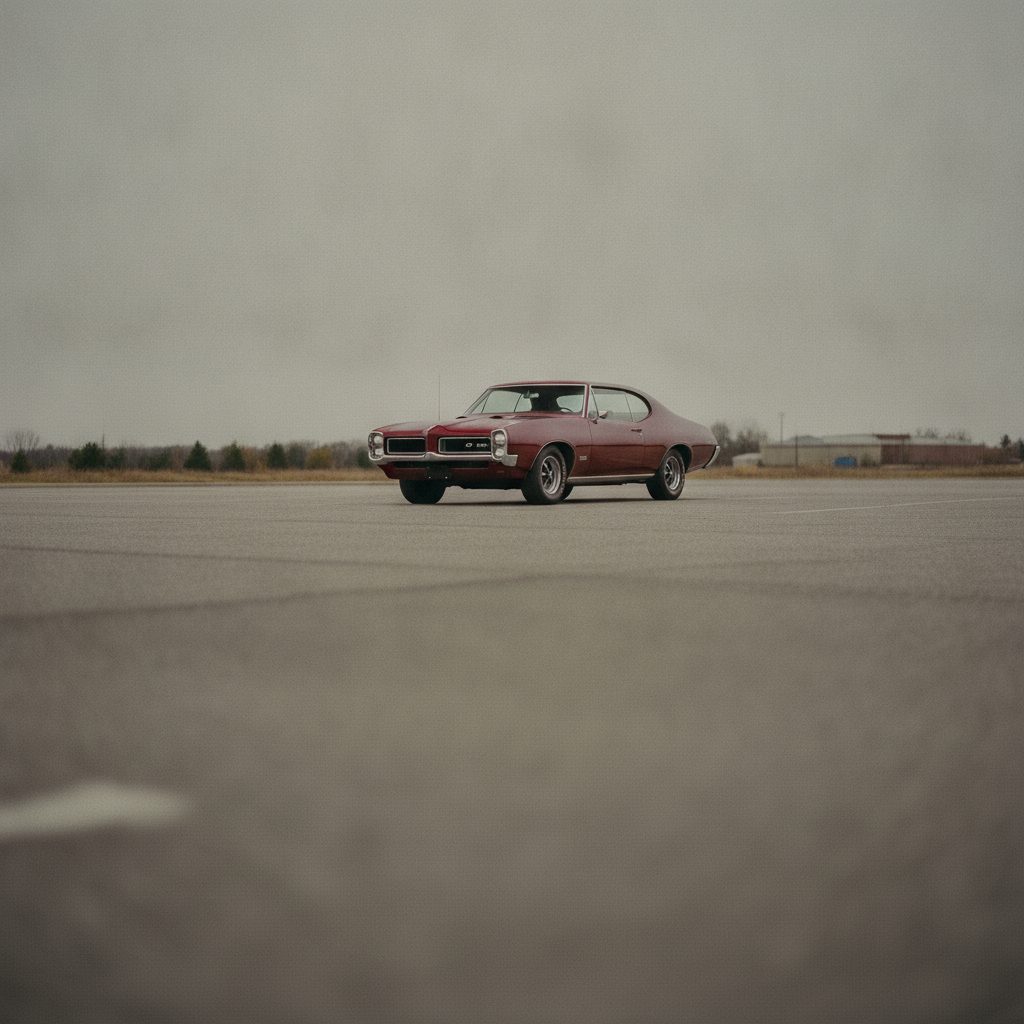
Pontiac started all of it. The 1964 GTO was a way around a corporate rule limiting engine size in GM's intermediates, and the trick was to sell the 389 as an option box on the Tempest LeMans instead of as a model of its own. It worked well enough that every division copied the homework. The Judge followed in 1969 with Ram Air engines and a paint scheme that looks like somebody lost a bet, and the Firebird Trans Am gave Pontiac a road course car to sell beside it.
Oldsmobile and Buick built the grown up versions. The 4-4-2 started as a package on the Cutlass and grew into the division's performance line, with the W-30 cars getting cold air induction and a carefully assembled engine. Hurst built 455 powered Oldsmobiles in 1968, outside the corporate rule book, because an outside shop was not bound by it. Buick then produced the quietest surprise of the era in the 1970 GS 455 Stage 1, a car with enough torque to embarrass Hemi badges at a stoplight while wearing wood trim and a bench seat.
American Motors had no money and built some of the best stories anyway. The two seat AMX was the only short wheelbase American two seater of the era that did not come from Chevrolet. The Javelin was the pony car, and it went on to win in Trans Am road racing against factory teams with far deeper pockets. The SC/Rambler of 1969 was a compact with a 390 crammed into it and a paint job visible from orbit.
The 1970 Rebel Machine closes the list, an intermediate with a 390 rated at 340 horsepower and a hood scoop with a tachometer built into it. These cars sat outside the mainstream then and they still trade below the Big Three equivalents now, which makes them the smart end of the field for anyone buying with their own money.
This is the part the listing pages never write, and it is the part that decides whether you overpay. Most of these cars were option packages rather than separate models, which means the paperwork matters more than the badges. A 1970 Chevelle SS is the cleanest example of the trap. The SS was an option code, not its own VIN series, so no amount of reading the VIN will prove a Chevelle is a real SS. You verify it with the build sheet, the cowl tag, and the Protect-O-Plate, and a seller who cannot produce any of the three is selling you a well built tribute.
Chrysler made it easier. On 1966 through 1971 cars the fifth character of the VIN is the engine code, so an R in that slot means the car left the factory with a 426 Hemi, and the fender tag spells out the rest of the order. Pontiac is split down the middle. A 1964 or 1965 GTO was an option on a Tempest and cannot be proven from the VIN, while every GTO from 1966 onward had its own series and can. Ford owners have the easiest time of anyone, because the factory records from 1967 on are available through a Marti Report from Marti Auto Works, which lists how the car was built and how many were built like it.
None of this makes a tribute car a bad buy. A clone with a straight chassis and honest paint is often the smarter way to actually drive one of these, and it costs a fraction of a documented car, which is a theme running through our guide to the cheapest muscle cars worth owning. It only becomes a problem when a tribute is priced like the real thing. Ask for the documents early, and read the seller's reaction as carefully as you read the paperwork.
There is no single answer, but the 1970 Chevelle SS 454 LS6 and the 426 Hemi cars from Dodge and Plymouth take most votes on raw performance. If the measure is influence instead of speed, the 1964 Pontiac GTO wins easily, because every other car on this list exists because the GTO sold.
The big three refers to the manufacturers rather than the cars: Ford, General Motors, and Chrysler. In muscle car conversation people usually shorten it further to Ford, Chevrolet, and Mopar, with Mopar covering both Dodge and Plymouth. American Motors is the fourth player almost everyone forgets to count.
The 1971 Hemi Cuda convertible is the usual answer, since only a handful were built and they trade in the millions. Other contenders include the 1969 Camaro ZL1 with its aluminum 427 and the 1970 Chevelle LS6 convertible. All three are rare for the same reason: they were brutally expensive when new.
Most of the hobby uses 1964 to 1974. The start is the Pontiac GTO, and the finish comes as emissions rules, insurance surcharges, and the 1973 fuel crisis strip the option sheets bare. Cars built after that window are usually called modern or revival muscle rather than classic.
The muscle world, every morning. Auctions, builds, reveals. Free.