Dana 60 Identification, and the Test Everybody Gets Wrong
Almost every guide on page one was written for a four wheel drive front axle, which is why none of them settle what is bolted under a muscle car.
Almost every guide on page one was written for a four wheel drive front axle, which is why none of them settle what is bolted under a muscle car.

Type dana 60 identification into a search box and page one hands you a four wheel drive answer. Kingpin knuckles instead of ball joints. Three u bolts instead of four. A 60F stamp on the front of the housing. Every one of those tests is real, and every one is useless to the person who needed the answer, because that person is on a creeper under a B body looking at the back of a car that has no front axle at all.
The Dana 60 that matters to this magazine is a rear axle. Chrysler bolted it under its heaviest hitting Dodge and Plymouth passenger cars from 1966, and it has been the most swapped, most claimed and most misread component in Mopar verification ever since. It is worth real money. It is also worth knowing that finding one under a car proves far less than the forums tell you.
Run the search and count the domains. Three forum threads. A Facebook group post. Two parts sellers with a tech page bolted to a shopping cart. A Jeep board. And Wikipedia three separate times, once for the Dana 60 and then again for the Dana 70 and the Dana 50, neither of which anybody asked about.
Wikipedia is the only established publisher on that page, and its application list rewards a close read, because Chrysler passenger cars are not on it. The entry covers trucks and commercial vehicles. So the one authoritative result on page one is silent on the exact use that sends most people searching, and the rest of the field is answering a Jeep question. Everything below is written for the car under the cover, not the truck in the driveway.
A Dana 60 carries a 9.75 inch ring gear. A Dana 44 carries roughly 8.5 inches. A Dana 70 about 10.5. Those are enormous gaps in axle terms, better than an inch in each direction. Pull the cover, put a tape across the ring gear, and the argument is over in ten seconds.
Here is the wrinkle nobody on page one reconciles. Wikipedia publishes nine and three quarter inches, and so does the most detailed Mopar reference on the subject. Torque King, a parts side tech page ranking for the same term, publishes nine and seven eighths. That is an eighth of an inch of disagreement on the axle's single defining specification, sitting in plain view on one results page, with no page acknowledging the others. In practice it changes nothing, since you are separating 8.5 from 9.75 from 10.5. As a signal about how carefully this material was assembled, it tells you plenty.
This is the shortcut everybody repeats, and Wikipedia leads with it: straight axle tubes, a ten bolt asymmetrical cover, a 60 cast into the housing. Two of those three are worth having. The bolt count is not.
The Dana 44 uses a ten bolt cover. So does the Dana 70. So does the Dana 80. Torque King's own chart, ranking on that very same search, gives the Dana 44 cover as roughly 10 and three eighths by 9 and three eighths inches and puts the 60 and the 70 both around twelve inches tall, separated by about a quarter inch of flange height. Counting to ten tells you that you are looking at a Dana product. It does not tell you which one, and two pages on the same screen contradict each other without either noticing.
The asymmetry is the part worth keeping. A Dana 60 cover is visibly lopsided side to side rather than evenly shaped, and the 60 cast into one of the reinforcing gussets is a genuine tell when it is legible. Cast marks vanish under forty years of undercoating, though, so absence is not evidence.
Counting cover bolts tells you that you are looking at a Dana. It does not tell you which Dana, and the same pages that teach the bolt count publish the dimensions that disprove it.
The real answer is stamped into the metal. Every Dana 60 built by Dana carries a bill of materials number, the BOM, on the back of the right hand axle tube, two to three inches outboard of the centre section. It runs six digits, a dash, then one or two more, and on passenger car units it generally opens with 60 or 61.
That number is the assembly's birth certificate. Looked up against Dana's published lists it returns the original ratio, the carrier type, the spline count and the intended application, which is more than any visual test will give you. It is also the hardest thing on the axle to read. The characters stand about an eighth of an inch tall, they are shallow, and they live on the surface most likely to be caked in fifty years of road film. Wire brush, degreaser, then a light held at a low raking angle across the tube. Not a flashlight pointed straight at it.
Two limits, and both matter for verification. The BOM says what the assembly was when it left Dana, not what is inside it today. Ring and pinion, carrier and axle shafts all change without disturbing the stamp, so a BOM decoding to 3.54 gears means the axle was born with 3.54 gears and nothing more. It is also an axle number, not a car number. It carries no VIN, so it can never tie the axle to the car it sits under.
Inboard of the BOM, on the same tube, sits the build date, written as month, day and year, sometimes with a trailing letter such as A, B or C that is usually read as a shift or line marker. A date falling a few weeks ahead of the car's own build date is exactly what an original axle should look like. A date falling after it is proof of a replacement, and that single check is the quickest way to separate an honest survivor from a well told story.
It only works in one direction. An early date confirms nothing, because nothing stops a correct period axle from a donor car being fitted last winter. Dates disqualify. They do not certify. That asymmetry runs through every code stamped on a Chrysler product, which is why the Big Block decoder states what each field cannot prove alongside what it can.
Ask around long enough and somebody will tell you that 35 splines means a Dana 60. It does not. Wikipedia lists inner shaft splines across the Dana 60 family at 16, 23, 30, 32, 33 and 35, with aftermarket shafts running out to 40. Early units used a 23 spline shaft an inch and a half in diameter, and the move to 35 splines arrived later, turning over abruptly in the truck line between 1968 and 1969.
So counting splines tells you how strong that shaft is. It does not identify the axle model, and it cannot be read backwards into a model year without knowing which line the assembly came off. One genuinely useful detail while the shafts are out: on a Dana 60 the right shaft is always shorter than the left, so unlike a Chrysler 8 and three quarter the two will not swap sides.
Chrysler put the Dana under its heaviest drivetrains from 1966 onward, and the four speed cars are where it turns up. Hemi and 440 manual transmission cars are the classic pairing, with passenger car ratios running 3.54 or 4.10, while the truck and van catalogue stretched all the way out to 5.86.
Which is where the verification myth gets going. A Dana under a Charger or a Road Runner is consistent with a big engine and a manual box. It is not proof of one. This is the most desirable and therefore most transplanted rear axle in the Mopar hobby, and the car wearing it today may well have received it in 1998. Read the myth backwards and it gets worse: a genuine Hemi car ordered with the automatic left the factory on an 8 and three quarter, so the absence of a Dana disproves nothing either.
The axle is one line of evidence, and it has to agree with the fender tag, the broadcast sheet and the build dates before it means anything. Same discipline the 9 inch Ford demands on the blue oval side. If you are choosing a ratio rather than authenticating one, our guide to rear end gears is the better place to start, because for a street car the Dana is usually more axle than the job needs.
Measure the ring gear if the cover is off. A Dana 60 is 9.75 inches, a Dana 44 about 8.5, a Dana 70 about 10.5. With the cover on, look for a lopsided ten bolt cover, straight tubes and a 60 cast into a gusset, then confirm with the BOM stamped on the right axle tube.
On the back of the right hand axle tube, two to three inches outboard of the centre section, with the build date just inboard of it. The characters are about an eighth of an inch tall and very shallow, so clean the tube properly and hold a light at a low angle across the metal rather than straight at it.
No. The Dana 44, 60, 70 and 80 all use ten bolt covers, so the count identifies the manufacturer and nothing else. A Dana 60 cover is noticeably asymmetrical side to side and stands around twelve inches tall against roughly ten inches for a Dana 44. Measure the ring gear if you want certainty.
No. The Dana went behind the four speed manual cars, while Hemi cars ordered with the automatic left the factory on the Chrysler 8 and three quarter. It was fitted to 440 cars too, so a Dana proves neither a Hemi nor originality. Check it against the car's paperwork.
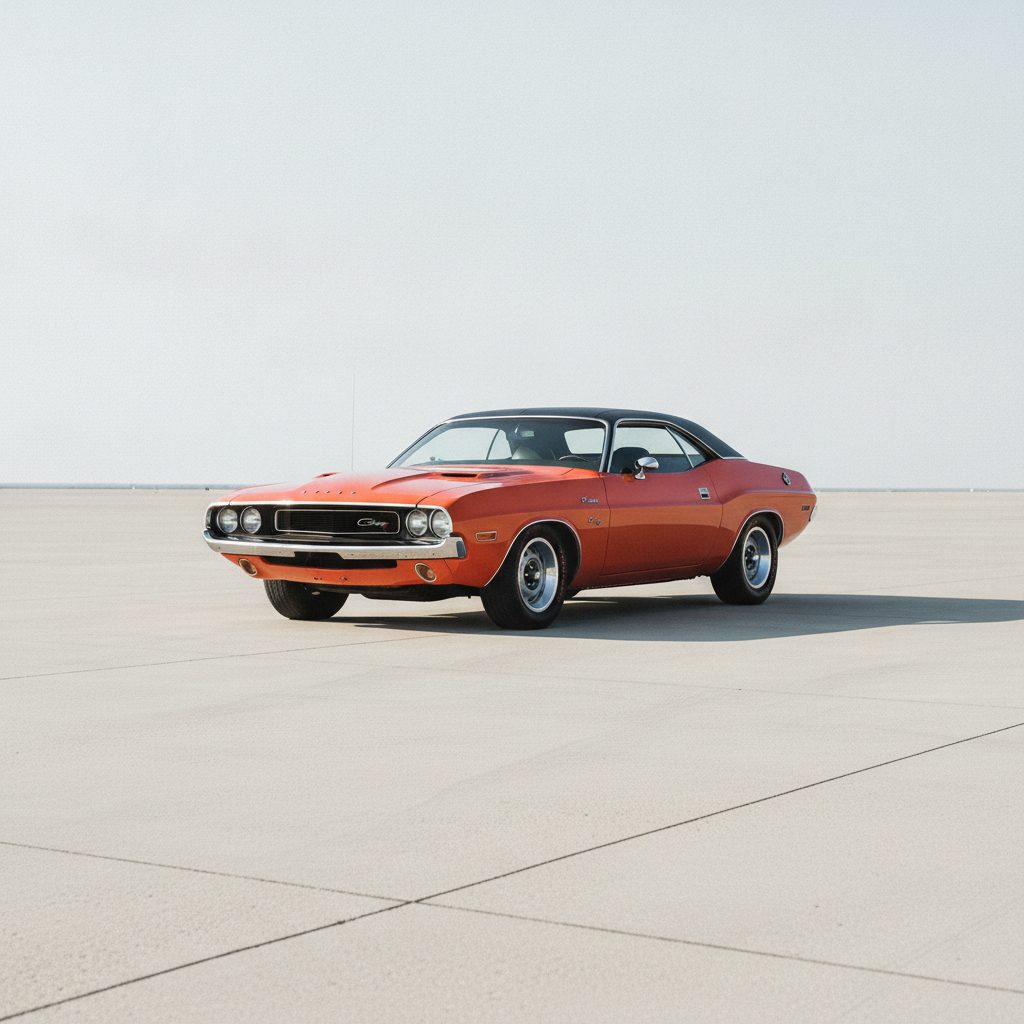
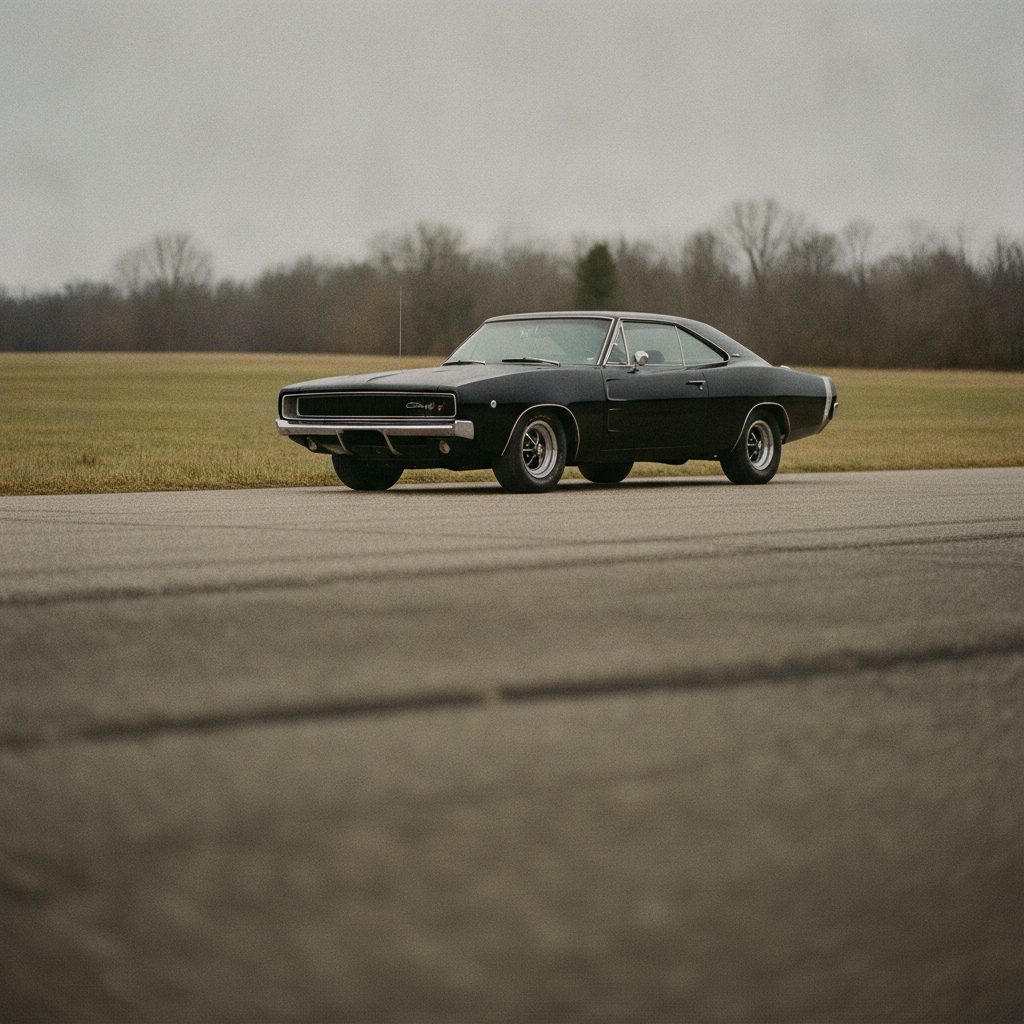
Specifications were cross checked against the Wikipedia Dana 60 entry, the Dana 60 reference at mopar1.us and the Torque King 4x4 axle identification guide, which disagree on ring gear diameter as noted above. The cover image is an illustration produced in house, not a photograph of a specific vehicle.
The muscle world, every morning. Auctions, builds, reveals. Free.