GM RPO Codes: What They Prove
The three character option codes decide what a classic GM muscle car is worth, and almost every guide online sends you looking in the wrong place.
The three character option codes decide what a classic GM muscle car is worth, and almost every guide online sends you looking in the wrong place.

Ask a room full of GM owners where to find the option codes and you will get the same answer every time. Open the glovebox, look for the white sticker. That answer is perfectly correct for a 2004 Silverado and completely useless for a 1970 Chevelle, because GM did not fit that sticker until 1984. If you are trying to verify a muscle car built between 1964 and 1972, the GM RPO codes you need were never printed on a label anywhere on the car.
This matters more than any other piece of paperwork on a classic GM car, because the codes are the difference between a Malibu with a big block in it and a real SS454. Same body, same paint, wildly different car. Yet the pages that rank for this subject are forum posts full of late model truck codes and lookup tools that quietly stop working before 1985. Here is what the codes actually are, where they live on a car old enough to matter, and what they can and cannot prove when money is on the table.
RPO stands for Regular Production Option. It is a standardized three character alphanumeric code that General Motors uses to designate an option, a package, or a factory modification. One code, one thing the factory did. A2M is a set of power windows. L78 is a 396 cubic inch V8 rated at 375 horsepower. Z28 is a whole performance package. The system runs across every GM division, so a Buick, an Oldsmobile, a Pontiac and a Chevrolet all speak the same alphabet even though they share almost no parts.
The codes were built for the assembly plant and the parts counter, not for enthusiasts, which is why they read like inventory control rather than marketing. Chevrolet sold you an SS454. The plant built RPO Z15. The gap between those two names is where most verification arguments start.
The Service Parts Identification label, the white sticker everyone tells you to look for, has been fitted to all GM vehicles since 1984. It lists the RPO and RPA codes for that specific car so a parts counter can order the right components without guessing. It is genuinely useful. On a late model truck it is the fastest way to settle what the vehicle left the plant with, and on the newest cars the same information now hides behind a QR code.
None of that helps a 1969 Camaro. There was no SPID label on a 1964 to 1972 GM car, so anyone telling a classic owner to check the glovebox is repeating advice that predates their car by more than a decade. This is the single most repeated error on the subject, and it sends people looking for a sticker that was never applied. If the car has one, either somebody added it or the car is newer than they told you.
On a muscle era car the codes live on paper and on metal, not on a decal. The build sheet, sometimes called the broadcast copy, is the sheet the assembly line worked from, and it lists the codes in plant order. Cars left the factory with copies stuffed wherever a worker put them down: under the rear seat, in the seat springs, on top of the fuel tank, behind a door panel, under the carpet. Finding one is luck. Finding two is a good day, because they should agree.
The Protect-O-Plate is the other original document, a small metal plate issued with the owner's manual from the mid 1960s into the early 1970s. It carries coded build information stamped into the plate, which makes it far harder to fake than a printed sheet. The dealer invoice and the original window sticker, when a car still has them, are the cleanest evidence of all because they list the options by code and by price.
What will not help is the cowl tag, and this is where a lot of hopeful sellers overreach. A pre 1972 GM cowl tag records body plant data such as build date, body style, paint and trim. It does not encode the engine, and on a Chevelle it does not encode the SS package. A cowl tag alone can never make a car an SS. Neither can a block casting number, which identifies the casting rather than the finished engine, a distinction we worked through in detail in our guide to big block Chevy casting numbers.
A cowl tag tells you where the body was built. It has never told you what was under the hood.
Engine RPOs are the codes that change the value of a car by a factor rather than a percentage. L78 is the 396 rated at 375 horsepower, the solid lifter big block that turned an ordinary intermediate into a street car people still argue about. L72 is the 427 rated at 425 horsepower, an iron block engine that was normally a Corvette item. LS5 is the 454 rated at 360 horsepower. LS6 is the 454 rated at 450 horsepower, and it is the code that made the 1970 Chevelle the high water mark of the whole era, a car we covered in our piece on the LS6 454 and its short reign.
The rating gap between LS5 and LS6 was not marketing. The two engines redline in different places, 5,500 rpm for the LS5 and 6,500 rpm for the LS6, which tells you everything about how differently they were built. Anyone selling an LS6 should be able to show you paperwork, not just a valve cover and a story. The engine is the easiest thing on a classic GM car to swap and the hardest single code to verify from the car alone.
Package codes bundle an engine with suspension, trim and badging, and they are the codes that give a car its name. RPO Z16 created the 1965 Chevelle Malibu SS 396, with the L37 version of the 396 rated at 375 horsepower and a mandatory M20 four speed. Chevrolet built 201 of them, which is why the Z16 sits in a different conversation from every other Chevelle.
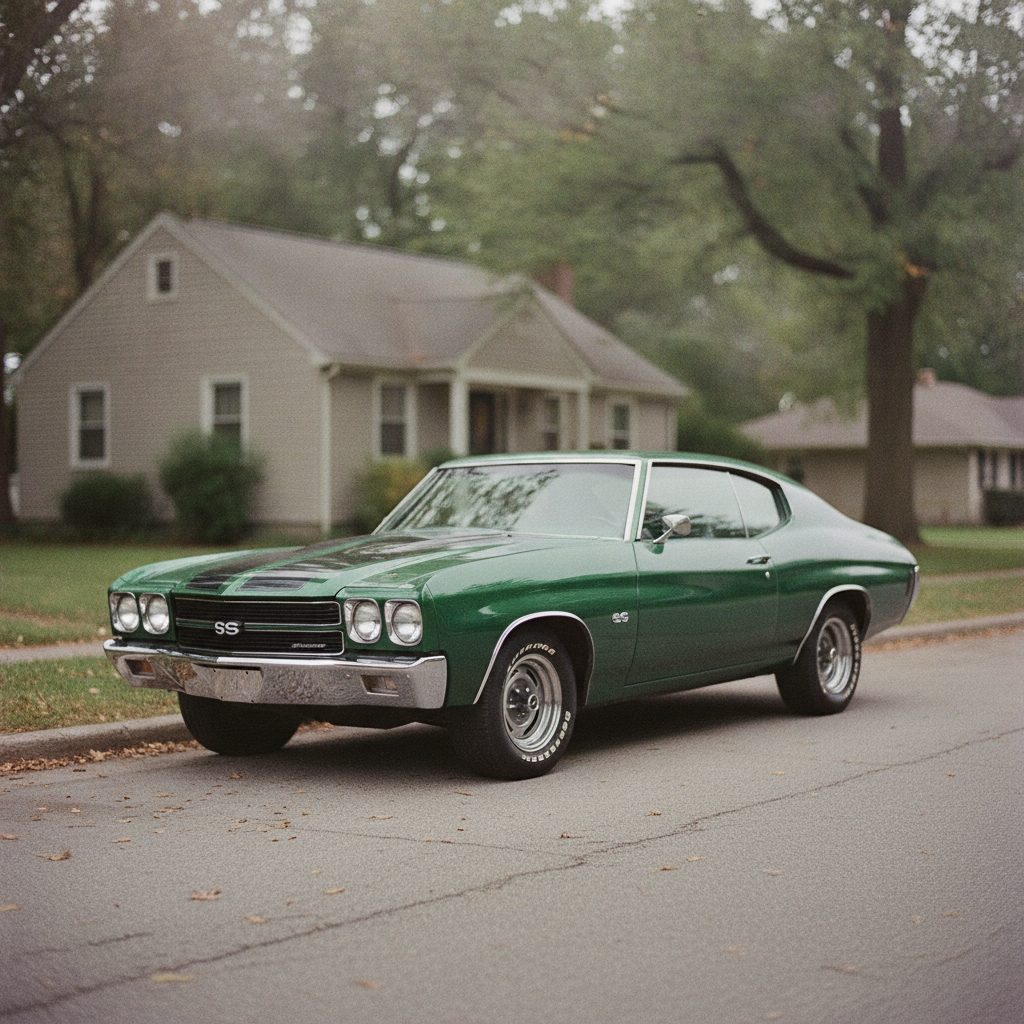
By 1970 the Chevelle carried two SS codes at once. RPO Z25 was the SS396. RPO Z15 was the SS454, which took the same equipment and swapped the engine. Chevrolet built 8,773 Z15 cars, split 4,298 with the base LS5 and 4,475 with the optional LS6. Read that split twice, because it means an LS6 car is not the freak outlier people assume, but it also means more than half of all SS454s never had one. If you want the wider model story, our Chevelle hub tracks the years side by side.
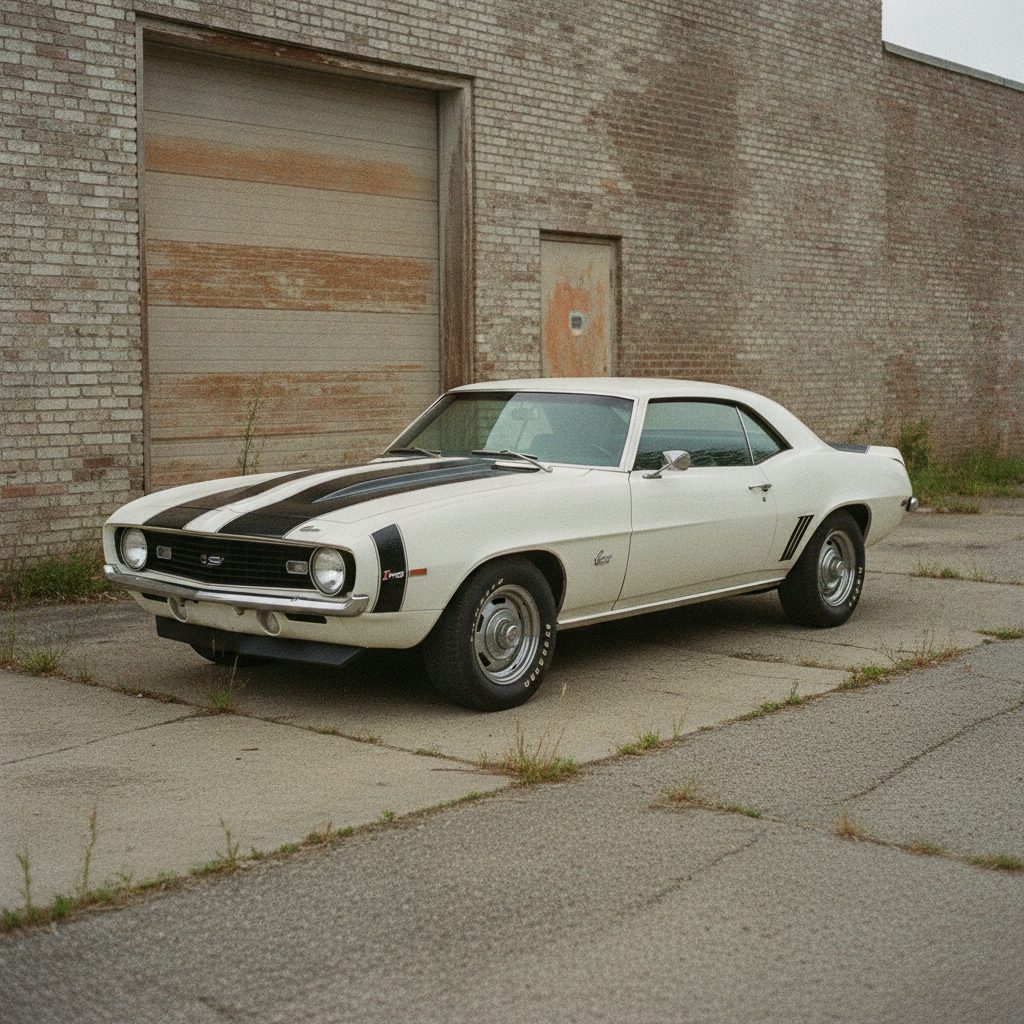
On the Camaro, RPO Z28 is the special performance package, which is why the correct answer to the question people keep asking is yes, Z28 really is an option code and not just a badge. We went through what that package included and what it did not in our guide to the 1969 Camaro Z28. Pontiac used the same logic with different letters. The Judge was ordered as WT1, a $337 package on the 1969 GTO that included the Ram Air 400 rated at 366 horsepower, the handling package, Rally II wheels and the rear spoiler. Oldsmobile ran its performance options under W codes, and W-30 on the 1970 442 meant a blueprinted 455 with cold air ducted from the bumper scoops, rated at 370 horsepower against the standard 365.
The rarest GM muscle cars did not come from the option book at all. COPO stands for Central Office Production Order, a dealer facing process meant for fleet and special equipment orders, and it was used to build cars the RPO system was not allowed to build. COPO 9561 put the L72 427 into the 1969 Camaro, roughly a thousand of them. COPO 9560 put the all aluminum ZL1 427 into 69 Camaros, an engine rated at 430 horsepower on paper and considerably more in reality.
This is the distinction that trips up every generic decoder online. A COPO number is not a three character RPO, it will not appear where you expect option codes to appear, and no lookup tool built for glovebox stickers has ever heard of it. If a seller waves a decoder printout at you as proof of a COPO car, the printout is proof of nothing. Those cars are documented through paperwork and registry work, not through a table.
Here is the honest boundary. A verified code tells you what the factory installed on the day the car was built. It does not tell you what is in the car now, and it does not survive a restoration on its own. The value in the classic GM market sits with cars whose codes are supported by original documentation that has stayed with the car, which is why a plain car with a build sheet and a Protect-O-Plate can be worth more than a prettier car with neither.
Work in that order and you will not get hurt. Start with the documents, since they are the only things that record the codes. Confirm them against the car, using casting numbers, engine suffix stamps and date codes to check that the hardware is consistent with what the paperwork claims. Then treat anything that cannot be checked as a story rather than a fact. Sellers rarely lie outright about codes. They repeat what they were told, and the codes are the only part of the conversation that can be independently tested.
On a 1984 or newer GM vehicle, read the Service Parts Identification label in the glovebox or trunk and match each three character code against a list for that model year. On a 1964 to 1972 car there is no label, so you work from the build sheet, the Protect-O-Plate, the dealer invoice or the window sticker instead.
There is no single official master list covering every year and division, which is why the hobbyist charts online disagree with each other. Codes were reassigned between model years, so a list is only reliable when it is tied to a specific year and division. Always check the year the chart was written for before you trust a code.
No. The Service Parts Identification label has been fitted to GM vehicles since 1984, so a 1964 to 1972 muscle car never left the factory with one. Advice to check the glovebox comes from late model truck forums and does not apply. Look for the build sheet and the Protect-O-Plate instead.
Yes. Z28 is the Regular Production Option code for the Camaro special performance package, not just a badge on the fender. The same logic applies elsewhere in the GM catalog: Z15 was the 1970 Chevelle SS454 package, Z25 was the SS396, and WT1 was the Pontiac GTO Judge.
The muscle world, every morning. Auctions, builds, reveals. Free.