The Hurst/Olds Was Muscle's Cleverest Loophole
When GM capped its midsize cars at 400 cubic inches, Oldsmobile called George Hurst and built the 455 anyway.
When GM capped its midsize cars at 400 cubic inches, Oldsmobile called George Hurst and built the 455 anyway.
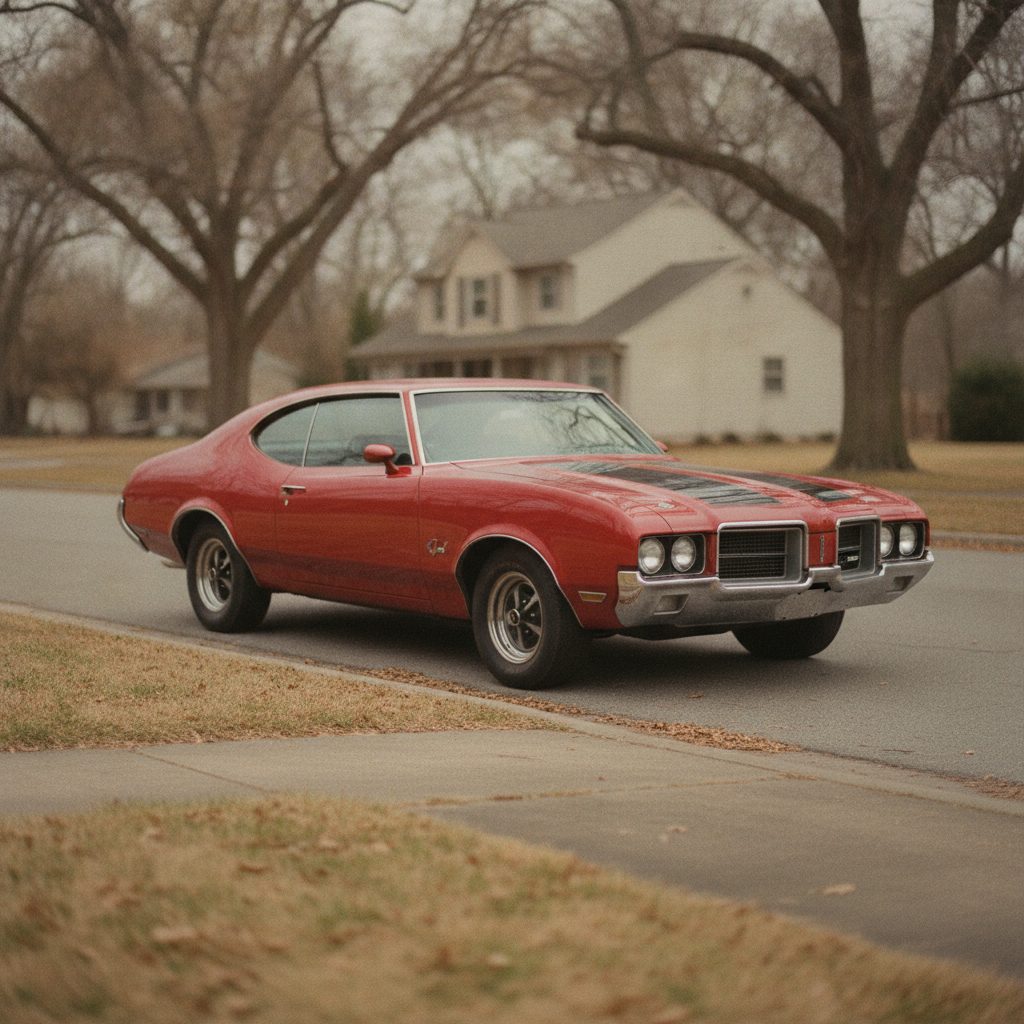
General Motors handed Oldsmobile a problem in the late 1960s, and Oldsmobile handed it to George Hurst. The company that built shifters solved it by building whole cars, and the Hurst/Olds became the smartest workaround of the muscle era.
The story starts with a corporate rule and ends with one of the most collectible Oldsmobiles ever made. Every big-block A-body from the period had a headline number, but the Hurst/Olds had a headline maneuver: it put an engine into a car that the rulebook said could not have it, and it did so with GM's quiet blessing. Understanding how that happened explains why a white and gold coupe with somebody else's name on the fender is one of the most respected cars in the hobby.
In the mid 1960s General Motors set an internal policy that capped engine displacement in its intermediate cars at 400 cubic inches. The idea was to keep the divisions from starting a horsepower war inside the same corporation, and to keep insurance companies and safety regulators off the corporate doorstep. It worked, mostly. Pontiac, Chevrolet, Buick, and Oldsmobile all built their midsize muscle around the 400, and the factory 442 lived inside that limit while the full-size Oldsmobiles and the Toronado carried the big 455.
Oldsmobile wanted the 455 in the 442, and the rule said no. The answer came from outside the assembly line. George Hurst, whose Dual/Gate shifters and Jaws of Life had made his name a performance byword, partnered with Oldsmobile to build a limited run of cars away from the main plant. Demmer Engineering in Lansing did the conversion work, pulling completed 442 hardtops and installing the 455 by hand. Because the cars were technically finished by an outside firm rather than the factory, they slipped past the corporate displacement cap without breaking it. The result wore Hurst badges and a special paint scheme, and it went on sale through Oldsmobile dealers like any other car.
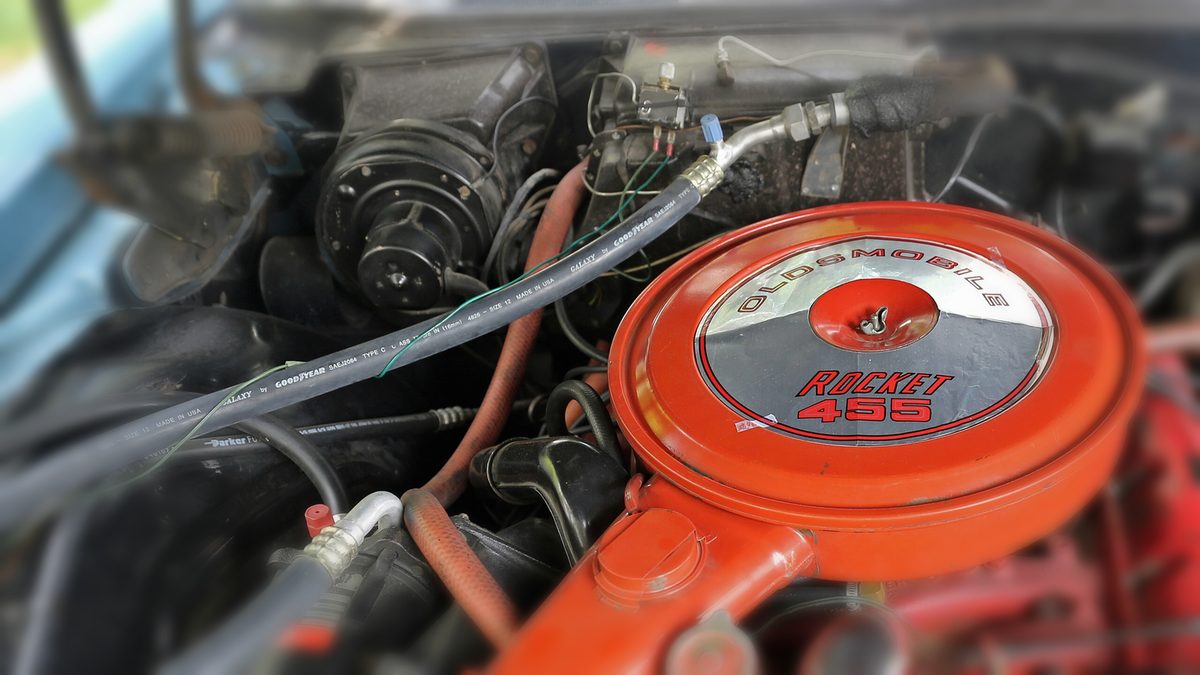
The first Hurst/Olds arrived for 1968 wearing Peruvian Silver with black accent stripes, a deliberately serious look that matched the division's engineering-first reputation. Under the fiberglass hood sat the 455 Rocket V8 with a force-air induction system in the spirit of the W-30 hardware, rated at 390 horsepower and a stout 500 lb-ft of torque. That torque figure is the number that mattered. This was a car built to leave a stoplight hard and never feel strained doing it.
Every 1968 Hurst/Olds used the Turbo Hydra-Matic 400 automatic, controlled by the Hurst Dual/Gate shifter that gave the car its personality. Oldsmobile built 515 of them for the year, a run split between pillared Sports Coupes and hardtops. That is genuine rarity, and it was rarity with a purpose: the Hurst/Olds existed to prove a point about what the division could do when the rulebook stepped aside. Compared with the factory 442 W-30, the Hurst car traded some of the pure drag-strip focus for grand-touring muscle, a heavyweight that happened to be quick.
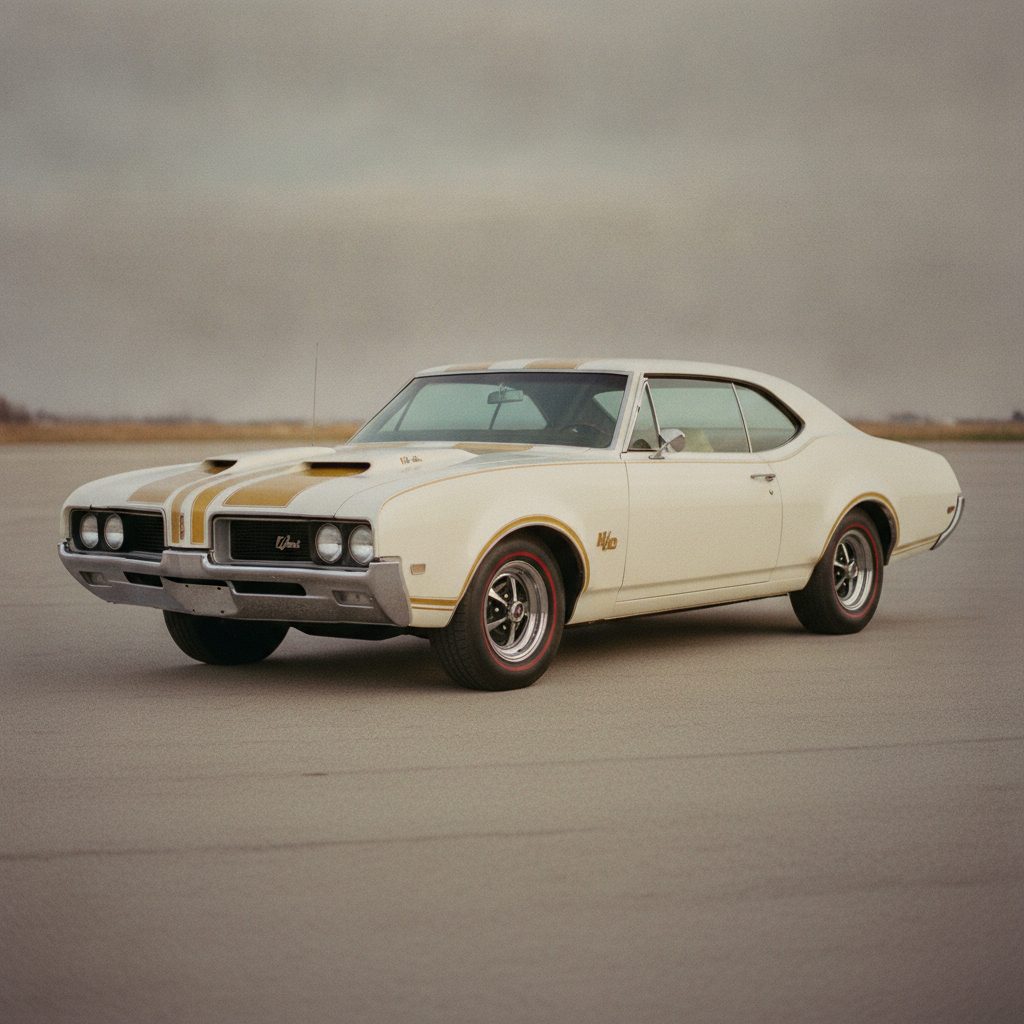
For 1969 the Hurst/Olds got the paint scheme that made it famous. Cameo White with Firefrost Gold stripes replaced the silver and black, and that combination has been shorthand for the car ever since. Twin hood scoops fed the force-air 455, now carrying the W-46 order code, and a rear deck spoiler finished the look. The engine rating settled at 380 horsepower with the same 500 lb-ft of torque, still routed through the Turbo 400 and the Dual/Gate.
Production nearly doubled to 906 cars, which tells you the concept had found its audience. The white and gold Hurst/Olds looked like nothing else in a dealership full of factory muscle, and it carried a whiff of exclusivity that the mass-produced badges could not match. It shared showroom space with the rest of GM's ferocious 1969 A-body class, cars like the Buick GSX Stage 1 that would arrive to define torque a year later, but the Hurst car answered to a different logic. You did not buy one to win a spec-sheet argument. You bought one because it was special, and because everyone who knew cars knew exactly what it was.
It wore another company's name and beat GM at its own rulebook.
The Dual/Gate shifter, nicknamed His and Hers, was more than a badge. It let the driver leave the Turbo 400 in a normal automatic drive gate for daily traffic, then slide over to a second gate that allowed firm manual control of each gear without the risk of overshifting into neutral or reverse. In an era when a true four-speed demanded skill and clutch legs, the Dual/Gate offered the best of both worlds, and it made the Hurst/Olds feel engineered rather than merely fast. It was exactly the kind of clever, grown-up hardware that fit Oldsmobile's character, which is why the pairing of the two names felt so natural.
General Motors lifted the 400 cubic inch cap for 1970, and just like that the loophole closed. The factory Oldsmobile 442 now came with the 455 straight off the line, so there was no rule left to beat. The Hurst/Olds could have quietly ended there. Instead it came back for 1972 with a bigger stage than any horsepower number could buy: it was chosen as the Official Pace Car of the Indianapolis 500, the first Hurst-badged car ever handed that honor.
The 1972 Hurst/Olds wore Cameo White and gold again, this time in full pace-car dress, and Oldsmobile built roughly 600 of them in coupe and convertible form. The horsepower story was more modest by then, since the whole industry had begun pulling compression down to meet emissions and lower-octane fuel, but the car's role had shifted. It was now a halo, a rolling reminder that the Hurst and Oldsmobile partnership still meant something. The relationship would carry on through the decade and return memorably in the 1980s with the black and gold Lightning Rod cars, but the 1968 through 1972 run remains the heart of the legend.
Like every low-volume muscle car, the Hurst/Olds lives and dies by its paperwork. The cars were built in small numbers by an outside firm, which means correct documentation, build records, and the right date-coded components matter enormously. A tribute built from a standard 442 can look convincing, but a genuine Hurst/Olds carries a verifiable history, and knowledgeable judges can separate the two. Buy the documents before you buy the car, and treat a fresh restoration with no paper trail as a question rather than an answer.
Directionally, values for the real cars have climbed steadily as collectors reward engineering credibility and documented rarity over sheer volume. The 1968 and 1969 cars in particular have moved from curiosities to headliners, helped by the story behind them and by how few survive in original condition. None of that requires hype, which would be off-brand for Oldsmobile anyway. The Hurst/Olds has always rewarded the buyer who reads the history first, exactly the sort of person the car was built for in the beginning.
General Motors capped its midsize cars at 400 cubic inches in the late 1960s. To get the 455 into a 442, Oldsmobile partnered with George Hurst, and Demmer Engineering installed the big engine off the main assembly line. Because an outside firm finished the cars, they slipped past the corporate rule without breaking it.
The 1968 Hurst/Olds used a force-air 455 Rocket V8 rated at 390 horsepower and 500 lb-ft of torque, backed by a Turbo Hydra-Matic 400 automatic with the Hurst Dual/Gate shifter. For 1969 the rating settled at 380 horsepower with the same 500 lb-ft of torque and the same transmission setup.
Oldsmobile built 515 Hurst/Olds cars for 1968 in Peruvian Silver with black stripes, split between hardtops and pillared Sports Coupes. Production nearly doubled to 906 cars for 1969 in the famous Cameo White with Firefrost Gold scheme. Both years remain genuinely rare compared with standard 442 production.
The Dual/Gate, nicknamed His and Hers, was a shifter for the Turbo 400 automatic with two gates. One gate worked like a normal automatic for everyday driving, while the second allowed firm manual selection of each gear without accidentally slipping into neutral or reverse. It gave the Hurst/Olds manual-style control with automatic convenience.
The muscle world, every morning. Auctions, builds, reveals. Free.