What Is a Hemi Engine? Inside the Dome That Built a Legend
The hemispherical combustion chamber is one simple idea with enormous consequences, and most of what gets repeated about it is only half right.
The hemispherical combustion chamber is one simple idea with enormous consequences, and most of what gets repeated about it is only half right.
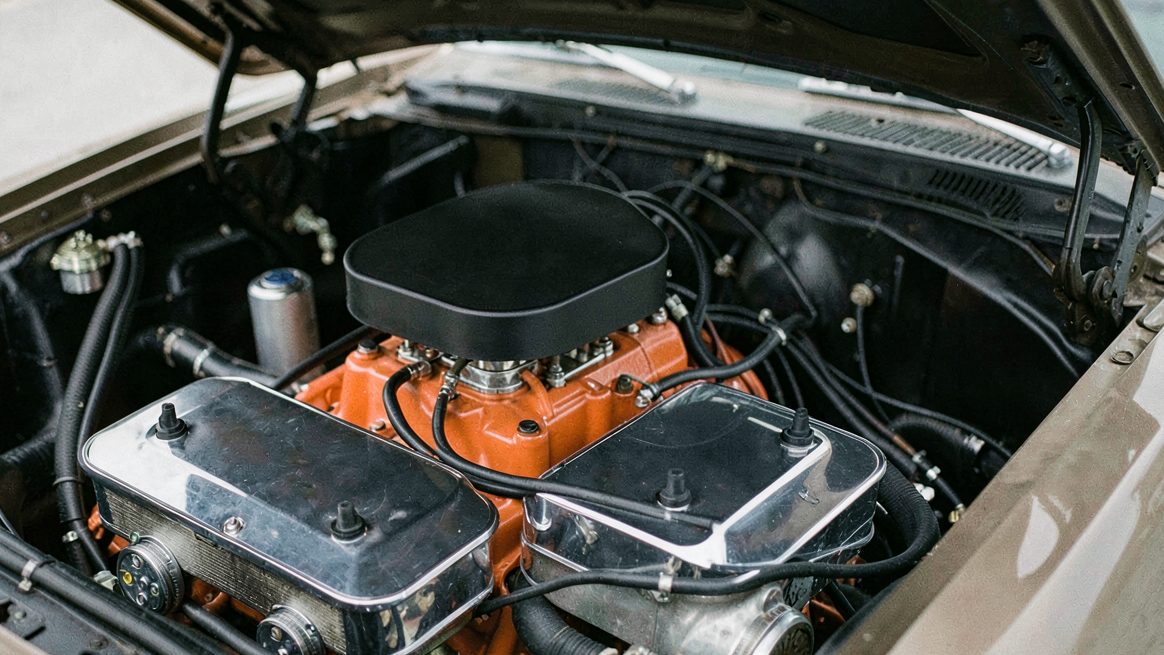
Ask ten people what is a hemi engine and you will get ten answers, and nine of them will be about horsepower. The real answer is smaller and far more interesting than that. A Hemi is defined by the shape of a hollow space roughly the size of a coffee cup, machined into the underside of a cylinder head. Chrysler did not invent that shape. It just spent seventy years building the loudest possible argument for it.
That space is a combustion chamber, and on a Hemi it is close to half a sphere. Almost everything people love about these engines, and most of what they quietly complain about, falls out of that single decision.
A Hemi engine is a piston engine whose combustion chambers are shaped like shallow domes instead of flattened wedges. The intake and exhaust valves sit on opposite sides of the dome and lean away from each other at a steep angle. The spark plug enters through the middle, at the top of the arc. That is the entire definition. Displacement, badge, carburetor count and supercharger whine have nothing to do with it. A four cylinder can be a Hemi, and plenty have been. Chrysler's are simply the ones everybody remembers.
The geometry pays off in two ways. Because the valves splay apart rather than standing side by side in a row, a hemispherical head has room for much larger valves than a conventional wedge head with the same bore. And because the valves are angled, the intake port can run a straighter, less tortured path into the chamber. More valve area plus a cleaner approach equals more airflow, and airflow is the only currency a naturally aspirated engine has to spend.
Hemi is short for hemispherical. It began life as a description of a shape, not a badge, and Chrysler's contribution was to trademark the word and turn it into forty years of marketing. The layout itself is much older. Hemispherical chambers were turning up in European racing engines before the First World War, and Jaguar's XK straight six sold the idea to the postwar world with a hemi head sitting under a polished cam cover.
Chrysler's first was the FirePower V8 of 1951: 331 cubic inches and 180 horsepower, at a time when that second number ended conversations. Dodge and DeSoto got their own smaller versions with their own names. By 1955 the Chrysler C-300 was making 300 horsepower from the same 331 cubic inches, and the 392 that followed in 1957 was good for 375 in the 300C. Then Chrysler dropped the whole family, because a cheap wedge head made nearly the same power for a fraction of the cost to build.
The engine that built the legend arrived in 1964, and it did not arrive in a showroom. The 426 Hemi was designed to win races, and it did that immediately. Richard Petty drove one to victory in the 1964 Daytona 500 and Mopar filled out the podium behind him. NASCAR looked at an engine that no member of the public could buy, and changed the rules to require that engines be available in production cars. Chrysler responded by sitting out most of the 1965 season in protest.
The fix was to build street cars around it. For 1966 the 426 Hemi became a factory option, rated at 425 horsepower at 5,000 rpm and 490 pound-feet at 4,000. Both were gross figures, and both were almost certainly conservative. Racers called it the Elephant, partly for what it did and partly because the cylinder heads were so wide that getting the engine into a car was a separate engineering project. The 1968 Hemi Dart and Barracuda drag cars, roughly 150 of them, were built for the strip and were never really meant to be driven to work.
Racers called it the Elephant. Chrysler spent six model years working out which of its own cars the thing would actually fit inside.
It never sold in volume, and it was never supposed to. The option cost serious money, it demanded valve adjustments and tuning attention that most owners were not prepared to give it, and only around 11,000 street Hemi cars left the factory across six model years. That scarcity is the reason a documented Hemi car now sits at the very top of the collector market, as anyone tracking what a genuine Hemi Superbird is worth already knows. Production ended after 1971, when compression ratios fell and insurance companies took over the horsepower conversation.
Three things work in the Hemi's favor at high rpm. The first is raw valve area, which sets the ceiling on how much air the engine can inhale per revolution. The second is port shape, since a valve that leans back lets the incoming charge turn less sharply on its way in. The third is where the spark happens. With the plug in the center of a symmetrical dome, the flame front has the shortest possible distance to travel to every corner of the chamber, so the burn is quick and even and the engine is less prone to detonation.
Set against all of that, the dome is a large volume, and large volumes are the enemy of compression. To get the ratio back up you have to fill the chamber in again with a domed piston, which puts an aluminum hill exactly where the flame wants to travel. Chrysler ran the street 426 at 10.25 to 1 with a serious crown on every piston. The chamber that breathes brilliantly at 6,000 rpm turns out to be a fairly mediocre chamber at 1,500.
A regular V8 head is a wedge. The valves stand more or less side by side in a compact, shallow chamber that looks like a slice cut off a cylinder. It is a deeply unglamorous design and it wins on almost every measure that is not peak airflow. A wedge chamber reaches high compression with a flat top piston, it flows better at small valve openings, which is where an engine spends its street life, and it needs one rocker shaft per head instead of two. It is also narrow, which matters enormously in a car built around shock towers. For more on how Detroit sorted its V8 families, the big block versus small block breakdown covers the architecture question.
This is why the Hemi was always the exception rather than the rule. Chrysler sold millions of wedge head 318s, 383s and 440s and about eleven thousand street Hemis. The wedge was the engine. The Hemi was the statement.
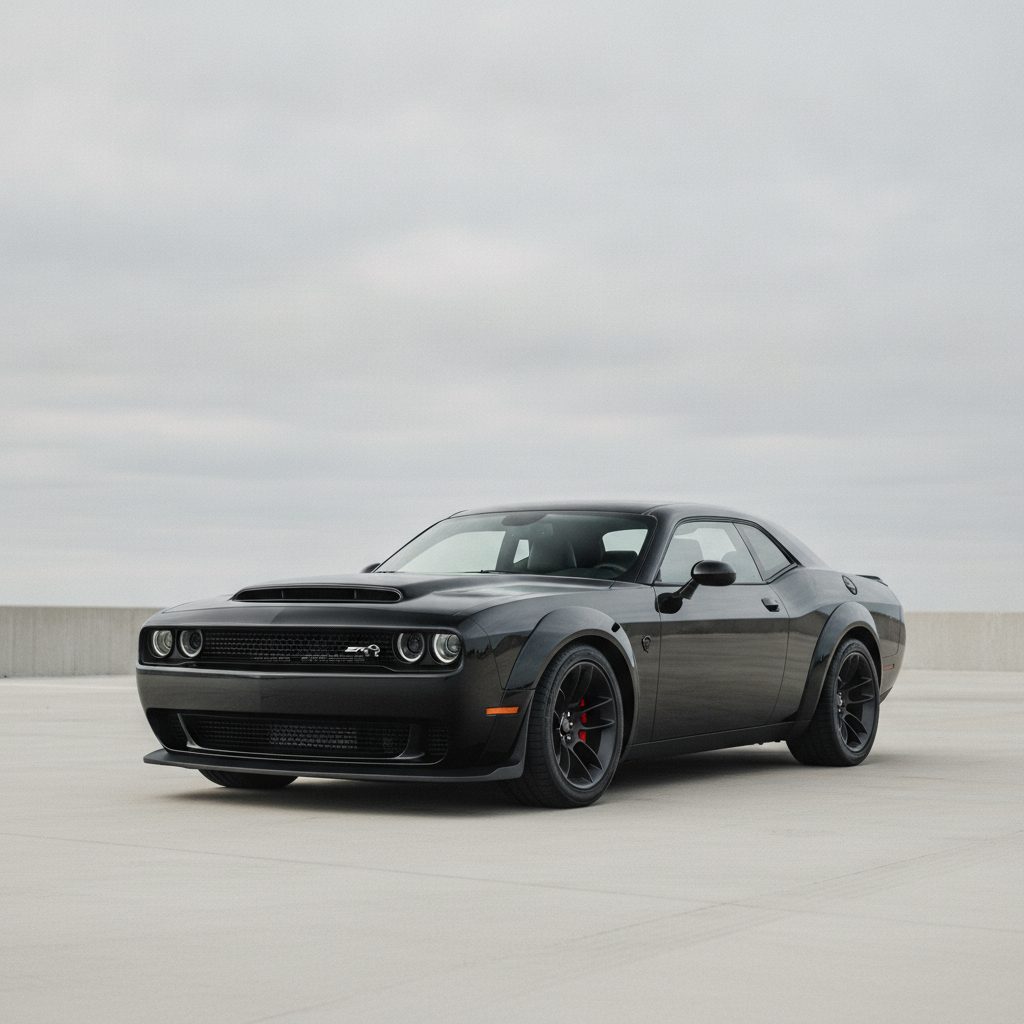
The name came back in 2003 on the 5.7 liter V8 in the Ram 1500, which was 345 cubic inches and 345 horsepower. A 6.1 liter SRT version followed in 2005 at 425 horsepower, then the 6.4 liter that everyone calls the 392 arrived in 2011 and climbed to 485 in car form. In 2015 Dodge bolted a supercharger to a 6.2 liter version and called it Hellcat, and 707 horsepower became a thing you could finance. The line ran all the way out to the 1,025 horsepower Demon 170 on E85, the subject of our last call for the Demon piece, and to a generation of Hemi Challengers that made 1971 look restrained.
Purists will tell you that none of the modern engines is a true Hemi, and on pure geometry they have a case. The third generation chamber is a squashed compromise: the valves are inclined far less than they were on the 426, and there are two spark plugs per cylinder rather than one, sixteen in a V8, because a slower burning chamber needs help to stay clean. It is a Hemi in family resemblance and in trademark, not in textbook cross section. It is also a far better engine to live with than the 426 ever was.
The honest list is short, and it explains why the rest of the industry walked away. Hemi heads are heavy and wide, so the engine is bulky and nose heavy. Two rocker shafts per head and a valvetrain that wants attention cost money to build and money to maintain. Part throttle efficiency is unimpressive, because that big chamber and its domed piston leave plenty of surface area to lose heat into. And a two valve hemispherical head lost the argument outright once four valve pentroof heads arrived, because a pentroof gets even more valve area into a far more compact chamber with a central plug and no dome required.
None of which has hurt the name. Ram put the 5.7 liter Hemi back in the 2026 Ram 1500 at 395 horsepower and 410 pound-feet with eTorque assistance, priced at about a 1,200 dollar upgrade on most trims, after taking more than 10,000 orders in the first 24 hours of announcing it in June 2025. Meanwhile the new Charger leans on a twin turbo 3.0 liter Hurricane inline six. The better engine is not always the one people want to pay for, and four letters on a fender still move metal.
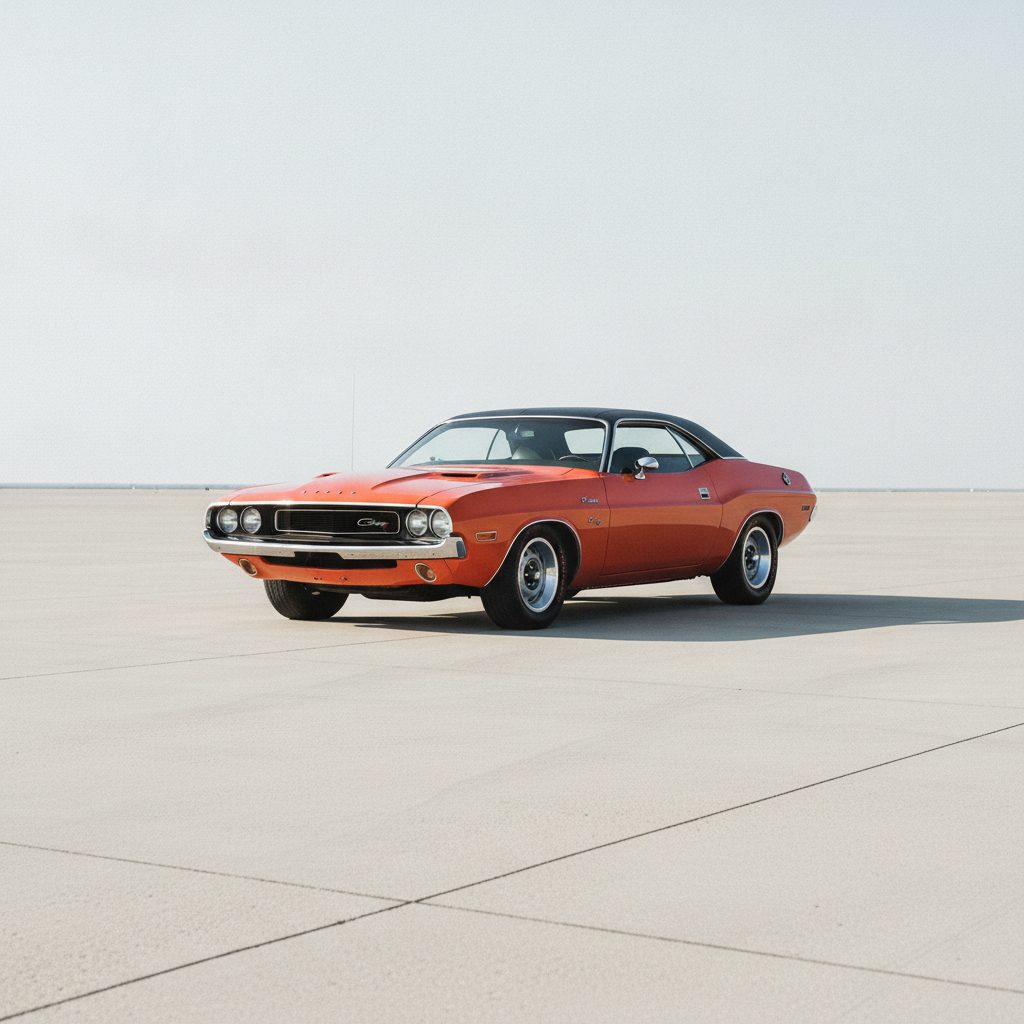
A note on the photograph at the top of this page: it is an illustration produced in house to show the layout described above, not a photograph of any specific car.
The difference is chamber shape. A Hemi has a dome shaped combustion chamber with widely splayed valves and a central spark plug. A regular engine uses a compact wedge chamber with the valves nearly side by side. The Hemi flows more air at high rpm. The wedge is lighter, cheaper, narrower and better behaved everywhere else.
Because you could not buy one. The 426 Hemi debuted in 1964 as a pure race engine, won the Daytona 500 immediately, and NASCAR then required that engines be sold in production cars. Chrysler boycotted most of the 1965 season, put the Street Hemi in showrooms for 1966, and the engine was legal again.
Weight, width, cost and part throttle efficiency. The heads are large and heavy, the engine is wide enough to cause packaging trouble, two rocker shafts per head add complexity, and the big domed chamber burns less efficiently at light load. Modern four valve pentroof heads deliver the same airflow advantage without any of it.
Not in the strict geometric sense. The third generation chamber is a flattened quasi hemisphere with much less valve inclination than the 426, and it uses two spark plugs per cylinder. It is a genuine descendant and a trademarked Hemi, but an engineer measuring the cross section would not call it hemispherical.
The muscle world, every morning. Auctions, builds, reveals. Free.