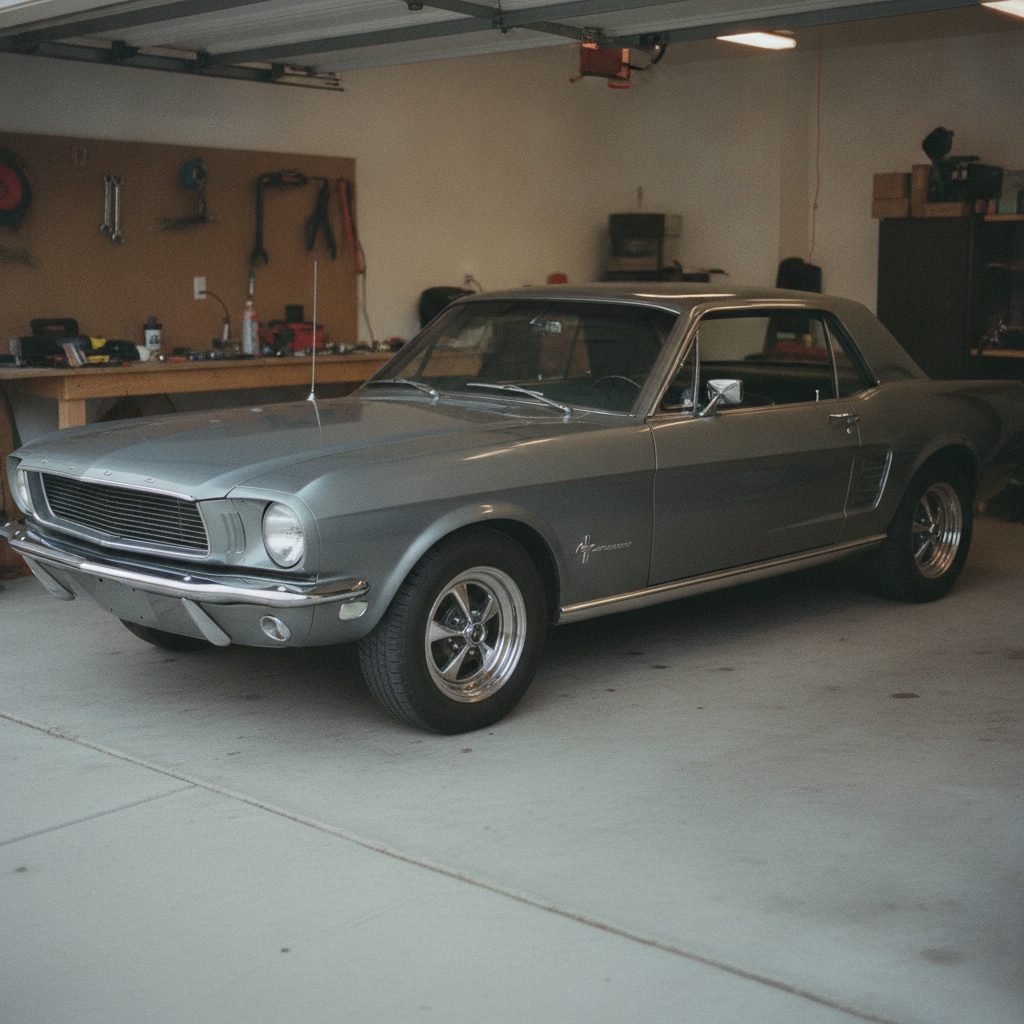
Windsor vs Cleveland: The Test Everyone Gets Backwards
Ford built two unrelated 351s at the same time, and almost every quick test online reads the one part that moved between them.
Ford built two unrelated 351s at the same time, and almost every quick test online reads the one part that moved between them.
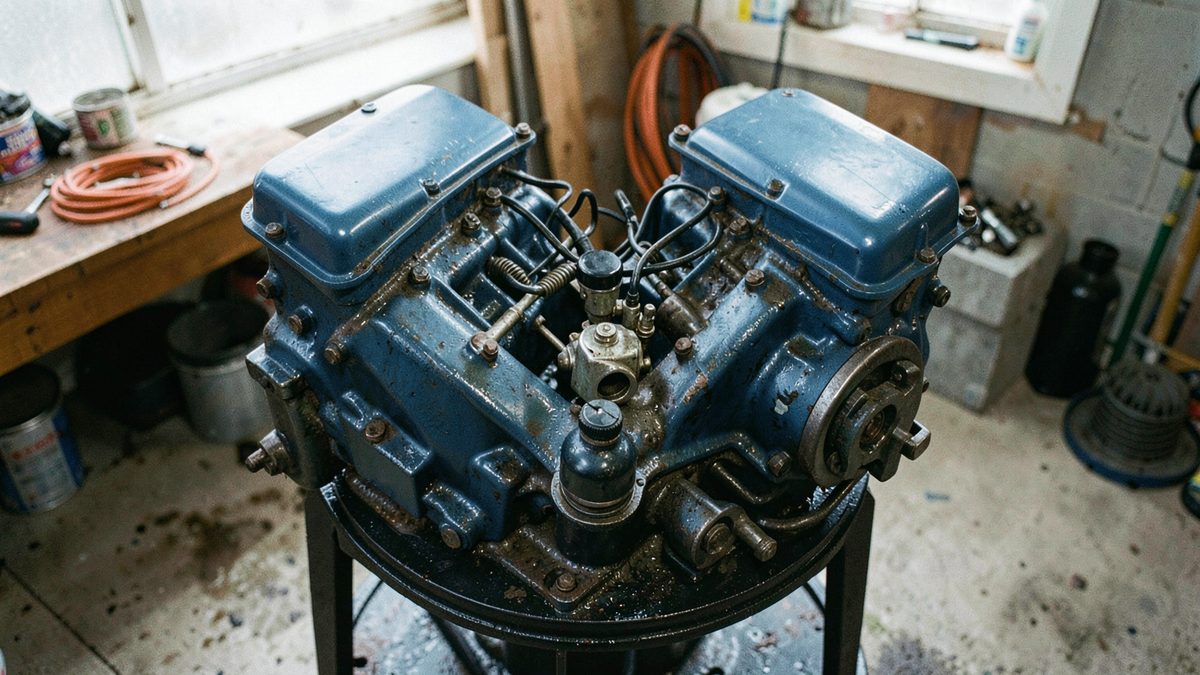
Ask the internet how to settle a windsor vs cleveland argument and you get the same four tests every time. Look at where the thermostat sits. Count the bolts on the valve covers. Check whether the valves are canted. Look at the timing cover. All four are real tests, and all four read the cylinder head, which is the one major component Ford kept moving between engine families. That is why you can run the whole checklist, get four confident answers, and still be wrong.
Ford did something in 1969 that no other American manufacturer did. It put two completely unrelated 351 cubic inch V8s into production at once, sharing a bore, a stroke and almost nothing else. Fifty years of swaps later the parts have been shuffled so thoroughly that the popular tests break in both directions. Here is what actually separates them, and which two measurements cannot be fooled.
The Windsor story starts in 1962 with a 221 cubic inch thin wall casting, a deliberately light and cheap small block that grew into the 260, the 289 and the 302. When Ford needed more displacement for 1969 it took the cheapest route available: raise the deck of the existing 302 block from 8.206 inches to 9.480, stretch the stroke to 3.500, and keep the tooling at Windsor Engine Plant Number One in Ontario. The 351 Windsor is a tall 302, and Ford named it after the plant only once it needed to tell it apart from the other one.
The other one was a clean sheet. In July 1969, for the 1970 model year, Ford started building the 335 series at Cleveland Engine Plant Number Two in Brook Park, Ohio. The Cleveland was designed around its cylinder heads rather than around existing tooling, with canted valves set at an angle to the bore so the ports could run straighter and bigger. It was meant to be Ford's performance small block for the decade ahead. It got four and a half model years.
Both engines are 90 degree V8s with a 4.00 inch bore and a 3.50 inch stroke. That is where the overlap stops. The Windsor block stands 9.480 inches from crank centerline to deck for 1969 and 1970, then 9.503 inches from 1971 through the end of production in 1996. The Cleveland block stands 9.206 inches, which puts it almost exactly one inch taller than a 302 and roughly a quarter inch shorter than the Windsor it was supposed to replace.
The crankshafts are not interchangeable either. A 351 Windsor rides on 3.000 inch main journals with 2.311 inch rod journals. A 351 Cleveland rides on 2.750 inch mains. The Cleveland routes its coolant through the block and up into the heads, so the thermostat housing stands on the front of the block and the intake manifold carries no water crossover at all. The Windsor runs its coolant through the intake, which is why its thermostat bolts into the manifold. Two engines, same displacement, no shared major part.
The four popular tests are worth stating plainly, because they are accurate as far as they go. A Windsor puts the thermostat and upper radiator hose in the intake manifold; a Cleveland stands it out of the front of the block. A Windsor uses six bolt valve covers; a Cleveland uses eight. A Windsor has inline valves in a wedge chamber; a Cleveland has canted valves. A Windsor has a separate cast timing cover with the water pump bolted to it; a Cleveland has the timing chain recessed into the block face behind a flat plate.
Now notice what every one of those tests is actually looking at. Valve angle is a head trait. Valve cover bolt count is a head trait. Thermostat position is a consequence of how coolant leaves the head. Only the timing cover reads the block. Ford moved Cleveland pattern heads onto other blocks twice, in both directions, and each time it took three of those four tests with them.
Every popular test reads the cylinder head. The head is the one part Ford kept moving.
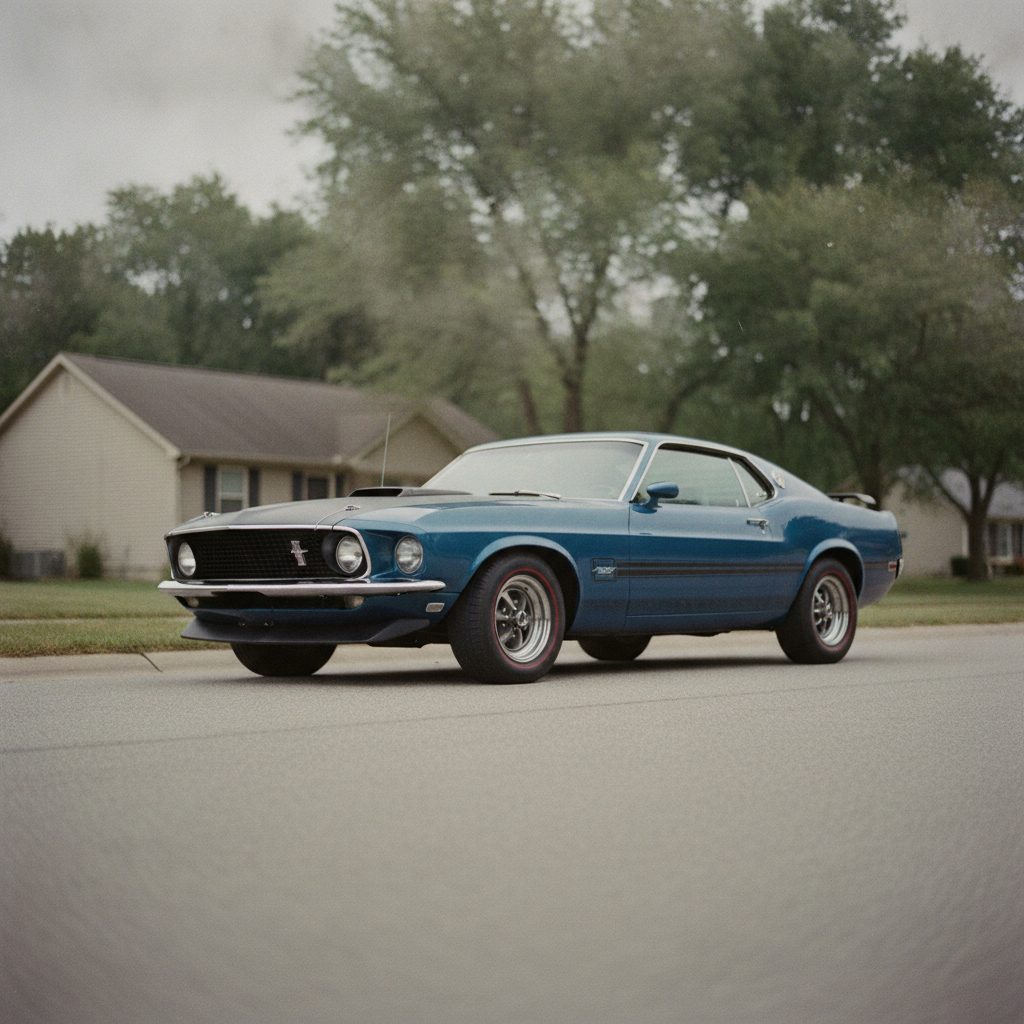
In 1969 Ford needed a 302 that could breathe for Trans Am homologation. It took a Windsor family 302 block, added four bolt main caps, screw in core plugs and a beefier rotating assembly, and bolted on cylinder heads adapted from the Cleveland design that had not reached production yet, with the water passages redrilled to suit the Windsor block. Ford built 1,628 of them for 1969 and 7,013 for 1970.
Run the checklist on one. Canted valves, so the valve test says Cleveland. Eight bolt valve covers, because the Boss shares its covers with Cleveland headed engines, so the bolt count says Cleveland. It is a Windsor block. Three of the four popular tests return the wrong family on one of the most valuable small blocks Ford ever built, and the fourth, the timing cover, is the only one that saves you. Our history of the Boss 302 and what it was built to beat covers the racing side of that engine; here it matters because it is the single clearest proof that a canted valve head does not prove a Cleveland block.
The trap runs the other way too, and this is the one that costs people money. When the Cleveland ended after the 1974 model year, Ford replaced it for 1975 with the 351M, which is Cleveland style heads on the tall deck block from the 400. Both stand 10.297 inches at the deck and both ride on 3.000 inch mains. A 351M and a 400 have the thermostat standing out of the block, eight bolt valve covers, canted valves and a flat timing plate. They pass all four tests as a Cleveland, because in head terms they are one.
That matters, because a 400 is a 4.00 inch stroke truck engine nobody wants at Cleveland money, and it is far more common than a real Cleveland. If a seller says Cleveland, the head tests cannot tell you whether it is a 1971 Boss 351 short block or a 1979 truck 400. Verifying a Ford core takes the same discipline as reading a Ford part number: establish what the number or the test can actually prove before you trust it.
There are only two checks that cannot be defeated by a head swap, and both read the casting itself. The first is the bellhousing bolt pattern. The 351 Cleveland shares the small block Ford pattern with the 289, the 302 and the 351 Windsor, so a Cleveland bolts to the same transmissions a Mustang small block does. The 351M and the 400 use the large 385 series pattern shared with the 429 and 460. One look at the back of the block separates a genuine Cleveland from a Modified permanently, whatever the heads say.
The second is deck height, and it needs nothing more than a straightedge and a tape. At 9.206 inches the Cleveland is visibly the shortest of the three. At 9.480 or 9.503 the Windsor is a quarter inch taller. At 10.297 the 351M and 400 are an inch taller again, which is why a Modified intake is visibly wider across the valley. Motor mounts agree: Clevelands use a two bolt mount, Modifieds three. Reading the block instead of the head is the same habit that makes a Ford 9 inch identification call reliable, and it works for the same reason.
Run this search and the errors show up on the first page. A thread still ranking in the top ten says the Cleveland has a 90 degree angle between the cylinder banks while the Windsor uses a narrower one. Both engines are 90 degree V8s and always were. That claim has been sitting in front of readers since 2002.
The compression is worse than the errors. OnAllCylinders, which is the source Google's own summary leans on hardest for this question, is careful: it writes the thermostat test and the valve cover test as Cleveland and Modified together, and it gives three separate ways to tell a 351C from a 351M. The AI summary that sits above the results rewrites both tests as Cleveland alone and drops the separation entirely, handing the reader a test that cannot distinguish the two engines most likely to be confused. The source was right and the summary broke it.
The dates disagree too. Jalopnik gives the Windsor a 1968 to 1997 run, Wikipedia 1969 to 1996, the AI summary the late 1960s to the mid 1990s. Three sources, three spans, and none of them mentions that the Windsor's deck height changed in 1971, which is the detail that decides which pistons a rebuilder orders. The Cleveland also outlived its American obituary by seven years: Ford of Australia built them at Geelong from November 1971 until December 1981, including a short stroke 302 sold nowhere else.
Look at the thermostat. On a Windsor it bolts into the intake manifold. On a Cleveland it stands vertically out of the front of the block. Confirm with the timing cover: the Windsor has a deep cast cover carrying the water pump, the Cleveland a flat plate over a recess.
They were built for different jobs. The Cleveland's canted valve heads flow far more air high in the rev range, which suits a built engine. The Windsor has larger main journals and vastly deeper aftermarket support, so it is cheaper to build. For most street cars the Windsor is the sensible answer.
Yes. Both use the small block Ford bellhousing pattern found on the 289 and 302, so they share transmissions. The 351M and 400 do not. They use the large 385 series pattern shared with the 429 and 460, which is the fastest way to separate a real Cleveland from a Modified.
Ford needed a high winding 302 for Trans Am racing in 1969, and the canted valve head being developed for the 351 Cleveland was the best breathing design it had. Engineers adapted it to the Windsor 302 block with revised water passages. The block is a Windsor and the heads are Cleveland derived.
The muscle world, every morning. Auctions, builds, reveals. Free.