Chevy Engine Suffix Codes: Read Every Letter
The right Chevrolet engine code starts with a complete stamp, a verified model year, and the discipline to keep service numbers out of the production chart.
The right Chevrolet engine code starts with a complete stamp, a verified model year, and the discipline to keep service numbers out of the production chart.
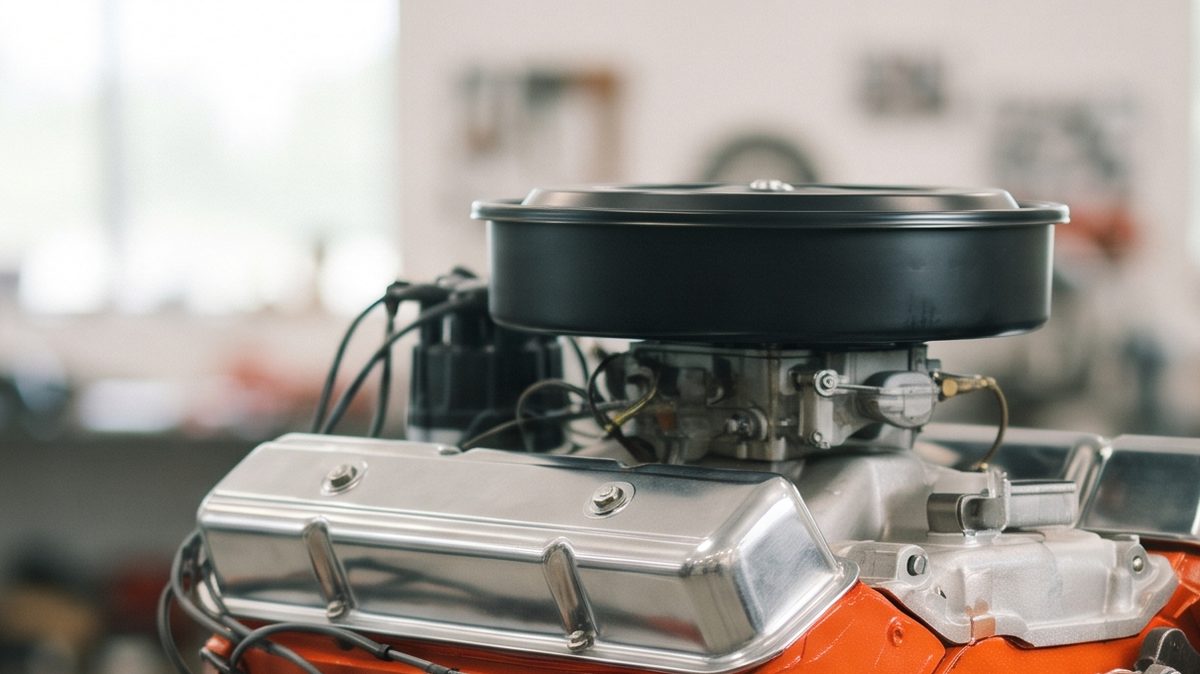
Two letters can turn an ordinary Chevrolet block into a very expensive conversation. They can also send that conversation in entirely the wrong direction. Chevy engine suffix codes identify a factory engine application within a particular year and numbering system. Before you search the letters, photograph the entire stamp. A missing character, a guessed year, or a service-replacement number fed into the wrong chart can produce a beautifully specific answer to the wrong question.
That matters across the Chevrolet family, from a small-block Camaro to a big-block Chevelle. The useful question is precise: what application did Chevrolet assign to this complete code? Whether the assembly still has those internals, and whether this block belongs to this car, require additional evidence.
On muscle-era Chevrolet V8s, start at the machined block pad immediately ahead of the passenger-side cylinder head. Clean it gently enough to preserve the surface. Take one photograph straight on and another with light grazing across the metal. Record every visible character before opening a lookup table. Leave an uncertain character marked as uncertain.
Chevrolet's 1970 Corvette identification sheet gives a useful factory example: F1210CTL. It separates F as the Flint source, 1210 as December 10, and CTL as the engine type. Keep CTL together when looking up that application. The stamp's month and day do not supply a four-digit year.
A raised casting number elsewhere on the block belongs in a separate field in your notes. Our small-block Chevy casting-number guide handles that evidence. Mixing a raised casting number with a stamped assembly code is an easy way to get a convincing search result that answers nothing about the letters in front of you.
Consider MO. The Camaro Research Group's year-specific drivetrain tables, drawn from Chevrolet dealer service bulletins, list MO for the manual-transmission 302 Z/28 application in 1968. Its 1969 table uses MO for the automatic-transmission L72 427 COPO application. Same letters, different displacement and transmission. Selecting the year changes the answer.
The same research lists paired two- and three-letter codes for 1969 Camaro 396 applications, including JG/CJG and JH/CJH. That defeats a blanket rule that every three-letter suffix must identify a 1970-or-later engine. Treat the transition as application-specific. A general chart's heading cannot overrule a documented exception for the model you are checking.
Build a short candidate list when the year is unknown. For each plausible entry, write down its year, displacement, transmission application, and source. Then eliminate candidates using the block's dated evidence. Don't choose the highest horsepower entry and work backward. If two candidates remain, the correct result is two candidates, with the missing evidence stated plainly.
A suffix and an engine RPO are different identifiers. Chevrolet's 1970 Corvette sheet lists CTL for the regular 350 with a manual transmission and CTM for the regular 350 with Turbo Hydra-Matic. It lists CTR for the optional LT1 350 with a four-speed. Those examples show why a lookup should return the full application, including the transmission, rather than simply a displacement.
The names on the fender can complicate the lookup, too. Chevrolet's September 1969 identification sheet for the 1970 Chevelle places CTX and CTW under the L34 Turbo-Jet 396 heading, while specifying 402 cubic inches. CTX is the manual application and CTW the Turbo Hydra-Matic application. A reference describing that combination as a 396 and another calling it a 402 are not necessarily describing different engines.
Preserve both labels in your record: the marketed engine designation and the specified displacement. Also keep the date printed on the reference. A factory sheet records information at a particular point in production planning; it should be checked against later bulletins when a running change matters. Save the actual page, not just a search-result snippet.
A suffix belongs to a row in a dated factory table. Give it the wrong year and you've changed the engine.
The transcription problem reaches back before the muscle-car years. A date-format instruction that works on a 1969 engine can break on an earlier small block. Chevy-Camaro.com's decoding help describes month and day fields as always two digits. Edward McComas's Chevrolet V8 identification book documents an exception: leading month zeros were absent from 1957 into mid-January 1960.
McComas also illustrates F4IID. In that example, F identifies Flint, 4 means April, II represents day 11, and D is the suffix. Reading the last three letters as IID sends the search into a nonexistent application. The date characters have swallowed the answer. Letter I and numeral 1 can be visually difficult in these stamps, so establish the format before dividing the string.
This is why a failed search is useful evidence. Return to the photograph and ask whether the proposed month and day make sense. Check the era of the block and the format used in that era. Keep the original transcription beside any normalized version, so another reader can see exactly which characters you interpreted and why.
A pad beginning CE followed by numbers needs a service-engine reference. The Camaro Research Group reproduces Chevrolet bulletin 69-I-1, dated September 19, 1968. It defines the first letter as the producing GM division and the second as the unit type. C means Chevrolet; E means engine. The next digit identifies the model year, followed by a five-digit service-unit sequence.
That explains why expanding CE as simply crate engine loses useful information. In the bulletin's system, this is service identification, covering assemblies and replacement components. It does not translate into a normal production application suffix, and it doesn't name the car that ultimately received the unit. The service numbering year also isn't a documented installation date.
A service replacement may be an entirely legitimate part of a car's history. Keep the claim proportionate: identify the service marking, record the block's other numbers, and look for repair paperwork connecting the replacement to the vehicle. A warranty invoice can explain a story that a suffix chart was never designed to tell.
Finish with a compact record: full pad transcription, photographs, casting number, casting date, proposed model year, suffix-table entry, and the reference page supporting it. For big-block casting questions, use our big-block Chevy identification guide. Keep the suffix conclusion separate from measurements or inspection results showing what is inside the engine today.
Where a VIN derivative is present, record it separately and compare its applicable fields with the car's VIN. An application suffix can be shared by many engines; it is not a vehicle sequence number. Our numbers-matching guide explains the larger originality question. Neither a desirable suffix nor a plausible date authenticates the stamping surface by itself.
If the evidence conflicts, say where. An uncertain final letter calls for a better photograph. A suffix with several year-specific meanings calls for a date. A CE service number calls for another numbering system. Those are useful conclusions. They tell the next owner or shop exactly what to investigate without turning a promising stamp into an unsupported claim.
On muscle-era Chevrolet V8s, the application suffix is part of the assembly stamp on the machined block pad ahead of the passenger-side cylinder head. Photograph the complete string, including the plant and date. Keep the raised block casting number and any separate VIN derivative in their own records.
Yes. MO identifies a manual-transmission 302 Z/28 application in the 1968 Camaro table and an automatic-transmission L72 427 application in the 1969 table. Establish the correct year before choosing a row. The letters alone do not settle displacement, original vehicle identity, or the engine's present internal specification.
No. Camaro Research Group documents three-letter alternatives for certain 1969 Camaro 396 applications, including CJG and CJH. Check the relevant model-year application table instead of dating an engine from suffix length alone. Preserve every character when you transcribe the stamp so a valid exception doesn't disappear during lookup.
Chevrolet's September 1968 service bulletin defines C as Chevrolet and E as engine. Its service numbering system adds a model-year digit and service-unit sequence. CE is not a normal production application suffix. The marking alone does not identify the receiving car or establish when the replacement was installed.
The muscle world, every morning. Auctions, builds, reveals. Free.