Delco Distributor Identification: Read the Evidence
The number, date and advance hardware each tell a different part of a classic Delco distributor's history.
The number, date and advance hardware each tell a different part of a classic Delco distributor's history.
Delco distributor identification starts with two separate readings: the assembly number and the production date. Neither tells you everything inside the housing, and neither proves the distributor has lived in the same muscle car since new. That distinction matters when a small, oily component becomes an expensive piece of restoration evidence. A convincing number can identify the right application while the date, housing, or advance hardware tells a different story.
The good news is that you can sort those questions without memorizing every Chevrolet distributor ever built. Photograph the complete unit, transcribe its marks, establish its construction, then compare the application and date with the car. Here is how to read the evidence without asking one stamp to do five jobs.
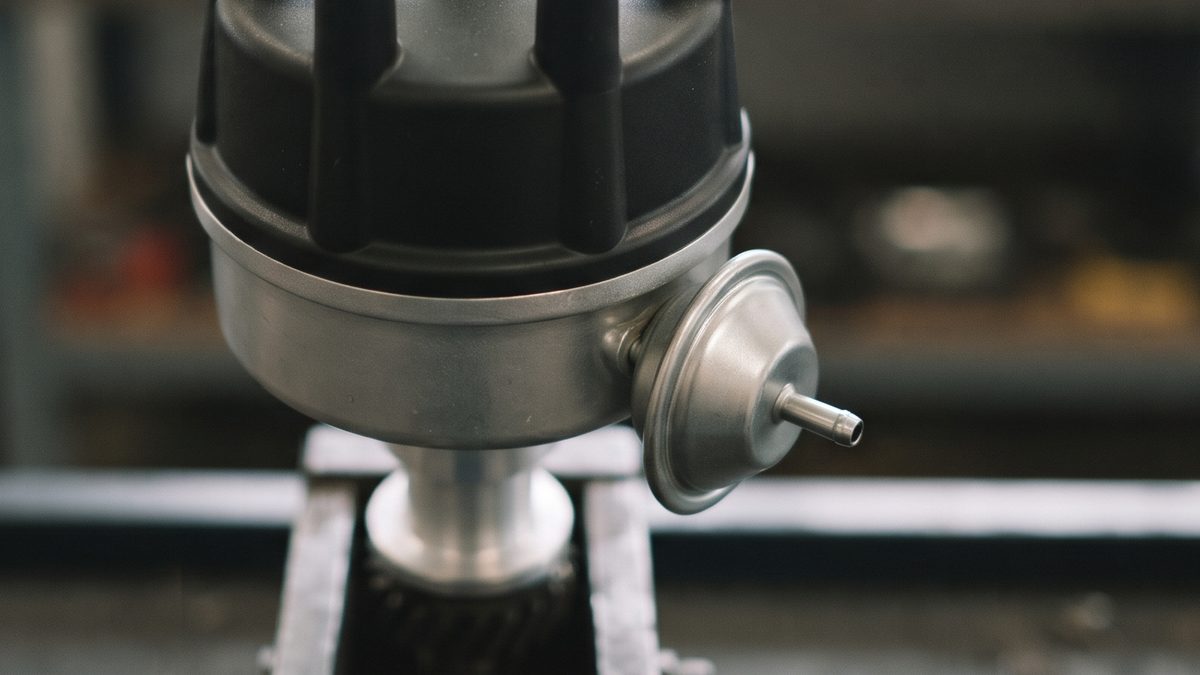
Look at the distributor before reaching for a chart. Record the housing material, cap shape, vacuum advance arrangement, mounting details, and any mechanical tachometer drive. A small points-style cap and a large coil-in-cap HEI assembly belong to different identification paths. An electronic conversion under an older cap can make appearances less straightforward still.
Find the actual assembly identification. Camaro Research Group documents numbers and dates stamped directly into aluminum housings, while its cast-iron example carries an identification band. Its distributor research includes Kurt Sonen's original photographs, which are more useful than a seller's typed description when you need to recognize a stamping location.
A missing band and an unreadable housing stamp are different problems. Preserve what remains with gentle cleaning and photographs in angled light. Do not grind, sand, or polish the identification surface to make it prettier. You may erase the very detail that would let somebody distinguish a surviving mark from a later alteration.
Write the long assembly number and the shorter date code on separate lines. Preserve spaces and uncertain characters in your notes. Raised casting marks elsewhere on the body are separate observations, not substitutes for a complete assembly number. Sending a specialist one isolated raised digit is a poor starting point.
The assembly number is your route into a model-specific application listing. It is not a unique serial number tying that component to one vehicle. Even a correct listing leaves questions about date, original construction, later rebuilding, and whether the distributor came from this particular car.
For a classic Camaro, establish the engine application independently before shopping for its distributor. Our Chevy engine suffix guide covers the engine-pad question. Buying a distributor first and then using its number to identify the engine reverses the evidence and makes a swapped part look like confirmation.
A correct application number is a starting point. The date and the hardware still have to agree.
For the classic GM stamped date format discussed here, read year, month, then day. Camaro Research Group's photographed 7H17 example means August 17, 1967 in that application. The first digit supplies the year within a decade, H supplies August, and 17 is the day. The leading digit is not the day or a shift number.
The month sequence is A January, B February, C March, D April, E May, F June, G July, H August, J September, K October, L November, and M December. The letter I is skipped. A day can occupy one or two digits, so do not reject a legible code just because its overall length differs from another example.
This is where a familiar chart can betray you. GM casting dates and stamped component dates do not share the same month sequence. CRG's date-code comparison separates them. Applying the casting sequence to a stamped distributor moves the interpretation of the last four months.
The correction is documented beyond forum disagreement. Alan Colvin's published Chevrolet by the Numbers errata changes the distributor and alternator month range to A through M. A reference book deserves the same edition check as an online table. A confident answer copied from an earlier printing can still be wrong.
The single year digit also repeats every decade. Treat it as a calendar clue within an established application and construction era. It cannot choose the decade on its own, and it does not automatically represent the vehicle's model year.
Chevrolet's 1969 Camaro information kit, Power Trains page 19, makes the application problem concrete. Its electrical table lists 1111488 for the 350/300-horsepower manual application and 1111489 for the automatic. Same displacement and advertised output, different distributor number.
That is why a listing headed simply 1969 Camaro 350 does not settle the question. Record transmission, engine specification, and any relevant equipment distinctions before looking up a candidate. Use the production documentation for the exact application, and keep later service replacement listings identified as such.
Compare charts rather than counting how many repeat a number. CRG explicitly flags conflicting GM references for the 1969 L34 automatic application. That disclosure matters: a disputed entry should trigger more investigation, not a claim that every car outside one website's row is incorrect. Photograph the evidence and retain the source and its publication date.
Identification and calibration are related, but they are not interchangeable. Removing a cap can reveal replaced points, an electronic conversion, or a collection of advance parts that no longer matches the assembly number. A rebuild can preserve the outside while changing how the distributor behaves.
The factory service illustration reproduced by CRG shows separate centrifugal advance hardware, breaker components, and the vacuum actuator. Those are things to inspect and document, not details a housing number can authenticate remotely. Have a rebuilder record the parts present and test the advance operation before assuming a desirable stamp guarantees a desirable curve.
The GM Camaro kit also supplies advance specifications and graphs. Its graphs are labeled in engine rpm and spark-advance degrees. If a distributor-machine report uses distributor rpm and distributor degrees, those scales must be reconciled before comparing results. A four-stroke distributor runs at half crankshaft speed; treating the scales as identical creates an apparent disagreement where none exists.
For a modified street engine, ask the tuner what calibration the engine needs now. For a restoration, ask what hardware and calibration the original application specified. Those are separate instructions to the shop, even when the work begins with the same distributor core.
Request clear photographs of the complete distributor, identification area, date, underside, and internals. Ask whether the band is original, whether any identification has been renewed, and what was replaced during rebuilding. Describe uncertain evidence as uncertain. A missing record is not permission to fill the gap with an attractive story.
Zip Corvette offers replacement identification bands, so the presence of a neat band cannot establish provenance by itself. A plausible date before engine assembly helps a restoration case, but it is not a unique vehicle identifier. A date after the relevant assembly event cannot support a born-with claim for that event.
Separate your conclusion into three statements: what application the number lists, what date the mark supports, and what the current hardware contains. Then state what connects the unit to the car. Our numbers-matching guide explains why that final connection needs evidence beyond a pile of individually correct components.
A good replacement distributor can be exactly what a driver needs. An authenticated original can matter greatly to a restoration. Honest identification lets both have their proper place, without turning every correct-looking part into a claim about fifty years of history.
Look for the assembly number on the housing or an attached identification tag or band, depending on construction and application. Classic Camaro aluminum housings can carry direct stamps; cast-iron examples can use bands. Photograph the complete unit and its marks before cleaning, and keep raised casting marks separate from assembly identification.
In the classic GM stamped format, read the year digit first, then the month letter, then the day. The month sequence skips I, making J September and M December. The year repeats each decade, so establish the application and construction era before assigning a full calendar year.
No. An assembly number supports an application lookup, while the date helps test chronology. Neither uniquely connects the distributor to a particular vehicle. Removable bands, replacement units, and rebuilt internals require further inspection. Describe a correct application separately from a documented original component, and retain the evidence supporting each claim.
Yes. Rebuilding or tuning can change advance hardware while leaving the housing identification intact. Inspect the current components and compare a measured advance curve with the specification for the intended engine. Check whether the report uses distributor or crankshaft speed and degrees before interpreting the figures against factory charts.
The muscle world, every morning. Auctions, builds, reveals. Free.