Mopar Broadcast Sheet: The Paper That Has to Match
A factory sheet can reveal the car Chrysler intended to build, but only after its VIN proves the paper belongs there.
A factory sheet can reveal the car Chrysler intended to build, but only after its VIN proves the paper belongs there.
A Mopar broadcast sheet is the most revealing piece of paper hidden inside many classic Dodges, Plymouths, and Chryslers. It can name the paint, trim, axle, transmission, tires, radio, glass, suspension, and dozens of small assembly details that the VIN never carried. It can also belong to a completely different car. Before one faded code adds a dollar of confidence, the identification line on the paper has to match the car in front of you.
That distinction matters in a market full of restored muscle cars, replacement tags, and confident claims, especially around highly documented cars in the Dodge Charger family. The sheet was not a collector certificate. It was a disposable production instruction that followed a vehicle through the plant. Workers read the boxes that concerned their station, then sometimes left the paper under upholstery, behind a glovebox, or beneath carpet. The survival is accidental. The information is factory-born, but its location alone proves nothing.
Chrysler called it a car production broadcast. The factory printed a matrix of vehicle identity, sales codes, part-number endings, and line instructions so each station knew what to install. A surviving 1970 sheet, for example, carries headings for the vehicle order number, vehicle identification number, body color, trim, engine, carburetor, transmission, axle, wheels, glass, heater and air conditioning, radios, suspension, exterior trim, and other equipment. The paper is therefore more than an option list. It is a working map of how a specific order moved through assembly.
That is why the broadcast sheet can answer questions the classic Mopar VIN cannot. A 1970 VIN can identify a Road Runner hardtop with a 440 Six Barrel, for instance, but it will not describe the original paint, seat trim, axle ratio, road wheels, radio, tinted glass, or console. The paper can carry those details because line workers needed them. The VIN was built for identity, not a complete equipment inventory.
The sheet describes the car the line was told to build. The VIN decides whether it describes your car.
Start at the identification line, not at the exciting option boxes. Compare the full VIN on the sheet with the dash VIN, one character at a time. On muscle-era cars, the final sequence digits are especially useful because two same-color cars with similar equipment can sit close together in production. If the paper carries another sequence number, stop. You found a real factory artifact, but not proof for this vehicle.
Wrong sheets are not rare folklore. The 1970 Dodge Charger Registry warns that incorrect sheets have routinely been found inside cars. Owners have also documented multiple sheets in one vehicle, including a correct sheet in one seat cushion and an unrelated one in another. That makes sense when the paper is viewed as shop-floor communication rather than a certificate deliberately archived for the buyer.
Next compare the scheduled production date, vehicle order number, body and trim codes, and assembly information with the Mopar fender tag. Exact field layouts change by model year and body family, so do not force a 1970 E-body decoder onto a 1968 B-body sheet. Agreement across independent identifiers is the point. A lone code that looks desirable is not enough to overrule three fields that disagree.
A matching original sheet is strong evidence of how Chrysler scheduled the car. It can support original color, interior, engine and transmission configuration, axle, wheel and tire package, and individual options. It is particularly valuable when the desired feature was an option rather than a unique model in the VIN. It also gives a restorer the small details that separate an attractive build from a faithful one.
It does not prove every component presently on the car is original. A sheet specifying a 440 and automatic does not serialize the block sitting between the fenders today. Verify drivetrain VIN derivatives, casting dates, assembly stampings, and part numbers separately. Our guide to numbers matching cars explains why factory configuration and surviving original hardware are related questions, not the same question.
It also does not record the actual moment the body rolled off the line. The scheduled production date was a target assigned when the order entered the system. The experienced registry researcher Barry Washington has repeatedly noted that actual build dates were not recorded in that field. A component dated shortly after the scheduled date is not automatically wrong, because production could move around the schedule. Read dates as a sequence of evidence, not as a single-day deadline.
Rear-seat springs are the famous location, both in the bottom cushion and the seatback. Check carefully between the burlap, foam, and wire. Other documented hiding places include beneath front seats, under carpet, above or behind the glovebox, and inside interior panels. More than one copy may survive, and each copy must be checked against the VIN before it joins the car's file.
Do not yank a brittle sheet through a spring. Photograph it in place first, then support the surrounding paper while releasing upholstery clips or hog rings. Dry paper tears at folds, spring impressions, and perforations. If it is damp, moldy, or fused to foam, stop and ask a paper conservator for advice. Aggressive flattening, tape, lamination, and household cleaners can erase the very clues you are trying to save.
Once removed, make high-resolution photographs of both sides in flat, even light. Store the original in an acid-free sleeve, flat and away from sunlight. Keep a working copy for decoding. A crisp scan also lets a registry compare faint boxes without repeatedly handling the original. Do not retouch missing digits on the archival image. Record an interpretation separately so another reader can distinguish ink from inference.
There is no single magic aging test. Genuine paper can be remarkably clean, while a real sheet left against rusty springs can be stained, torn, and almost unreadable. Reproductions can be printed on aged stock. Begin with internal agreement: VIN, vehicle order number, scheduled production date, body, engine, paint, trim, and plant information should tell one coherent story for the correct year and body family.
Then compare the physical car. Hidden original paint, seat upholstery fragments, date-coded glass, axle stampings, transmission numbers, and engine stampings should be plausible companions to the document. A fresh-looking sheet is not guilty by appearance, and a brown one is not authentic by color. Provenance becomes stronger when old owner records, a window sticker, dealer invoice, warranty material, and the sheet agree without depending on one another.
Be cautious with blank or replacement forms sold as display pieces. A reproduction can be useful for a restoration file if it is permanently identified as a reproduction. It should never be aged, filled out, and presented as a paper recovered from the car. The safest buyer language is precise: original sheet with matching VIN, reproduction based on known codes, or unrelated factory sheet found in the vehicle. Those are three different things.
Decode by model year, assembly plant, and body family. A useful reference should show actual sheets and explain which values have been observed, rather than presenting one universal chart. The 1970 Charger Registry says its decoder is built from sheets submitted to its database and adds codes as they are proven. That is a healthier method than copying an undated table whose source cannot be checked.
Separate sales codes from production numbers. Some boxes complete familiar three-character option codes, while others show the final digits of a part number or a routing instruction used only on the line. Not every two-digit entry is a retail option. Read the row heading, compare other sheets from the same year and plant, and leave an uncertain box unresolved instead of turning it into a rare feature.
The result should be an evidence table, not a sales pitch: field, printed value, interpretation, corroborating item, and confidence level. That format exposes conflicts before they become claims. It also makes the document useful to the next owner, who can see exactly why a conclusion was reached and which boxes still need research.
It is a factory production document used to tell assembly stations how a specific Dodge, Plymouth, or Chrysler was configured. It can include the VIN, order information, paint, trim, drivetrain, axle, wheels, tires, and option codes. Collectors also call it a build sheet.
The most common locations are inside the rear-seat bottom or seatback springs. Sheets have also been found beneath front seats, under carpet, behind or above the glovebox, and inside trim panels. A car may contain several sheets, so match every one to the VIN.
No. It proves the scheduled factory configuration when its VIN matches the car. Numbers matching requires separate examination of the engine, transmission, body stampings, casting dates, and other identifiers. A correct sheet can support the investigation, but it cannot make a replacement block original.
You can buy blank or reproduction forms and create a display copy from verified information, but that is not a recovered factory original. Label it permanently as a reproduction. If the original is missing, assemble evidence from the VIN, fender tag, drivetrain stampings, invoices, and prior-owner records.
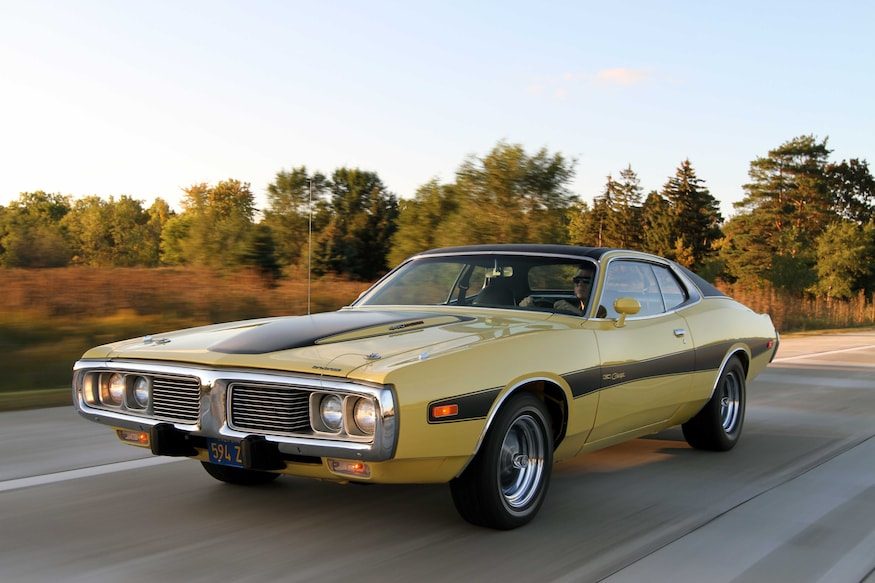
Cover photograph: 1974 Dodge Charger Rallye by George, licensed under CC BY-SA 2.0 via Wikimedia Commons.
The muscle world, every morning. Auctions, builds, reveals. Free.
.jpg)