The Mopar Fender Tag Decoder That Actually Reads the Year
Most tag charts in circulation treat 1968 and 1970 as the same car, and that is exactly how a real one gets misread.
Most tag charts in circulation treat 1968 and 1970 as the same car, and that is exactly how a real one gets misread.
The small metal plate riveted to the inner fender of a classic Dodge, Plymouth or Chrysler is the closest thing these cars have to a birth certificate. It is also the most misread object in the hobby. Feed the codes into any popular Mopar fender tag decoder and you get an answer in about four seconds. Whether that answer is correct depends on something most of those tools never ask you, which is what year the car was built.
Chrysler reused the same letters and three digit codes across a run of model years, and quietly changed what several of them meant. A chart that ignores the year still returns a confident result. It just returns the wrong engine, and that is not a rounding error.
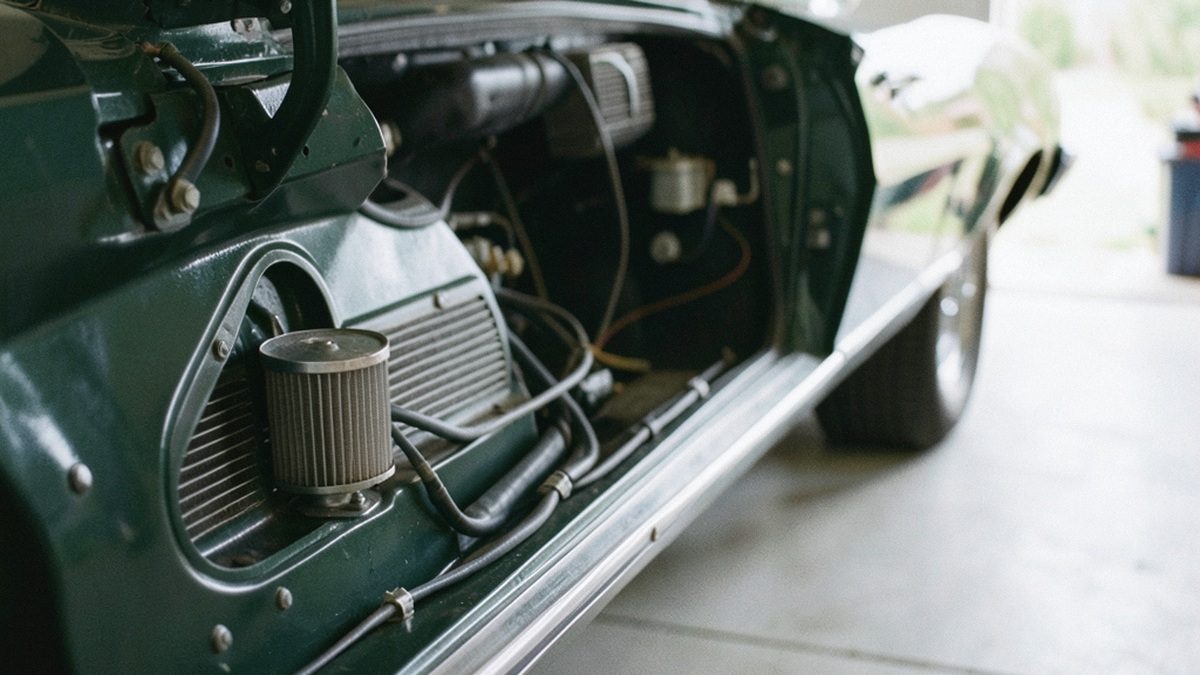
On almost every car you will meet, the tag sits on the driver side inner fender panel under the hood, held on with machine screws or rivets. Some earlier cars carry it on the radiator core support, the cowl, or the A pillar instead. Check those three spots before concluding a tag is gone.
Chrysler used tags of this kind from roughly 1962 through 1974, though the format the online tools cover is narrower. The two best known free decoders, at realdash.net and Kinley's Classics, both scope themselves to 1969 through 1974, which fairly reflects where the code sets are best documented. Galen Govier, the acknowledged authority on Mopar tag and broadcast sheet decoding, works the full span.
You do not read the tag like a page. Start at the bottom line and work upward, left to right within each line. Every serious walkthrough of a 1969 to 1974 tag is organized that way, because the bottom line carries the drivetrain and the identity of the car. Everything above is optional equipment.
On a 1969 and later tag, the bottom line runs engine code, then transmission code, then the VIN. The engine code starts with E and two digits, the transmission code with D and two digits. The VIN opens with a four character block giving car line, price class and body style. JS23 reads as Dodge Challenger, Special, two door hardtop.
The VIN is where the year problem bites hardest. Our own year aware VIN engine decoder exists because the letter in that block does not mean the same thing in 1968 that it means in 1970.
Pull up three different E code lists and you will find three different answers for at least one code. That is not sloppiness. It is what happens when you flatten a moving target into one table.
Some are genuinely stable. E44 is the 318 two barrel, E55 the 340 four barrel, E63 the high performance 383 four barrel, E74 the 426 Hemi. E31, the 273 two barrel, appears for 1969 and then goes away entirely, a useful reminder that a code can simply stop existing.
Then there is E86. One widely circulated list calls it a 440 four barrel at 375 horsepower. Others call it the 440 Six Pack at 390. Both camps can point at documentation, because the six barrel car was coded differently across the run, with E87 carrying the 390 horsepower version for 1970 and the 385 horsepower version for 1971. When a tag and a chart disagree, the chart may simply be from the wrong year.
The transmission codes do the same in miniature. D21 is the four speed manual throughout. D36 is documented as the heavy duty 727 TorqueFlite for 1969 through 1971, then shifts to the 727-B for 1972 and up. Same three characters, different transmission.
A fender tag is evidence, not a certificate. It records what the plant intended to build that week. It says nothing about the fifty years that happened afterward.
These are two separate systems, and conflating them is the most common failure in the material ranking for this subject. The E codes above are sales codes, the same family the factory used on the order form. The engine letter in the VIN is a different scheme entirely, and it is the one that got reassigned.
For 1968 and 1969, H is the 383 four barrel and J is the 426 Hemi. For 1970 those letters have moved on. H is the 340 four barrel, G is the 318, L is the 383 two barrel, N is the 383 four barrel, U is the 440 four barrel, V is the 440 Six Pack, and the Hemi has relocated to R. Read a 1970 car with a 1968 chart and you turn a 340 car into a 383 car and lose the Hemi completely.
This is not theoretical. Published guides from large, reputable outfits print the 1968 letter set under headings implying it covers the whole era, and Google's own AI summary for this query reproduces a flat engine letter list with almost no year qualification. We hit the same error researching the 1970 Charger, which is what pushed us to build the decoder.
Move up one line and the tag changes character. This row is about how the car looked and when it was scheduled. It carries the exterior paint code, the upper door frame color where the car had one, the interior trim code, the scheduled production date, and a six digit vehicle order number.
The scheduled production date is the figure most owners want, and the name deserves precision. It is the date the car was scheduled to be built, not the date it was finished, and certainly not the date it was sold. The vehicle order number beside it ties the tag back to the broadcast sheet.
Paint codes carry a useful three-character structure. Dodge's own heritage archive now confirms that the first letter identifies the color series year, with E for 1969, F for 1970 and G for 1971; the next character gives the color family and the final number separates the shade. That first letter dates the color code, not necessarily the car, because a finish such as EV2 continued into later model years. Use the rule as an orientation point, then verify the full code against a year-specific chart.
Everything above those two lines is optional equipment, written as a letter plus two digits and grouped by category. Once you know the categories the tag stops looking like noise. A is option and package groups, B brakes, C seats and interior, D transmissions and axles, E engines, F electrical, G glass and mirrors, H heating and cooling, J convenience items, L lighting, M moldings, N engine accessories, P power equipment, R radio, S suspension and steering, T and U tires and wheels, V paint, stripes and vinyl, W wheels and covers, and Y sales and destination.
The D group is worth knowing cold, because it carries the rear axle as well as the gearbox. D51 is 2.76 gears, D53 is 3.23, D55 is 2.45, D56 is 3.54, D57 is 3.91 and D58 is 4.10. D91 is the Sure Grip differential. A car sold as a factory 3.91 Sure Grip should carry D57 and D91, and if it does not, somebody has a story to tell.
The list terminates with END, or on some tags EN1 or EN2. That marker does real work. It tells you the option list finished there, rather than continuing onto a portion of the tag that has corroded away.
The honest limits are the part almost nobody publishes. First, the tag does not list every option the car left with, and how much it lists varies by assembly plant. Lynch Road cars are known for tags showing almost no optional equipment, which does not mean the car was a stripper. It means that plant did not stamp those codes. The document that lists everything is the broadcast sheet, sometimes still folded into a seat frame.
Second, the tag is only worth as much as its agreement with the rest of the car. On 1969 and later cars the last eight digits of the VIN were stamped into the body in more than one location, and the tag VIN should match those stampings and the dash plate. On 1968 and earlier cars it is the vehicle order number on the body. When those numbers disagree, walk carefully.
None of this makes the tag useless. It makes it the first step rather than the last. Decode the tag, then check it against the body stampings, the dash VIN, the engine pad, and the broadcast sheet if the car still has one. That discipline separates a documented Road Runner from a well built clone, and it is why the codes on a Charger deserve an afternoon before money changes hands.
On most classic Dodge, Plymouth and Chrysler cars the tag is attached to the driver side inner fender panel under the hood, held on by machine screws or rivets. On some earlier cars it sits instead on the radiator core support, the cowl, or the A pillar, so check all three before deciding the tag is missing.
Start at the bottom line and work upward, reading left to right within each line. On a 1969 and later tag the bottom line gives the engine code, the transmission code and the VIN. The line above holds paint, interior trim, the scheduled production date and the vehicle order number. Everything higher is optional equipment.
The stamped tag format the popular decoders handle runs from about 1962 to 1974, and the tools themselves generally scope to 1969 through 1974. Later cars carry identification data in a different arrangement, which is why a 1969 to 1974 decoder returns nonsense for them rather than an error message.
Yes, and it is a legitimate restoration service when handled properly. Galen Govier reproduces tags for 1962 to 1974 Dodge, Plymouth and Chrysler cars, but only for owners who can supply a build sheet along with a VIN plate or title. Fabricated tags without that paper trail damage the value of the car and the credibility of the hobby.
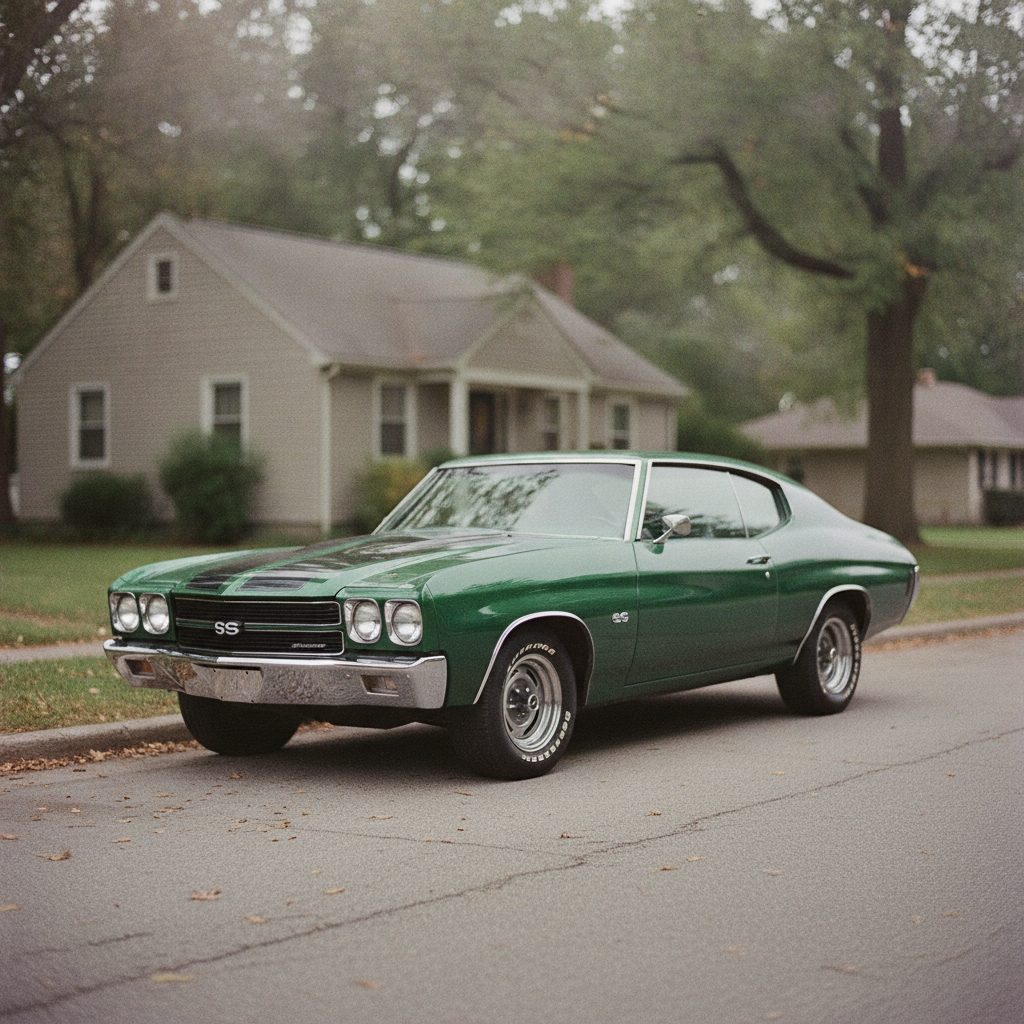
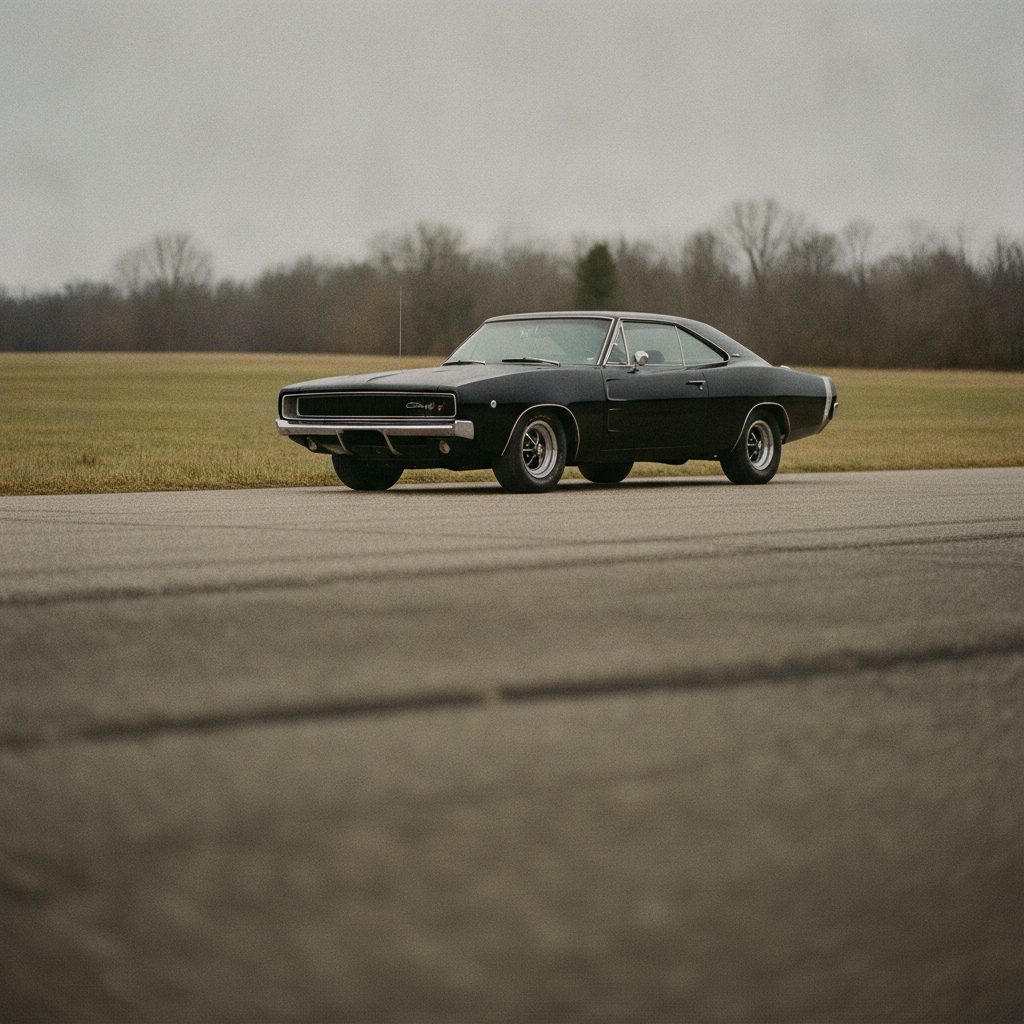
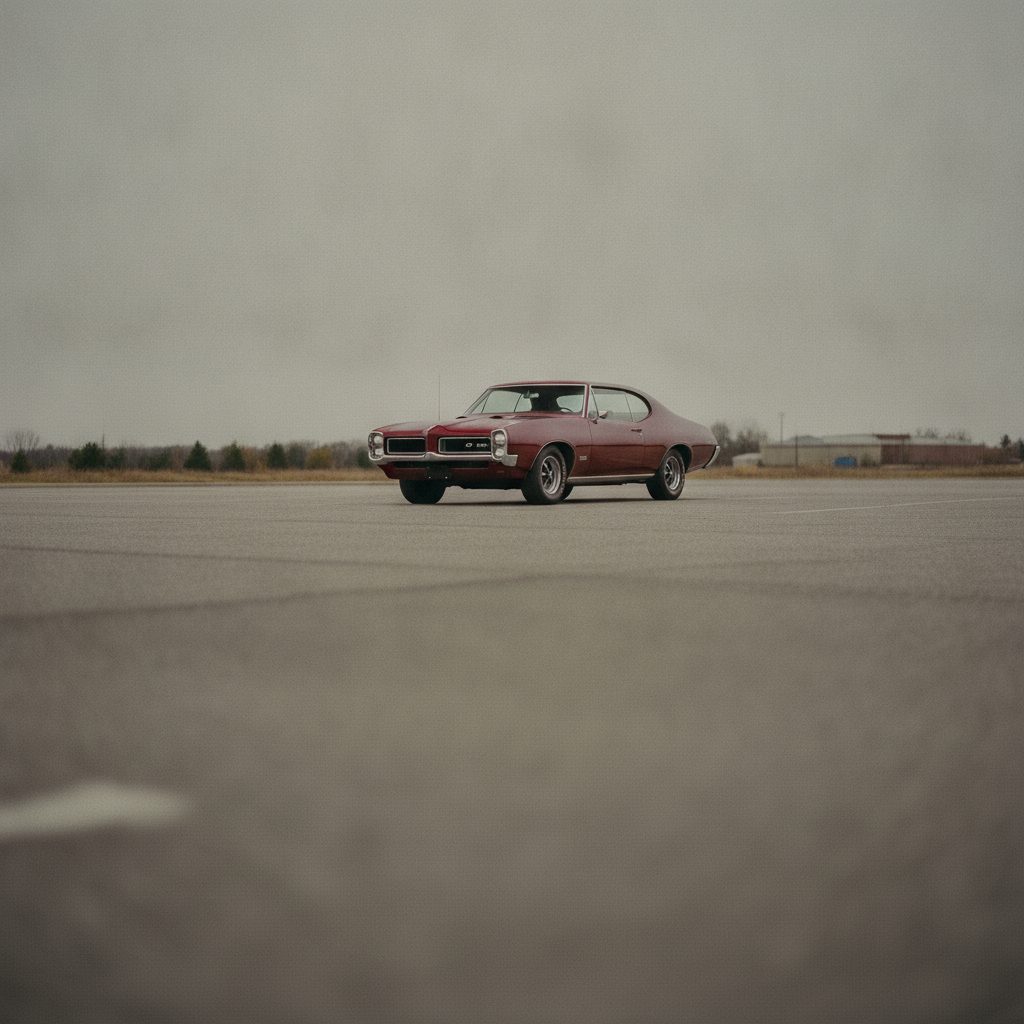
Sources for the code tables here: the 1969 to 1974 fender tag walkthrough at StockMopar, the sales code listings at mopar1.us, the documentation guidance at MaxWedge.com, and the decoder tools hosted by RealDash and Kinley's Classics. The cover photograph is an illustration produced in house, not a picture of a specific car.
The muscle world, every morning. Auctions, builds, reveals. Free.