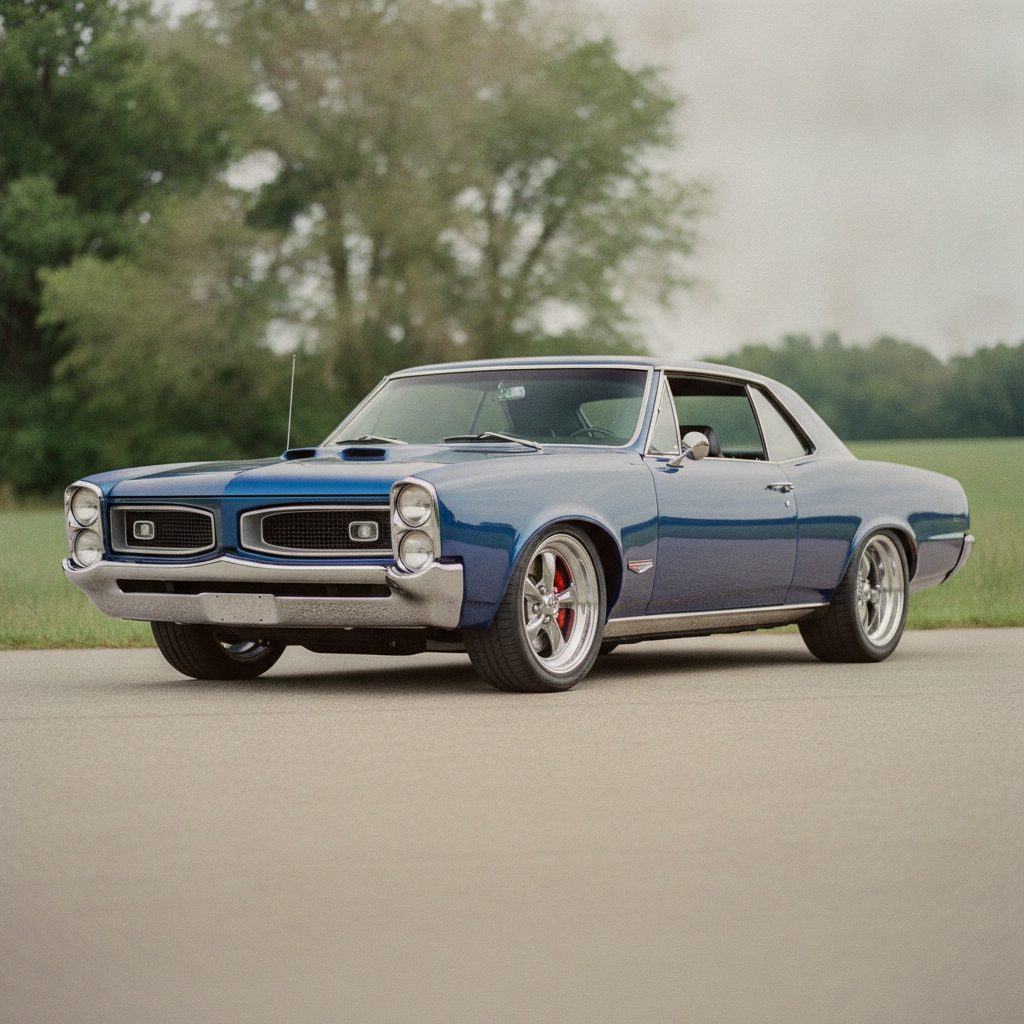
Pontiac Cowl Tag Decoder: Where the GTO Hides
The Fisher Body plate on a 1964 to 1972 Pontiac nails the paint, trim and build week, but it never names the engine and goes blind on the GTO in three model years.
The Fisher Body plate on a 1964 to 1972 Pontiac nails the paint, trim and build week, but it never names the engine and goes blind on the GTO in three model years.
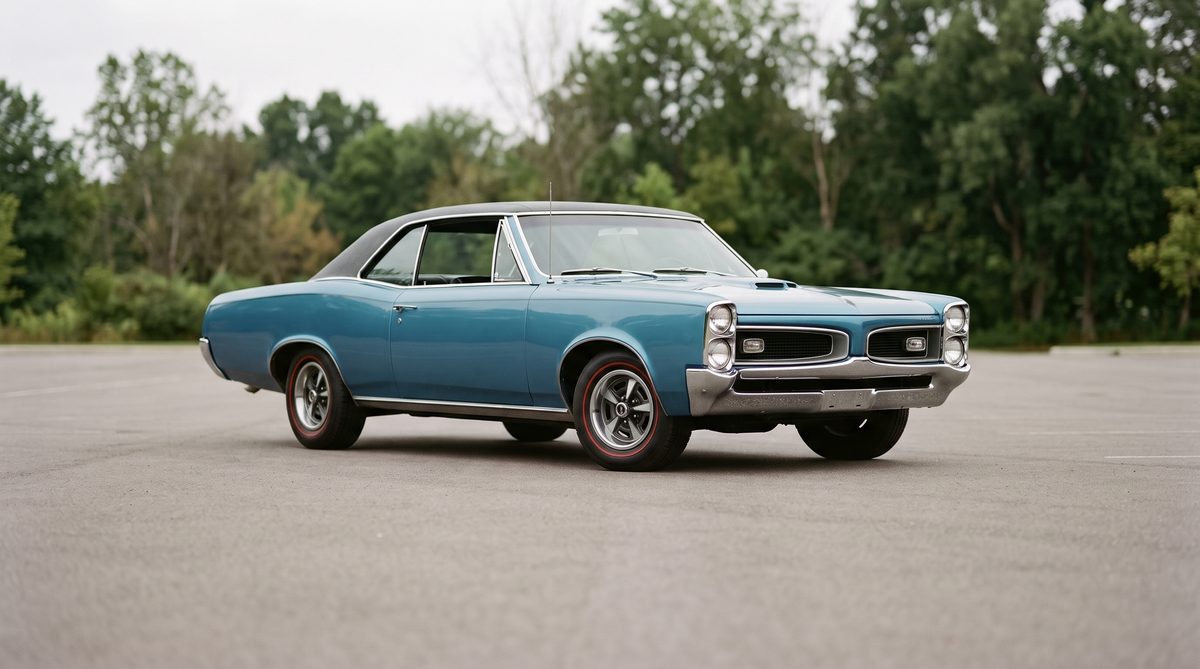
Pull the hood on a 1964 to 1972 Pontiac and there it is, a small stamped plate riveted to the firewall. Sellers photograph it, buyers squint at it, and a whole corner of the hobby treats it as a birth certificate. It isn't one. The Fisher Body tag is a work order for the body shop, and on a Pontiac it is silent on the engine in every year and silent on the GTO in three of them. Read it for what it can actually say and it is a sharp tool. Read it for what the seller says it says and it is the cheapest prop in a clone.
Search for a Pontiac cowl tag decoder and you'll mostly find forum threads asking strangers to read a photo, a Facebook group post, a 2017 answer-site reply, and a parts seller's chart that turns out to decode the VIN, not the tag. None of them sorts the tag's fields into the ones that carry weight in a sale and the ones that don't. That is what this guide does, year by year, for the GTO, the LeMans and the Firebird.
The layout drifts by year and by plant, but the fields stay the same. Up top sits the time built code, two digits for the month and a letter for the week, so 05A is the first week of May. Next to ST you'll find the model year, then the style number, which is the division digit (2 for Pontiac), two series digits and two body digits. So 2 23 37 reads as Pontiac, Firebird, coupe.
The plant comes next, as a Fisher Body abbreviation rather than the single VIN letter. First-generation Firebird tags read LOS for Van Nuys, LOR for Lordstown and NOR for Norwood. Then there's the body sequence number. It counts bodies through that Fisher plant and will never match the sequence in the VIN, and it shouldn't. Below that you get the trim code, three digits for interior color and material, and the paint code. Pontiac used letters for lower and upper body colors until mid-1969, then switched to numbers, with a letter added for the vinyl or convertible top.
Earlier plates also carry accessory codes along the bottom, grouped by number with a letter in each group. These cover glass, seats, console and similar items. They are real, but they are not consistent from plant to plant, and they are the easiest thing on a reproduction tag to add.
In 1964 and 1965 the GTO wasn't a model. It was an option package on the Tempest LeMans, so a GTO body is a LeMans body. On a 1965 car the style number reads 23727, 23737 or 23767 whether the car left Pontiac with a Tri-Power 389 or a six. The VIN reads 237 either way too. Nothing in the style number separates them.
Restorers and auction listings point to a letter N in the fifth accessory group as the stamped GTO option, and when it's there on an untouched tag it's a useful clue. It is still one letter. A plate that reads 5N proves somebody stamped an N, and a missing N proves nothing either, because accessory stamping varied by plant. On a 1964 or 1965 car the only document that can settle the GTO question is the factory billing record, which we'll get to.
For 1966 the GTO became its own series, 242, and stayed there through 1971. Now the style number finally carries weight. A 1966 or 1967 GTO hardtop tag reads 24217, and a 1968 to 1971 hardtop reads 24237, with 24267 for the convertible. The VIN starts 242 as well, so the two should agree. A 242 tag on a car whose VIN starts 233, 235 or 237 is a LeMans or Tempest wearing borrowed paperwork.
That's also the limit. Series 242 tells you GTO. It doesn't tell you which GTO. The Judge was an option on the 242 car from 1969 to 1971, so a Judge and a plain GTO share the same style number, and nothing on the tag separates a Ram Air car from a base 400. Engine identity lives on the block, in the two-letter code and the VIN derivative, which our guide to Pontiac engine codes walks through stamp by stamp.
The cowl tag can tell you what a Pontiac body was built as. It can never tell you what engine it was built with.
For 1972 the GTO went back to being an option, this time on the LeMans, and the 242 series disappeared. The tag goes quiet on the GTO again. The VIN changed format that year too, with a series letter in place of two digits and an engine code at position 5. Our Pontiac VIN decoder explains why that engine code can rule a 1972 GTO out but never rule one in. For the tag, the lesson is simple. In 1972, as in 1964 and 1965, the plate can confirm a LeMans body, its paint and its trim, and that's all it can confirm.
Every 1967 to 1969 Firebird wears the same two style numbers, 22337 for the coupe and 22367 for the convertible. That covers the six, the Sprint, the 350 and the 400, and it covers the Trans Am. Pontiac built 689 Trans Am coupes and eight Trans Am convertibles in 1969, according to production figures compiled by the First Generation Firebird club, and every one of them carries the same style number as a six-cylinder base car. The VIN can't help either. Its third digit is 3 on every first-generation Firebird.
From 1970 the picture improves. The Trans Am got its own series, 228, alongside 223 for the base car, 224 for the Esprit and 226 for the Formula, so the style number and the VIN can now name the model. Some second-generation plates also carry the model RPO code, WS4 for a Trans Am. Trans Am Country, a long-running owner site, warns that the Van Nuys plant was notorious for leaving those codes off, so a missing code on a Van Nuys car is not, on its own, a red flag.
The parts-seller chart that ranks second for this search is laid out under headings like 1964 GTO Tag, but the fields it decodes belong to the VIN. A buyer who reads it that way will go looking for an engine digit on a firewall plate that never carried one. The same chart lists series 33 for both the 1971 T-37 and the 1971 LeMans. The 1971 LeMans was series 235, with 233 for the T-37 and 237 for the LeMans Sport. It also lists a plant at Bloomfield, Illinois, the same entry we've caught on copied Buick and Pontiac VIN charts. GM never built cars there.
A general GM body tag guide that shows up in the image results says the tag's plant code must match the plant code in the VIN. The plants should agree, but the characters won't. A Van Nuys Firebird reads LOS on the tag and L in the VIN, so match the meaning, not the letters. And the answer-site reply that ranks for this search decodes a 1965 cowl tag with a VIN series table. On that car, neither one can tell a GTO from a LeMans.
Pontiac kept billing records, and Pontiac Historic Services holds them. PHS works from the VIN, covers 1961 to 1986, and sends a copy of the factory invoice or billing history, a letter decoding the options where needed, and a dealer order form for that year. PHS is independent of GM and quotes three to five business days for a packet. For a 1964 or 1965 GTO, a 1969 Trans Am or a Judge, this is the document that answers the question the tag can't.
In the market, that gap between plate and paper drives price. A GTO with a PHS packet that matches its VIN, its tag and its engine stamps trades as the real thing. One with a convincing tag and no paper trades as a question. If you're shopping, read the tag for paint, trim, build week and body style, then get the PHS packet before you get your checkbook out. For more on the badge itself, our GTO hub collects every Goat story we've run, and our Chevelle cowl tag decoder covers the same Fisher plate on Pontiac's Chevrolet cousin.
No. From 1964 to 1972 the Pontiac Fisher Body tag records the time built, model year, style number, plant, body sequence, trim and paint, plus accessory codes on some plates. It never records the engine. Engine identity comes from the block's two-letter code, its casting number and date, and the VIN derivative stamped on the block.
You can't settle it from the tag. A 1965 GTO was an option on the LeMans, so its style number reads 23727, 23737 or 23767, the same as a LeMans. An N in the fifth accessory group is a clue, not proof. The factory billing record from Pontiac Historic Services is the document that confirms a GTO.
Series 242 is the GTO from 1966 to 1971, the only years the GTO was its own Pontiac series. A tag reading 24217, 24237 or 24267 confirms a GTO body, and the VIN should start 242 to match. It cannot tell a Judge from a standard GTO or identify the engine.
No. All 1967 to 1969 Firebirds share style numbers 22337 and 22367, including the 689 Trans Am coupes and eight convertibles built in 1969, and the VIN does not separate them. Only the billing history from Pontiac Historic Services confirms the Trans Am package. From 1970 the Trans Am had its own series, 228.
The muscle world, every morning. Auctions, builds, reveals. Free.