Classic Car Values Are Splitting in Two
The best cars keep setting records while ordinary drivers barely beat inflation, and the price guide only tells you half of that story.
The best cars keep setting records while ordinary drivers barely beat inflation, and the price guide only tells you half of that story.

Ask ten people what classic car values are doing this year and you will get ten answers, most of them confident and wrong. The headline sales say the hobby has never been richer. The car under a cover in your neighbor's garage says the opposite. Both are correct, and the distance between them is the most important thing in the collector market right now.
Hagerty's Market Rating, the broadest gauge of collector car heat, sat at 58.77 in July 2026. That figure lives inside what Hagerty calls flat market territory, between 50 and 60, and it has stayed under 60 for roughly a year. Flat is an average, and averages hide the only thing you need to know.
Two numbers from the same pile of auction data tell the story better than any index can. Through the first half of 2026, the global average sale price at auction climbed about 22 percent year over year, to roughly $75,000. Over the same stretch, the median sale price rose 2 percent, to about $26,900. The average is being hauled upward by a thin layer of seven and eight figure cars. The median, which is what the middle of the market actually pays for a car, has barely kept step with inflation.
The volume figures agree. Global auction sales reached $3.17 billion through June, up 32 percent on the year, while lots offered grew 10 percent and lots sold grew 8 percent. Almost none of that growth came from more cars changing hands. It came from bigger prices on a small number of very good cars. That is the split, and it shows up in every auction result.
Hagerty publishes eleven quarterly indexes that average the condition #2 values of representative cars in a segment. Its Supercar Index has been the runaway story, climbing another 7 percent in the most recent quarter after a 19 percent jump the quarter before, led by cars like the 2005 Ford GT, the Porsche 959 and the Ferrari F40. The American Muscle Car Index, by contrast, posted modest and uneven gains built on a handful of standout sales rather than broad strength.
An index that rises because three cars in it jumped is not the same as a segment where everything is worth more. If you own the exact car that carried the index, your money went up. If you own the same model with a different engine, a repaint and no paperwork, the index moved and you did not.
July is normally the quiet stretch between the spring sales and Monterey, and it still moved a lot of metal. GAA Classic Cars ran one of its four annual sales at its indoor Automobile Palace in Greensboro, North Carolina, offering roughly 750 vehicles. Reported top results included a 1967 Shelby GT500 at $176,000, a 1957 Chevrolet Bel Air convertible at $175,000, a restomodded 1969 Camaro RS/SS at $167,000 and a 1970 Chevelle SS 454 LS6 at $160,000. Those are strong, sober numbers for genuine cars. The LS6 result in particular is what a top 1970 Chevelle SS is worth when the car is right, and the Shelby name continues to carry a premium nothing else in the Ford world can match.
The same weekend, Mecum's Harrisburg sale at the Pennsylvania Farm Show Complex ran four days and roughly 1,200 vehicles. The headline was a 2026 Chevrolet Corvette ZR1 Stars and Steel Edition convertible, one of three built, at a record $561,000 with commission. Buried in the same catalogue, a well kept 1962 Oldsmobile Starfire convertible sold for $25,300. One weekend, one auction house, and a twenty to one spread between the halo car and the honest one. That is the market in a single sentence.
A price guide gives you the middle of a market. It cannot tell you whether the car standing in front of you is the good one.
Every serious price guide quotes values by condition, and the grades are not marketing language. Hagerty splits them four ways. A #1 car is concours, better than new, and genuinely rare: possibly one car in 500. A #2 is excellent, the kind of car that wins a regional show, and might be thirty or forty in 500. A #3 is good, drives and runs well, may wear some incorrect parts, and describes most collector cars in private hands. A #4 is fair, with chipped paint or a tired interior, flaws you can see from across the lot, and it still runs.
Here is what matters for anyone holding a driver. Over a recent five year window, Hagerty's own analytics team measured the average increase in guide values by grade: 32.4 percent for #1 cars, 33.8 percent for #2, 29.4 percent for #3 and 23.4 percent for #4. A decade earlier, across 2009 to 2014, the spread between the top and bottom grade was about seven percent. It has widened ever since, largely because restoration costs climbed hard enough that buying a needy car and fixing it later stopped penciling out.
The practical lesson is that a #3 car is not a #2 car with a discount attached. It is a different asset on a different curve. Two identical looking cars at the same sale can bring $55,000 and $21,000, and condition explains most of that gap.
There is no single blue book for old cars, and the sources that exist are measuring different things. The Hagerty Price Guide covers more than 40,000 collector vehicles across those four condition grades and updates quarterly, with a basic search free to use. J.D. Power absorbed the old NADA classic guides, so nadaguides.com now redirects there, and its numbers lean toward the dealer side of the trade, including wholesale figures. CPI, which stands for Cars of Particular Interest, is a Black Book product aimed at businesses and reaches back to 1946.
Then there are the sold-data sources. Classic.com, launched in 2019, aggregates what cars actually brought at auction rather than what a guide thinks they are worth. The Hemmings price guide draws on years of Hemmings asking prices, and asking is not selling. Bring a Trailer's results archive is free and specific, though it skews toward cars that photograph well online.
Use them in that order and they stop contradicting each other. Frame the range with a condition-graded guide, then verify it against completed sales of your exact year, engine and body style. If a guide number and a stack of recent results disagree, the results win. A guide updates quarterly. A market moves every weekend.
Muscle has one wrinkle that European classics mostly do not, and it swings money harder than paint or mileage. On many American cars, the VIN does not prove the thing that makes the car valuable. A pre-1972 GM VIN encodes neither the engine nor the SS package, which is why a Chevelle SS or a Z/28 lives or dies on its cowl tag, block stamping, build sheet and Protect-O-Plate. Ford owners have the Marti Report, Pontiac owners have PHS billing history, and Mopar owners have the fender tag and broadcast sheet. Chrysler also reassigned its VIN engine letters for 1970, which is why so many published code charts quietly misidentify cars, and why we built a year-aware VIN engine decoder that shows what the same letter means in every other year.
The money follows the documents. A tribute car built to a high standard is worth real money, and worth calling what it is. A documented numbers-matching car with the original paperwork sits in an entirely different price bracket, and the ones bringing headline results at GAA and Mecum are almost always the documented ones. If a seller cannot produce the paper, you are buying a nice car, not a rare one, and it should be priced that way.
For buyers, the split is good news at the bottom. Ordinary drivers, unrestored #3 and #4 cars and the affordable end of the hobby went sideways while the top end ran away, so a decent car costs less in real terms than it did three years ago. Body condition, not mechanical condition, should decide what you buy: an engine is a known price, and rust is not. Our guide to the cheapest muscle cars covers where that money goes furthest right now.
For sellers, the message is narrower. If your car is genuinely excellent and fully documented, the market is paying up and there is no reason to be shy about reserve. If it is a good honest driver, price it against completed sales rather than the headline result you read about, because those two numbers drift further apart every quarter. The next test arrives immediately: Mecum, Barrett-Jackson, Bonhams, RM Sotheby's and Gooding all hold major sales at Monterey Car Week in mid August, and announced consignments suggest the top-heavy pattern has more room to run.
Start with a condition-graded price guide such as Hagerty's to establish a range for your year, model and engine, then check completed sales for that exact combination on Classic.com, Bring a Trailer or auction house results archives. Be honest about condition, since most cars owners call excellent are actually good. For insurance or a large sale, add a professional appraisal.
Not in the single authoritative sense that Kelley Blue Book serves the used car market. Kelley's coverage of older vehicles is thin, and J.D. Power absorbed the old NADA classic guides. The closest equivalents are the Hagerty Price Guide, the CPI Black Book for collector vehicles, and sold-data sites like Classic.com. Serious buyers cross-check at least two.
Both, depending on the car. Through mid 2026 the global average auction price rose about 22 percent while the median rose just 2 percent, meaning top-tier cars are climbing while ordinary ones roughly track inflation. Hagerty's Market Rating has sat below 60, in flat territory, for about a year, and its muscle index shows uneven gains.
There is no single national definition. Most states set antique or classic plate eligibility at 25 years, though the rules and restrictions vary widely, and collector insurers commonly write policies on cars 20 years and older. The Classic Car Club of America is far stricter, reserving the term Full Classic for select cars built between 1915 and 1948.
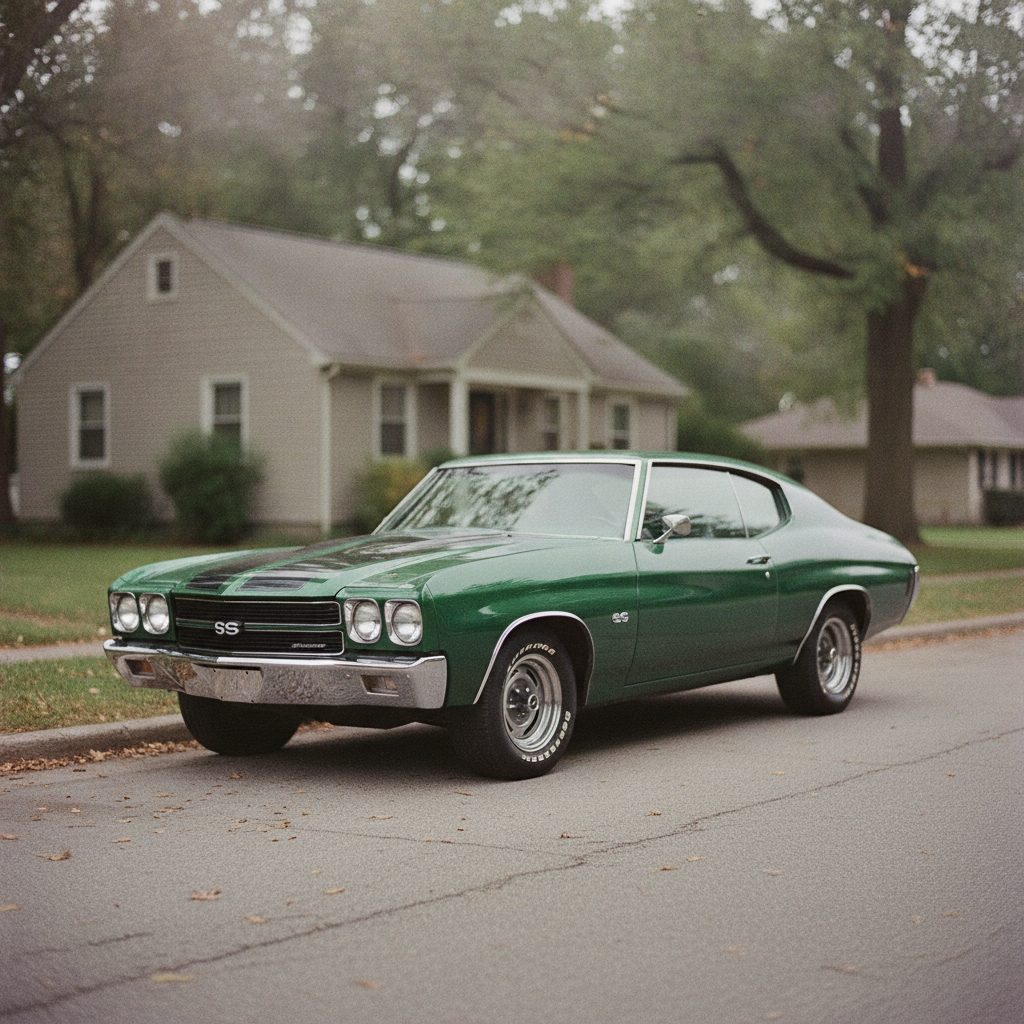
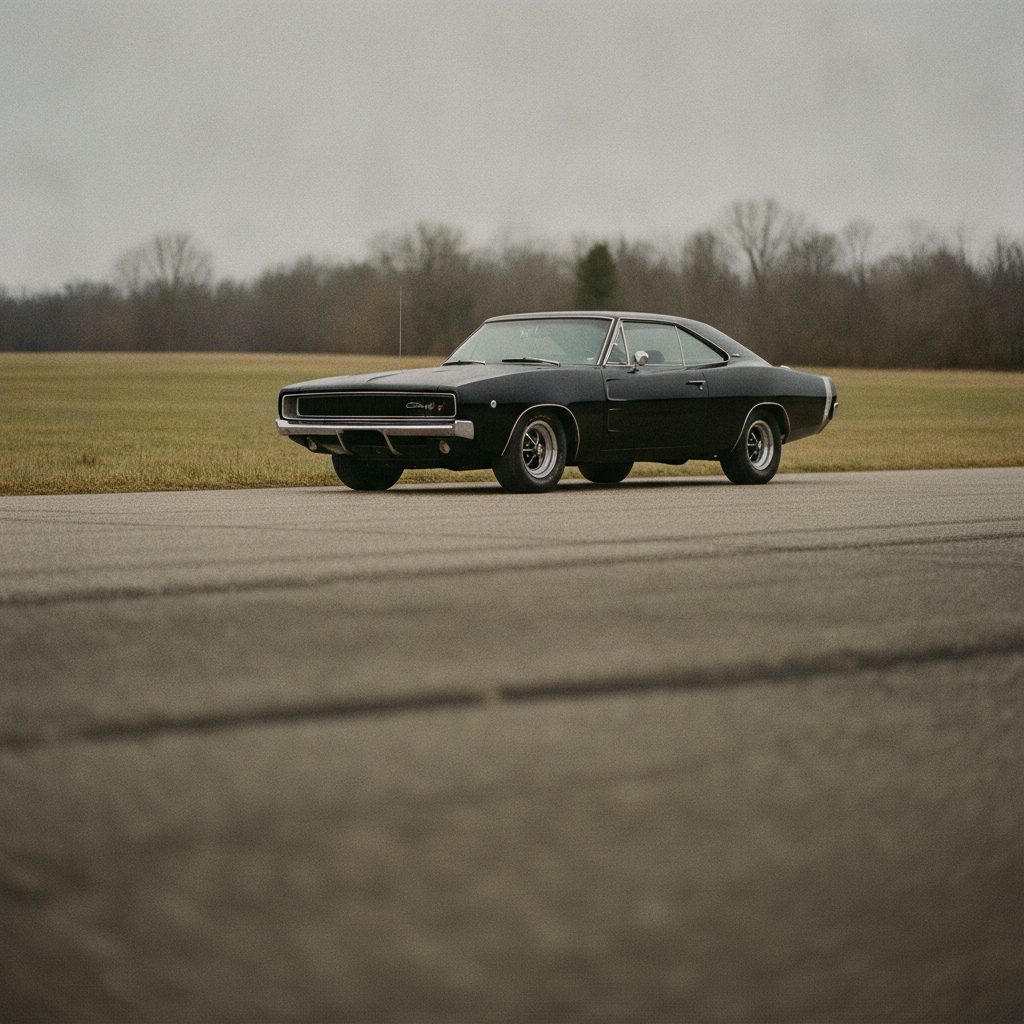
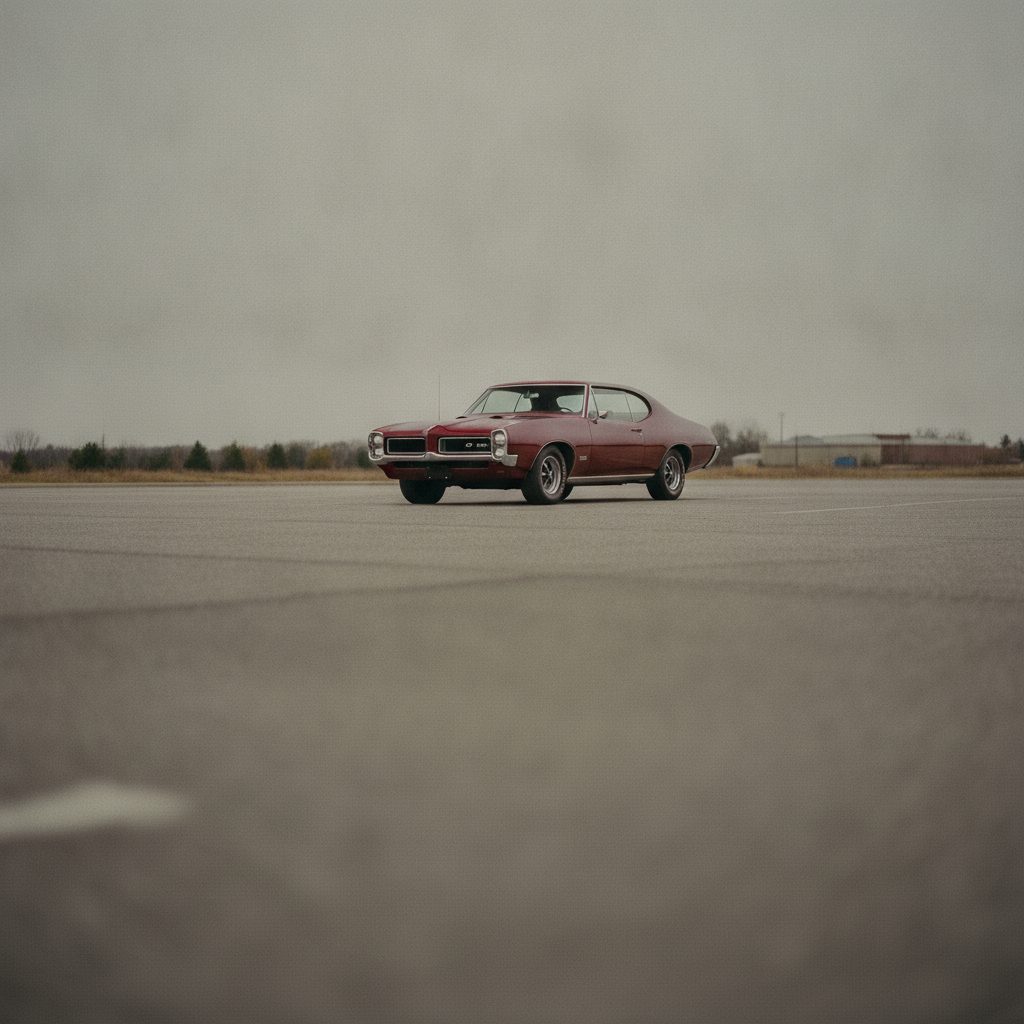
Cover illustration produced in house for Big Block Magazine. It is a representative row of late 1960s American cars on an auction field, not a photograph of a specific sale. The auction results cited above are publicly reported figures from GAA Classic Cars and Mecum, and the market data is from Hagerty.
The muscle world, every morning. Auctions, builds, reveals. Free.