Mopar Paint Codes: Why Three Characters Aren't Enough
The factory code names the finish, but the model year, division, and surviving paperwork decide what that color actually proves.
The factory code names the finish, but the model year, division, and surviving paperwork decide what that color actually proves.
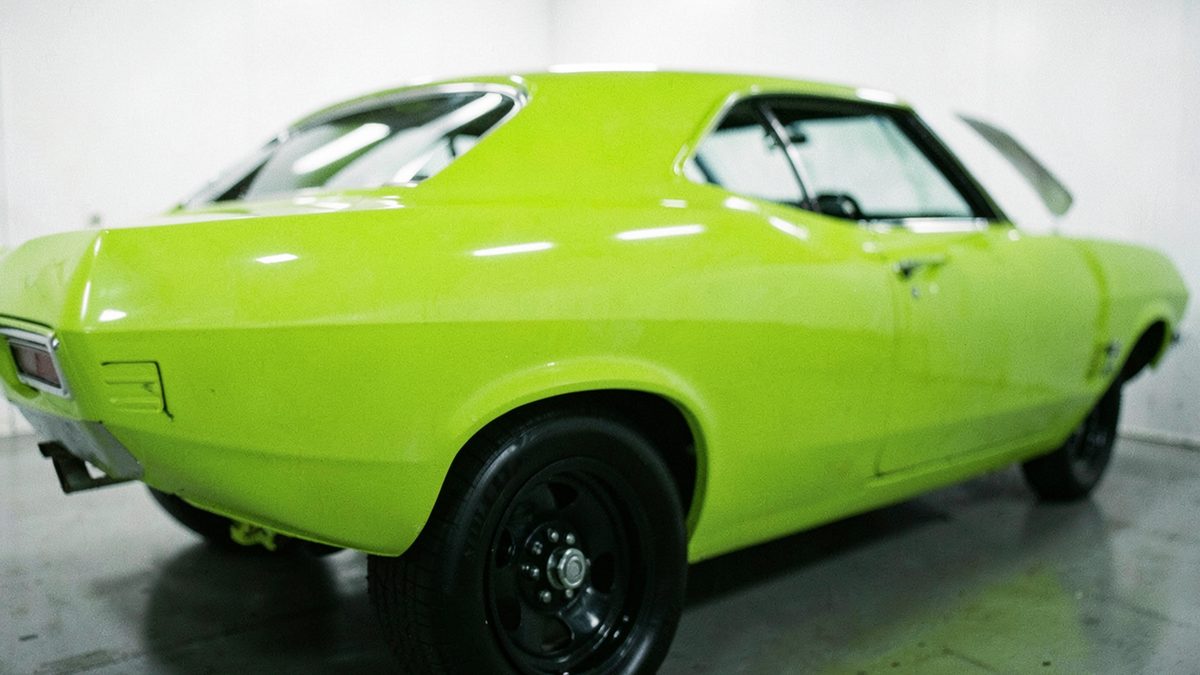
A classic Mopar can wear enough color to stop traffic, yet the most important part of that paint may be three characters stamped into a dull metal tag. FJ5, FC7, EV2, and FM3 look like shorthand from a parts counter. Read correctly, they identify some of the most memorable finishes of the muscle era. Read without the model year, and even a familiar code can send a restoration in the wrong direction. Mopar paint codes are a starting point, not a paint formula and not proof that the finish on the car today is original.
That distinction matters because Chrysler's system carried more information than a nickname, while still leaving important questions unanswered. The same finish could have a different sales name at Dodge and Plymouth. A color could remain available after the year represented by its first character. Midyear bulletins could add colors after the original books were printed. Special-order cars could carry 999 instead of a standard code. The useful answer is therefore a method: read the complete code, place it in the correct model year, then check the tag against the broadcast sheet and period ordering material.
Dodge's own heritage archive confirms the basic pattern. The first character identifies the color series year: E means 1969, F means 1970, and G means 1971. The second character identifies the color family, and the final number separates the shade within that family. That is why FJ5 and FJ6 are both 1970-series greens but are visibly different colors. It is also why dropping the first character and asking for plain "B5 blue" throws away information a paint supplier needs.
The trap is assuming that the first character is the car's model year. It is not. It dates the color code. EV2 belongs to the 1969 series, yet Dodge says the color remained available through 1972. EL5 likewise originated in the 1969 series and continued through 1971. A 1971 car can legitimately carry an E-series color if that finish remained on the order sheet. The code should be read whole and checked against the application chart for the car, division, and production period.
On most 1969-and-later muscle-era cars, the exterior paint appears on the fender tag under the hood. The tag layout changes by year and assembly plant, so do not force one screenshot onto every Dodge and Plymouth. Our Mopar fender tag decoder shows how to start at the bottom and keep the paint field separate from the VIN, trim, and sales codes around it. Photograph the entire tag before cleaning it, because sanding a rusty plate can erase shallow characters.
The broadcast sheet is the second check, not a substitute chosen only when it agrees with the desired answer. A sheet found under a seat must match the car's VIN before any color entry is trusted. Our broadcast sheet guide explains that rejection test. When both documents survive and match, agreement between their body-paint entries is stronger evidence than either item alone. When they disagree, stop and investigate the document identity, tag originality, and production date before buying paint.
Paint, vinyl, and stripe codes can also sit close together. A code such as V1X describes a black vinyl roof, while stripe and two-tone entries describe an appearance treatment rather than the main body finish. Period 1970 Dodge ordering pages list roof and two-tone combinations separately from the body color. That separation prevents a common mistake: treating every code with a color word beside it as the exterior paint code.
The code is more reliable than the nickname because Chrysler's divisions marketed the same finish differently. FJ5 was Sublime at Dodge and Limelight at Plymouth. FC7 was Plum Crazy at Dodge and In-Violet at Plymouth. EK2 was Go Mango at Dodge and Vitamin C at Plymouth. FM3 was Panther Pink at Dodge and Moulin Rouge at Plymouth. EV2 was HEMI Orange in Dodge language and Tor-Red for Plymouth and Chrysler. A seller using the Plymouth name on a Dodge may be speaking casually, not exposing a fake car. The shared code settles the finish.
Names can still create false confidence. FJ5 and FJ6 are not interchangeable because both look green in a photograph. Dodge describes FJ5 as the brighter Sublime or Limelight shade and FJ6 as the deeper Green Go or Sassy Grass color. Lighting, old film, faded single-stage enamel, modern clearcoat, and screen calibration can push either image toward the other. Do not authorize a mix from an auction photo or a remembered nickname. Give the supplier the full factory code and the vehicle's year.
The nickname wins the conversation. The complete code wins the restoration.
Period documents show why a year-only chart is incomplete. Chrysler's 1970 Fleet Buyer's Data Book presented 31 standard acrylic-enamel colors and said dealers could also help fleet and leasing customers order special exterior colors. Its chart includes familiar codes such as EB5, FC7, FJ5, and EK2, but the same archive warns that advance publications were subject to revision. The printed palette was a working sales document, not the final word on every car built months later.
A Chrysler-Plymouth Product Information Bulletin dated January 28, 1970 makes the point concrete. It announced FJ6 Sassy Grass Green and FM3 Moulin Rouge for early February production on the Valiant, Barracuda, and Belvedere lines. It also specified matching interior, roof, mirror, and stripe availability. A modern table that labels either paint simply "1970" hides the fact that an early-production car could predate the option. Scheduled production date and period bulletin matter when a color claim affects value.
That does not mean every unusual early car is wrong. Pilot cars, show cars, and special orders can break normal timing rules. It means the burden of documentation rises when the tag, date, and published availability do not line up. A persuasive file might include the matching sheet, original invoice, dealer order, historical photographs, and physical evidence in protected areas. A fresh repaint and a story are not enough.
The most dangerous flat-chart answer is 999. It does not name one universal shade. In muscle-era documentation it flags a special paint situation whose actual finish must be established elsewhere. Chrysler's fleet book explicitly offered special exterior colors outside the standard palette. Dodge's history of the 1968 LO23 Hemi Dart gives an even sharper example: on those factory drag cars, 999 indicated primer rather than a final exterior coat. The number describes an exception, not a can of paint.
That corrects a live error in the current search field. At least one model-specific chart labels 999 as Bahama Yellow, while registries and period-aware references use it for special-order paint. Bahama Yellow may have been the documented finish on a particular 999 car, but the result cannot be promoted into a universal decoder entry. A 999 tag requires the special-order number, invoice, sheet, or other car-specific evidence before anyone can name the original color.
For restoration, start with evidence before chemistry. Record the tag and sheet, confirm the car's identity, and look for protected original paint under weatherstrip, behind trim, beneath the package tray, or inside an untouched trunk hinge area. Then take the complete code and a clean original sample to a supplier that can cross-reference period formulas. Old acrylic enamel and a modern basecoat-clearcoat system can share a code but differ in texture, gloss, metallic orientation, and how the color reads in sun. A spray-out card under daylight is cheaper than repainting a quarter panel.
For buying, factory color is one part of the car rather than a shortcut to value. A color change can be excellent work and honestly disclosed. A claimed original high-impact finish should survive inspection at jambs, trunk gutters, under seals, and around fasteners, while the documents should agree. The same discipline applies to a 1970 Dodge Charger or a Plymouth Road Runner: code, date, application, paperwork, and physical car must tell one story.
Primary references for this guide include Dodge's official High Impact Colors heritage page and LO23 Hemi Dart history, plus Chrysler's 1970 Fleet Buyer's Data Book and January 28, 1970 Product Information Bulletin preserved by the Hamtramck Historical archive. The cover is a representative in-house illustration of a freshly painted classic coupe, not a photograph of a specific car.
The first character identifies the color series year, such as E for 1969, F for 1970, and G for 1971. The middle character identifies the color family, and the final number separates the shade. Always verify the complete code against the car's model year and division.
No. The muscle-era VIN identifies the car line, price class, body style, engine, model year, plant, and sequence, not the exterior color. Look for the paint entry on the fender tag and matching broadcast sheet, then confirm it with year-specific factory ordering material.
It indicates a special paint situation, not one universal color. The actual finish must be established from the car's special-order paperwork, broadcast sheet, invoice, period photographs, or protected original paint. On Dodge's 1968 LO23 Hemi Darts, for example, 999 indicated primer rather than a final coat.
Yes. FJ5 was marketed as Sublime by Dodge and Limelight by Plymouth. Other shared finishes also carried division-specific names, including FC7 Plum Crazy or In-Violet and EK2 Go Mango or Vitamin C. Use the complete code, not the nickname, when documenting or mixing the color.
The muscle world, every morning. Auctions, builds, reveals. Free.