The 70s Muscle Car Was Never as Slow as the Spec Sheet Says
The decade's horsepower collapse is part regulation and part arithmetic, and telling the two apart changes which cars you should be buying.
The decade's horsepower collapse is part regulation and part arithmetic, and telling the two apart changes which cars you should be buying.
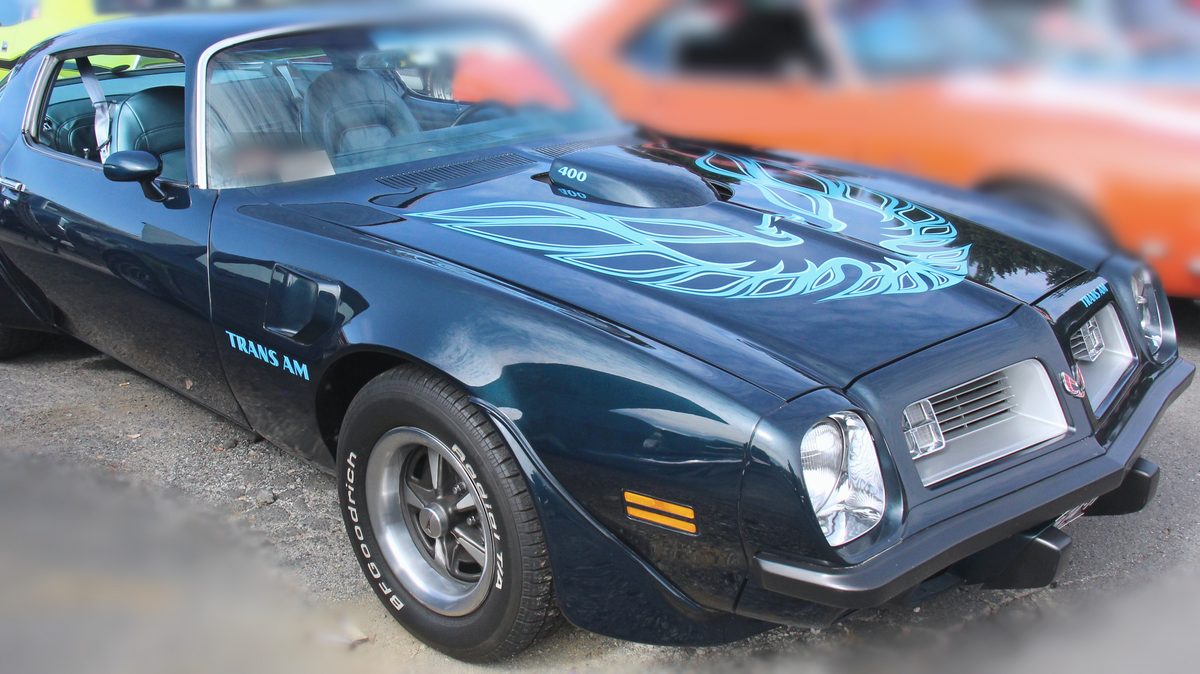
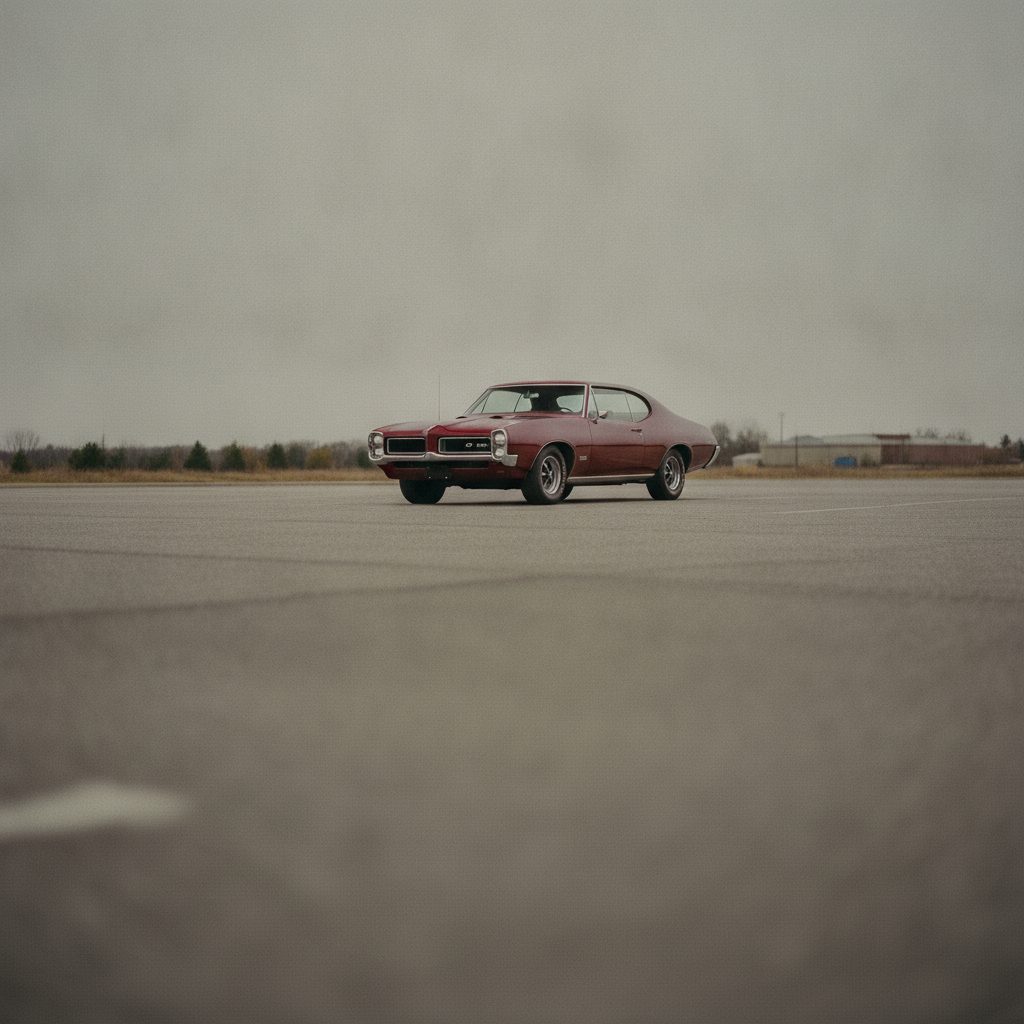
In 1971 a Pontiac Trans Am left the line with a 455 HO under the shaker hood, rated at 335 horsepower. In 1972 the same engine, carrying the same camshaft and the same heads, was rated at 300. Pontiac had not thrown anything away between those two model years. The ruler changed. That one fact explains more about the 70s muscle car than any top ten list ever written, and it is why the decade reads like a collapse on paper when the truth is messier, slower moving, and a great deal more interesting.
Every roundup of the era tells the same story in the same order. The 1970 cars were gods, the government showed up, and by 1975 everything was a vinyl-roofed disappointment. That version is not wrong so much as lazy. It compresses four separate forces into one villain, and it skips the part a buyer actually needs, which is what the numbers on a 1972 window sticker really mean next to the numbers on a 1970 one.
Four things hit at once, and they arrived in a specific order that matters. Insurance came first, then compression, then the rating system, then the fuel itself. Each one gets blamed for the whole decade, and none of them did the job alone. If you want the ground rules on what qualifies as one of these cars in the first place, our piece on what makes a muscle car lays out the formula. This is what happened after that formula ran into the 1970s.
Insurance was the quiet killer, and it was already working by 1970. Underwriters had worked out that a young single man in a car wearing an SS, R/T, GT or Judge badge was a different risk from the same man in a sedan, and they priced accordingly. Surcharges keyed on exactly what made these cars desirable: functional hood scoops, performance trim designations, displacement above 400 cubic inches. A buyer could afford the car and still not afford to insure it. That gutted the demographic the segment was built on, and it happened before a single emissions rule bit.
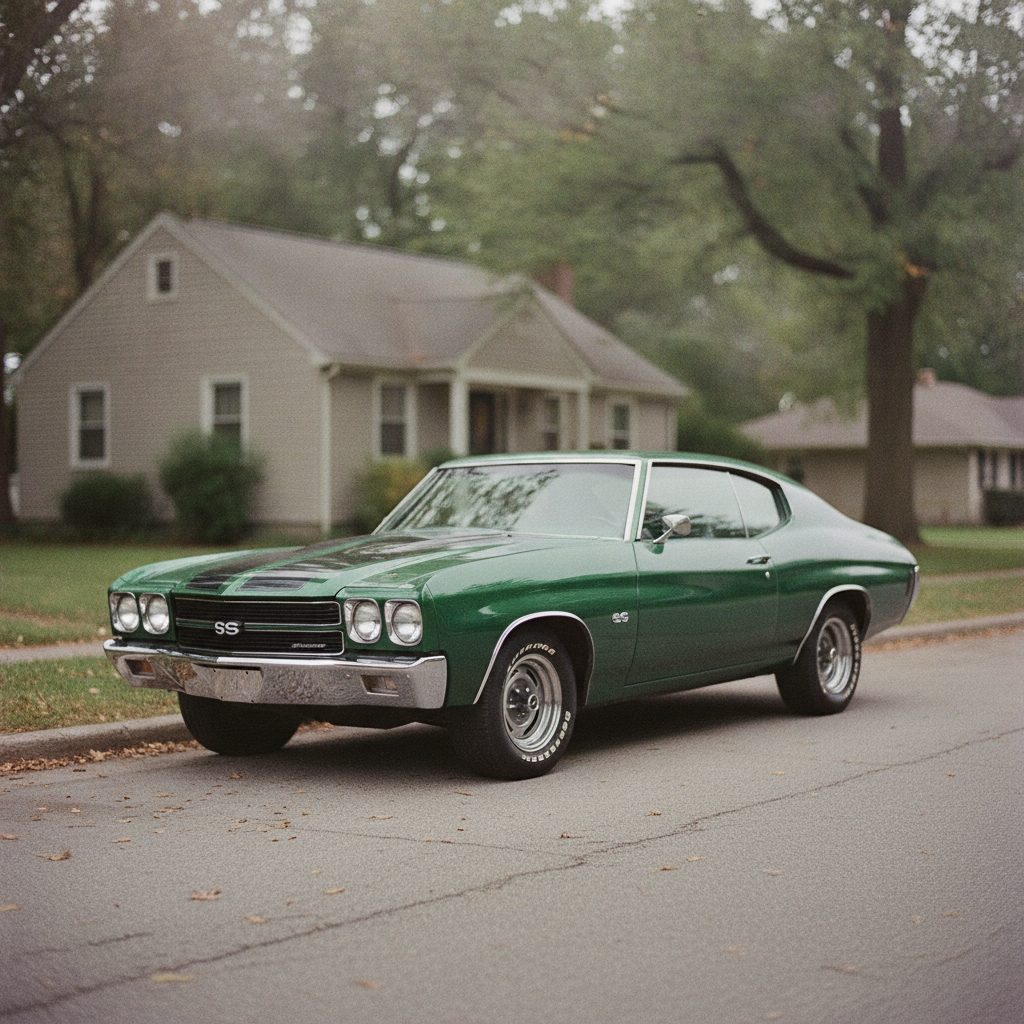
The high-water mark is real and worth being precise about. Chevrolet built the LS6 454 at 450 horsepower gross, the highest factory rating of the classic era, and our 1970 Chevelle SS year guide walks that whole engine ladder. Plymouth and Dodge still sold the 426 Hemi at 425 gross. Buick's GSX Stage 1 quoted torque figures that embarrassed cars with more advertised horsepower. AMC had the Rebel Machine. Pontiac had Ram Air. Everything the decade would spend five years dismantling was, for one model year, sitting on dealer lots at once.
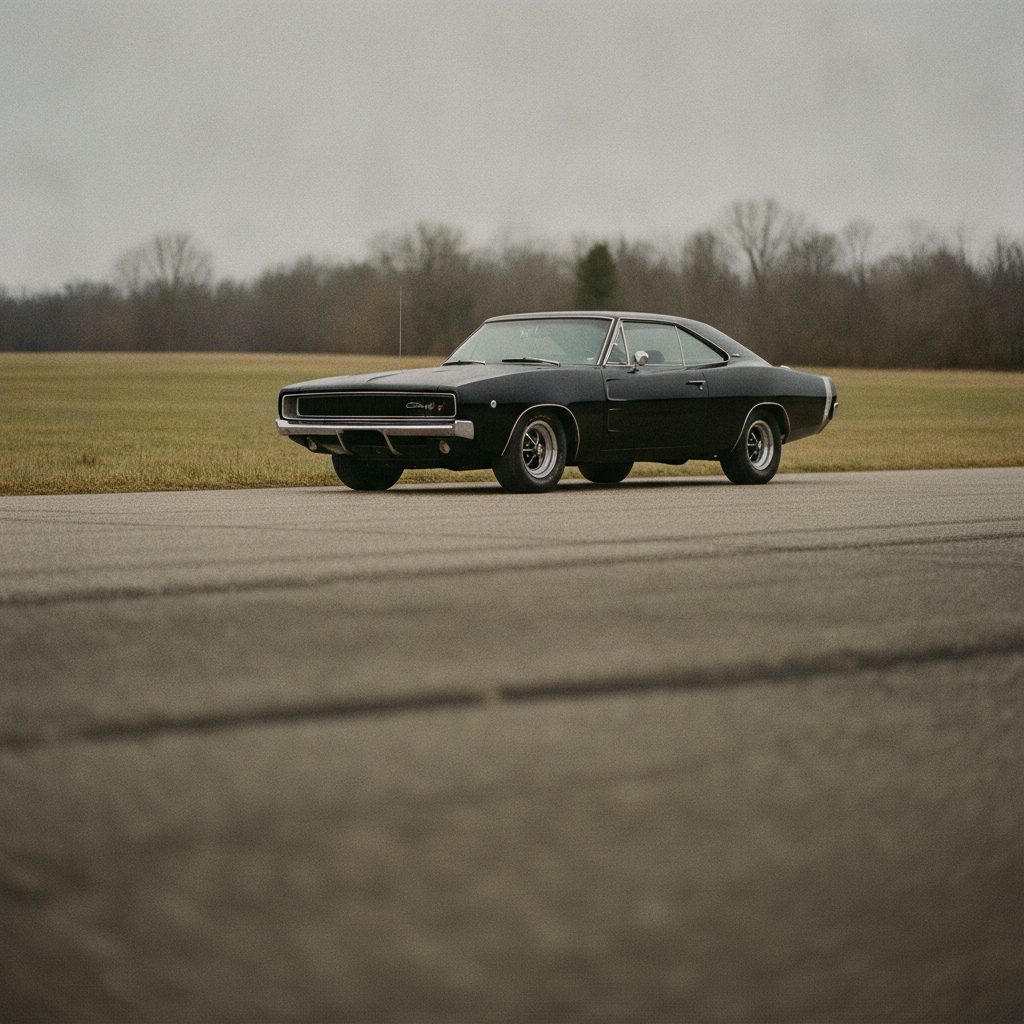
It ended fast. The 426 Hemi lasted through 1971 and stopped, and the last year was a rounding error: roughly 108 Hemi 'Cuda hardtops and seven convertibles, with sources disagreeing slightly on the totals. The engineering behind why that motor was worth the trouble and the surcharge is in our Hemi explainer. By the end of 1971 it was off the price list entirely.
This is the year real power actually left, and it was a corporate decision, not a federal one. GM president Ed Cole announced in January 1970 that every 1971 GM engine would be built to run on fuel with a research octane number no higher than 91. That meant dropping compression across the entire range, on everything, at once. The oil companies could then sell unleaded regular, which the catalytic converter GM was already planning would require.
The effect was immediate and measurable. The Corvette LT-1 small block ran 11.0 to 1 compression in 1970 and made 360 horsepower. For 1971 it ran 9.0 to 1 and made 330. That 30 horsepower is genuine. It is the only clean, like-for-like power loss in the whole decade, because both figures were quoted on the same gross standard. Everything after this point gets tangled up in how the number was measured.
Here is the arithmetic that ruins every casual comparison. Through 1971 the industry advertised SAE gross horsepower, measured on an engine stand with open headers and no accessories hanging off it. No alternator load, no power steering pump, no air conditioning compressor, no exhaust system, no air cleaner. It was a laboratory number for an engine that would never run that way in a car.
SAE net measures the engine as installed: full intake, full exhaust with mufflers and tailpipes, every accessory turning. It is a far more honest figure, and roughly what a modern engine still quotes today. Some manufacturers published both in 1971. Then a California law required that any horsepower reference in advertising, brochures, owner's manuals or sales literature for 1972 and later state only the as-installed net rating, and the industry stopped maintaining the gross number. It vanished from the price lists in one model year.
Pontiac did not lose 35 horsepower between 1971 and 1972. It lost a measuring stick that had always flattered it.
Run the Trans Am numbers again with that in hand. The 1971 455 HO was quoted at 335 gross, and the same engine came to 305 when measured net. In 1972 Pontiac published 300 net. The paper drop from 335 to 300 looks like a 35 horsepower cut. The real year-over-year change on that engine was closer to five. The Corvette LT-1 tells the same story from the other side: 330 gross and 255 net were printed for the same motor. Anyone comparing a 1971 brochure against a 1972 brochure without adjusting for this is not comparing engines at all.
The back half of the decade is where genuine losses stack up, and they were not all under the hood. Federal rules required front bumpers to survive a 5 mph impact for 1973, with the rear following for 1974. Meeting that meant heavy reinforced structures on cars whose bodies had been drawn for slim chrome, which is why so many 1973 and later muscle cars look nose-heavy next to their own 1970 versions. Weight went up exactly as output was coming down.
Then came October 1973 and the OPEC embargo. Fuel supply, not fuel price alone, became the story, and a 10 mpg intermediate with a four-barrel became a hard sell overnight. For 1975 catalytic converters arrived on most cars, which locked in unleaded fuel and took another bite out of output. The Corvette makes the low point vivid: the base L48 350 was rated 165 net horsepower for 1975, the weakest base engine Chevrolet had put in the car since 1956, with the optional L82 reaching 205.
Ford's answer was the most drastic. The Mustang II arrived for 1974 with no V8 at all, the first time in the model's history. A 302 returned for 1975 making 130 horsepower, automatic only, and Cobra II stripes showed up in 1976 to sell an idea the drivetrain could not back. Easy to mock now. It also outsold the car it replaced, which tells you how far the market had moved.
This is the part the top ten lists skip, and it is where the decade gets its dignity back. Pontiac kept building serious engines after everyone else had folded. The Super Duty 455 went into the 1973 and 1974 Trans Am and Formula, rated at 290 net horsepower at 4,000 rpm and 395 lb-ft at 3,600. Pontiac had originally planned 310 net before emissions equipment and internal pressure forced a milder camshaft. Production was tiny: roughly 295 cars for 1973 and around 1,001 for 1974, with registry figures varying by a few units.
Read 290 net against the era properly. That is an as-installed figure in a year when a Corvette's base engine made 165. On the old gross standard the SD-455 would have been quoted well north of 350. It is the last genuinely engineered American performance engine of the classic period, and almost nobody counts it because the number on the page is small.
The Firebird's reward for holding the line was survival, and then dominance. Trans Am sales ran 46,700 in 1976, 68,745 in 1977, 93,341 in 1978 and 117,108 in 1979, the best year the model ever had. The car that outlasted the horsepower wars did it on style, handling and a hood decal, and our Firebird coverage follows that arc in more detail. The muscle car did not die in the 1970s. It changed what it was selling.
The rating change creates a pricing quirk you can use. Cars from 1971 and 1972 often carry engines barely different from their 1970 counterparts, but they wear the smaller advertised numbers, and the market has historically paid for the number on the page rather than the hardware in the bay. A 1972 car with a healthy big block is frequently the better buy than the 1970 equivalent, and the gap is wider than the spec sheets suggest.
The 1973 to 1979 cars are the genuine entry point, with their own rules. Look hard at the bumper mounts and the structure behind them, because those heavy assemblies rot their mountings and the repair is structural, not cosmetic. Emissions plumbing on mid-decade cars is often missing or bypassed, which matters for originality and for any state with a visual inspection. Verify documentation on anything claiming to be a Super Duty or a 455 HO, because both are worth many times a base car and both are easy to fake with a badge and a valve cover.
Above all, correct the numbers before you compare cars. Anything advertised for 1971 or earlier is a gross figure. Anything for 1972 or later is net. Comparing them directly, which almost every listing and half the published guides still do, will talk you out of good cars and into overpriced ones. If you want the real figures rather than a rule of thumb, our gross to net horsepower converter lists the engines whose makers published both numbers, and the spread is wider than anyone assumes.
The 1970 model year holds the peak: the Chevelle SS 454 LS6, the Hemi 'Cuda, the Buick GSX Stage 1 and the Challenger R/T. From 1973 onward the standouts are the Pontiac Trans Am SD-455 and the 455 HO cars, which kept real engineering alive after the rest of the industry had given up on performance entirely.
Three separate reasons stack up. Compression ratios fell for 1971 to allow unleaded fuel, which cost real power. Emissions equipment and catalytic converters from 1975 cost more. But a large part of the apparent drop in 1972 was simply the switch from SAE gross ratings to SAE net, which measures the engine as installed.
Gross horsepower was measured on a test stand with open headers and no accessories fitted, so it flattered the engine. Net horsepower is measured with the full exhaust, air cleaner and all accessories driven, matching what the car actually delivers. Net figures typically read 15 to 25 percent lower on the same engine.
The 1970 and 1971 halo cars are already priced accordingly and move with the wider collector market. The better opportunity sits in 1972 through 1979 cars, where advertised power numbers understate the hardware and prices still reflect the paper figures. Condition, documentation and originality drive returns far more than model year alone.
Cover photograph: 1975 Pontiac Firebird Trans Am 400 by Sicnag, licensed CC BY 2.0 via Wikimedia Commons. Cropped and graded in house. Big Block Magazine is not affiliated with the photographer or the vehicle's owner.
The muscle world, every morning. Auctions, builds, reveals. Free.