Holley Carburetor Identification: The Date Code Everybody Reads Backward
The list number tells you what a Holley was built as, the date code tells you whether it belongs on your car, and the published guides get the second one wrong.
The list number tells you what a Holley was built as, the date code tells you whether it belongs on your car, and the published guides get the second one wrong.
Holley carburetor identification comes down to one number, and most people find it eventually. The list number is stamped into the air horn, four to six digits, sometimes with a dash suffix. Feed it into Holley's own database and out come the CFM rating, the jetting and the right rebuild kit. That part is easy. The part nobody puts in the guide is that the list number describes a carburetor that left the factory decades ago, and says almost nothing about the one bolted to your manifold now.
That gap is where the money goes missing. It is why a swap meet carburetor wearing a famous list number can be worth a fraction of what the seller believes, and why two of the biggest names on the first page of Google publish contradictory answers about the same carburetor. The fix is the smaller number stamped underneath, and that is the one the guides get wrong.
Holley's own Carb Hunter's Guide puts the list number on the throttle lever side of the air horn on a standard 4150 or 4160. It is stamped, never cast, and it is the only number Holley itself uses to look anything up. Four to six digits, often with a dash suffix like 3310-1. That suffix is not decoration. It marks a revision, and revisions changed jetting, venturi sizes and airflow ratings.
The prefix moved around over the years, which is where the first published error creeps in. Google's AI Overview for this search says modern numbers start with a zero and vintage numbers start with an R, a tidy two way split. Holley describes three stages, not two: R on pre mid sixties carburetors, then L or the spelled out word List, then the modern 0- convention. The same basic carburetor has been catalogued as R3310A and as 0-3310. The prefix dates the paperwork, not the part.
The suffix matters more than the prefix, and Holley proves it by accident. Its text calls the 3310 a 750 CFM carburetor. Its own table, further down the same page, lists R3310A at 780 CFM on a 1965 Chevelle 396. Both have been correct at different points in that number's life, which is why 3310 alone is not an answer.
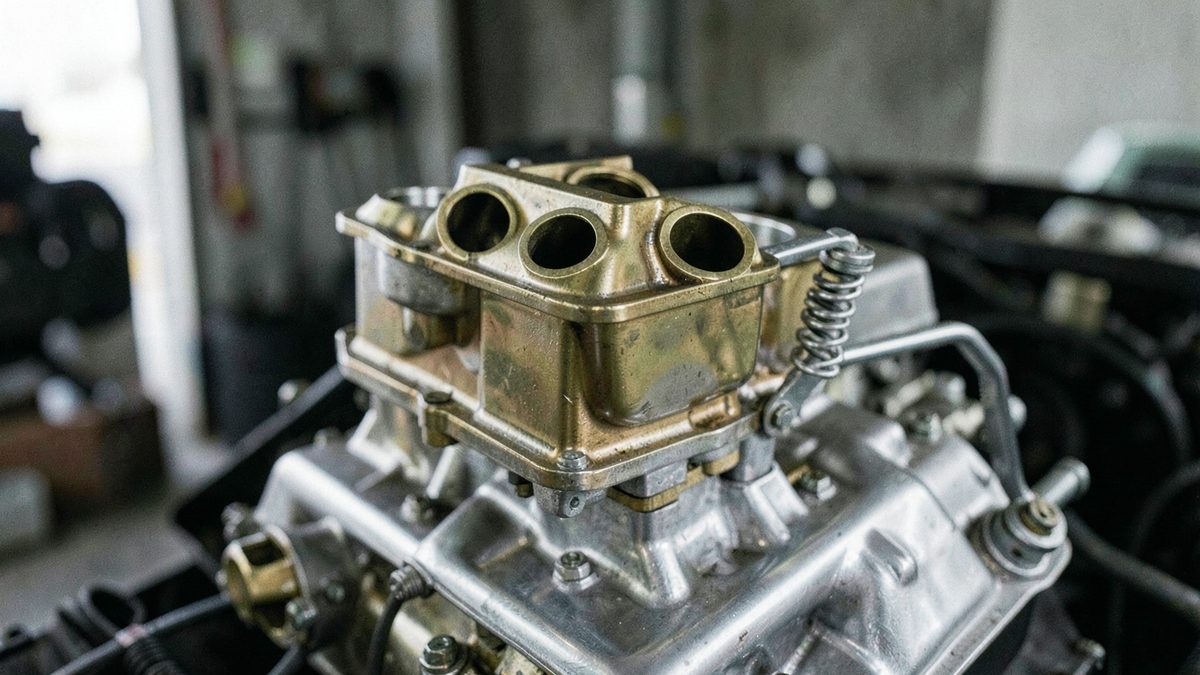
On most factory four barrels the number sits on the front of the choke tower, with the date code directly beneath it. The trouble is that it gets repeated as though every Holley has one. The 4150 HP and XP carburetors leave the factory without one, so the stamping moves to the main body, and on later race pieces it is laser etched into the side.
Then there is the number that is not the number. Casting numbers are raised and alphanumeric, moulded into the metal. List numbers are stamped into it, shallow and sharp edged. Confuse the two and you will chase a part that does not exist. It is the same discipline that governs big block Chevy casting numbers: the raised number identifies the casting, not the assembly that came out of the plant.
Holley's guide works through a carburetor the writer kept on his desk. It is the most useful worked example online, though not for the reason it was published. Three lines are stamped into the air horn. S2MS-9510-A on top. 3259-1 in the middle. 0798 at the bottom.
The top line is the Ford engineering number, used to track which car the carburetor went on. Holley says plainly that it is no use for sourcing a rebuild kit. The middle line is the list number, and Holley's own application table ties 3259-1 to the 1965 Mustang Hi-Po 289 at 715 CFM. Stop there and you are holding a Hi-Po carburetor. Most sellers stop there.
The bottom line changes the story. 079 is the day of the year, which lands in March, and the trailing 8 is the year digit. Holley identifies the carburetor as a service unit built in 1978. So it wears the list number of a 1965 Hi-Po carburetor and was built thirteen years after the car it is named for. Nothing about it is fraudulent. It is a dealer replacement, sold exactly as intended. But a seller who quotes the list number and stops has told you the flattering half of the story.
The list number tells you what a carburetor was built as. The date code tells you whether it could possibly be the one that came on your car.
Holley used a three digit date code up to 1973 and a four digit code after that. The three digit version reads year, then month, then week of the month. A carburetor stamped 763 was built in the third week of June 1967. Simple enough, until autumn.
Holley's guide decodes that middle character as a plain month number and leaves it there, which works for January through September and then stops, because the line did not shut down for the last quarter of the year. The Shelby American Automobile Club decode fills the hole: 1 through 9 are January through September, 0 is October, A is November, B is December. The Corvette and Chevelle forum archives carry the same scheme, with 502 reading as the second week of October 1965. Hand Holley's guide a three digit code with a letter in it and it cannot read it.
The four digit code is where the real damage happens, because it runs backwards from what people expect. It is Julian. The first three digits are the day of the year, and the last digit alone is the year. Google's AI Overview for this query describes it as showing the year and month of manufacture, which inverts the whole thing. Read 0798 as a year and a month and you land on July 1998. Read it properly and you get the seventy ninth day of 1978. Same four characters, twenty years apart.
A carburetor is an assembly, not a casting. Main body, bowls, metering blocks, baseplate and choke housing all unbolt and all interchange. A correct list number on the air horn proves the air horn and the body it is attached to. It does not prove the baseplate, or that the combination in front of you ever ran together. That is the trap that runs right through numbers matching as a concept: a stamping proves the part it is stamped on, and it stops there.
The number does not always survive either. Fifty years of fuel and corrosion, or one enthusiastic replating pass, will take a shallow stamping off completely, which is why NightWrencher has a video on identifying a Holley with no list number at all. What is left is architecture: barrel count, choke tower or none, a full secondary metering block or a thin metering plate, and the measured throttle bore.
Here is what happens when nobody reconciles the charts. A reader posted three numbers off his carburetor in the comments of the JEGS identification article: GM number 3886091, LIST 3418-1, and a date stamp of 833. The published reply calls it a carburetor around 600 CFM, commonly fitted to 396 engines, and decodes 833 as the thirty third week of 1968.
Holley's own application table, two results higher on the same page of Google, lists R3418A at 855 CFM on the 1966 Corvette 427 rated at 425 horsepower, GM number 3886091. Same carburetor, same results page, 255 CFM apart. And no published scheme produces a thirty third week of anything, because a month has four or five. Under both decodes in circulation, 833 reads as the third week of March 1968, which is the more interesting finding: a carburetor carrying that 1966 list number but built in March 1968 is a service replacement, and on a judged car that is the difference between a correct engine bay and a nice one.
This is where identification turns into money. Correct, date appropriate originals for headline applications sit in a different market from a good rebuilt 4160. The outer carburetors from a Six Barrel or Six Pack setup, the 780 CFM units off a Boss 302, the Cobra Jet pieces: what is being paid for there is documentation. The Plymouth Road Runner and its 440 Six Barrel option is the clean example, because the centre and outer carburetors are all different list numbers and losing one breaks the set.
For a car you drive, none of that premium buys you anything. A fresh carburetor out of a box will run better and cost less than a correct one, which is the calculation behind carb versus EFI. The premium exists for cars being judged, not cars being enjoyed.
One last caution about cross referencing by factory number. Holley's own table prints the Ford number D00F-9510-R against two different list numbers, R4628 for the 1970 429 Cobra Jet and R4647 for the Boss 429. They cannot both be right. Work from the list number first and the date code second.
On most factory four barrels it is stamped on the front of the choke tower, with the date code below it. Holley's own guide puts it on the throttle lever side of the air horn on a 4150 or 4160. HP and XP models have no choke tower, so the stamping moves to the main body.
Three digits means pre 1973: year, then month, then week of the month, where 1 to 9 are January to September, 0 is October, A is November and B is December. Four digits is Julian: the first three are the day of the year and the last one alone is the year.
Both are square bore four barrels and they look nearly identical from above. The 4150 carries a full metering block on the primary and the secondary side. The 4160 uses a primary metering block and a thin secondary metering plate instead, which makes it slimmer front to back and cheaper to build.
Only indirectly. The digits encode nothing themselves, but the number is the key to Holley's application data: CFM rating, factory jetting and power valve size. Watch the dash suffix, because revisions of one list number have carried different airflow ratings. The 3310 has been published at both 750 and 780.
The muscle world, every morning. Auctions, builds, reveals. Free.